Women Unveiled: Navigating Challenges and Embracing Empowerment
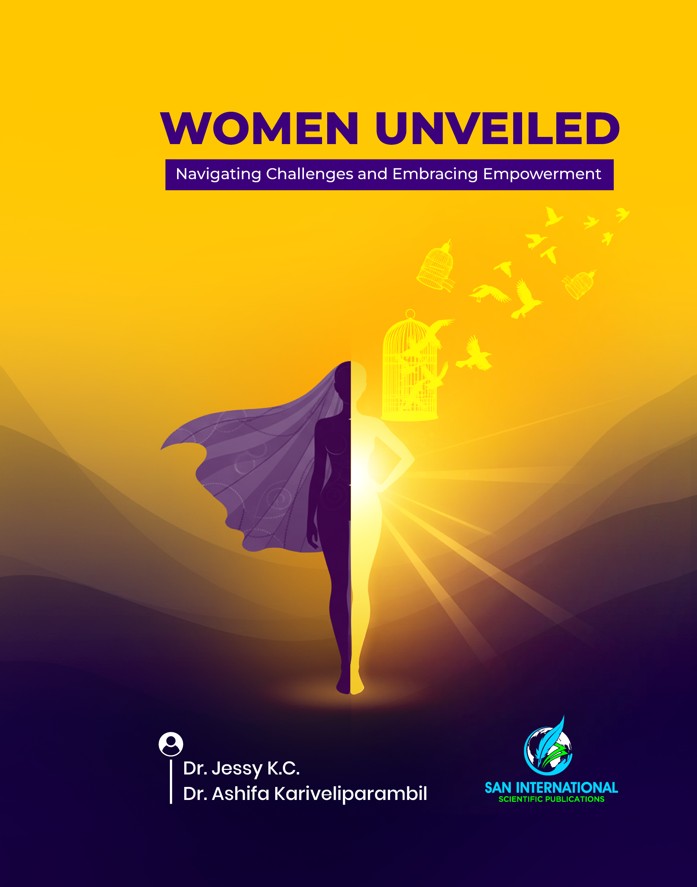
Women Unveiled: Navigating Challenges and Embracing Empowerment
Authors: Dr. Jessy K.C, and Dr. Ashifa Kariveliparambil
ISBN: 978-81-996233-0-9
DOI: https://doi.org/10.59646/567
Date of Publication: January 15, 2026
About the Book:
In the evolving landscape of women’s rights and empowerment, significant strides and challenges coalesce, painting a complex picture of progress. This book, Women Unveiled: Navigating Challenges and Embracing Empowerment, delves into the diverse experiences of women across various spheres of life. Through a compilation of comprehensive studies, this work highlights the multifaceted challenges women face and the strides they are making towards empowerment and equality.
Chapter One explores the awareness and perception of the Prevention of Sexual Harassment (POSH) Act among working women. Sexual harassment in the workplace is a significant occupational hazard affecting women’s health, morale, and performance. This chapter investigates the level of awareness and understanding of the POSH Act among women in various sectors, including healthcare, education, and public services. The findings underscore the critical need for more comprehensive training and awareness programs to ensure a safe and equitable work environment. Despite some knowledge of the law, many women lack detailed understanding, highlighting a gap that needs addressing to protect their rights and dignity at work.
Chapter Two shifts focus to the postpartum period, specifically the awareness of baby blues among new mothers. The emotional and psychological challenges that accompany childbirth can be overwhelming, remain under-discussed. This chapter highlights the prevalence of baby blues, characterized by mood swings, anxiety, and sleep disturbances, affecting many women shortly after childbirth. Through a detailed study, the chapter reveals the critical role of family support and the need for greater awareness and resources to help new mothers navigate this challenging period. The insights call for increased social support and education to improve maternal mental health and well-being.
Chapter Three addresses the physical and psychological well-being of primiparas, or first-time mothers. The transition to motherhood brings about profound changes and challenges, including physical discomfort, emotional fluctuations, and adjustments in family dynamics. This chapter explores these issues in depth, highlighting the importance of a strong support system for new mothers. The study reveals significant changes in marital relationships and the need for emotional and practical support from partners and families. By understanding these challenges, we can better support first-time mothers in their journey through motherhood.
Chapter Four provides an in-depth analysis of the challenges and gender experiences of women in political participation. Despite constitutional guarantees, women face numerous obstacles in the political arena. This chapter examines the structural barriers, societal norms, and cultural perceptions that hinder women’s political engagement. Through the experiences of women in political positions, the study highlights the resilience and determination of women striving for political leadership. The findings underscore the importance of creating an inclusive political environment that encourages and supports women’s participation and leadership.
Chapter Five discusses the unique challenges faced by adolescent girls from tribal communities during menstruation. Menstruation, a natural biological process, is often stigmatized and surrounded by taboos, especially in tribal areas. This chapter explores the cultural practices, lack of resources, and health issues that adolescent girls face during their menstrual cycles. The study reveals the impact of these challenges on their education and overall well-being, calling for more inclusive and supportive health interventions.
Chapter Six explores the impact of social media on women’s mental health. Social media has become a pervasive part of modern life, influencing various aspects of personal and professional lives. This chapter examines both the positive and negative effects of social media on women’s mental health, highlighting the need for balanced and mindful use of these platforms. The chapter discusses how social media can be a powerful tool for connection and support but also a source of anxiety and stress, emphasizing the importance of digital literacy and resilience.
Chapter Seven delves into the economic empowerment of women through entrepreneurship. Women’s participation in entrepreneurial activities can drive economic growth and foster financial independence. This chapter discusses the barriers women face in entrepreneurship and the support systems necessary to overcome these challenges, including access to finance, training, and mentorship. The stories of successful women entrepreneurs provide inspiration and practical insights for aspiring businesswomen.
Chapter Eight addresses the role of education in women’s empowerment. Education is a critical tool for empowering women, providing them with the knowledge and skills needed to participate fully in society. This chapter explores the state of women’s education, the challenges they face, and the policies needed to promote gender equality in educational institutions. It highlights the transformative power of education in breaking the cycle of poverty and enabling women to achieve their full potential.
Chapter Nine focuses on women’s health and access to healthcare services. Women’s health needs are diverse and require comprehensive healthcare services. This chapter examines the accessibility and quality of healthcare services available to women, highlighting gaps and suggesting ways to improve health outcomes for women. It addresses issues such as reproductive health, maternal care, and the impact of social determinants on women’s health.
Chapter Ten discusses the intersection of gender and environmental sustainability. Women play a crucial role in environmental conservation and sustainability efforts. This chapter explores how empowering women can lead to more effective environmental stewardship and sustainable development. It highlights the contributions of women in various environmental initiatives and the importance of including gender perspectives in environmental policies.
Chapter Eleven looks at the impact of cultural norms and practices on women’s lives. Cultural norms can both empower and constrain women. This chapter examines various cultural practices and their impact on women’s rights and freedoms, advocating for a more inclusive and respectful approach to cultural diversity. It discusses how cultural transformation can be a catalyst for gender equality and women’s empowerment.
Chapter Twelve examines the legal frameworks and policies affecting women’s rights. Legal protection is essential for safeguarding women’s rights and promoting gender equality. This chapter reviews existing laws and policies, identifying areas for improvement and advocating for stronger legal protections. It highlights the importance of legal literacy and access to justice for women.
Chapter Thirteen explores the role of women in peacebuilding and conflict resolution. Women are often at the forefront of peacebuilding efforts, bringing unique perspectives and solutions to conflicts. This chapter highlights the contributions of women to peace processes and the need for their inclusion in decision-making roles. It showcases the stories of women peacebuilders who have made significant impacts in their communities.
In the concluding chapter fourteen, we reflect on the comprehensive journey documented in this book. This chapter synthesizes the insights from previous chapters, highlighting the progress made in women’s empowerment while acknowledging the challenges that remain. It serves as a call to action, urging continued advocacy, collective effort, and commitment to achieving gender equality. By envisioning a future where every woman can realize her full potential, this chapter underscores the importance of education, economic empowerment, legal protections, and cultural transformation in paving the way towards a more just and equitable society.
This book aims to provide a comprehensive understanding of the diverse challenges women face and the ongoing efforts to address them. Through these studies, we hope to contribute to the broader discourse on women’s empowerment, highlighting the importance of awareness, support, and policy intervention in fostering gender equality. Women are navigating a complex landscape of cultural, social, and economic challenges, but their stories are also ones of resilience, strength, and progress. By sharing these insights, we aspire to inspire further research, advocacy, and action in support of women’s rights and empowerment.
In presenting these chapters, we acknowledge the contributions of the researchers, participants, and all those who strive to make a difference in the lives of women. This book is a testament to their efforts and a call to continue the journey towards a more just and equitable society. It is our hope that this compilation will serve as a valuable resource for scholars, policymakers, activists, and anyone committed to advancing the cause of women’s empowerment. Together, we can build a future where every woman has the opportunity to thrive and contribute to a more inclusive and equitable world.