
Transforming Multidisciplinary Research Through Artificial Intelligence
Transforming Multidisciplinary Research Through Artificial Intelligence
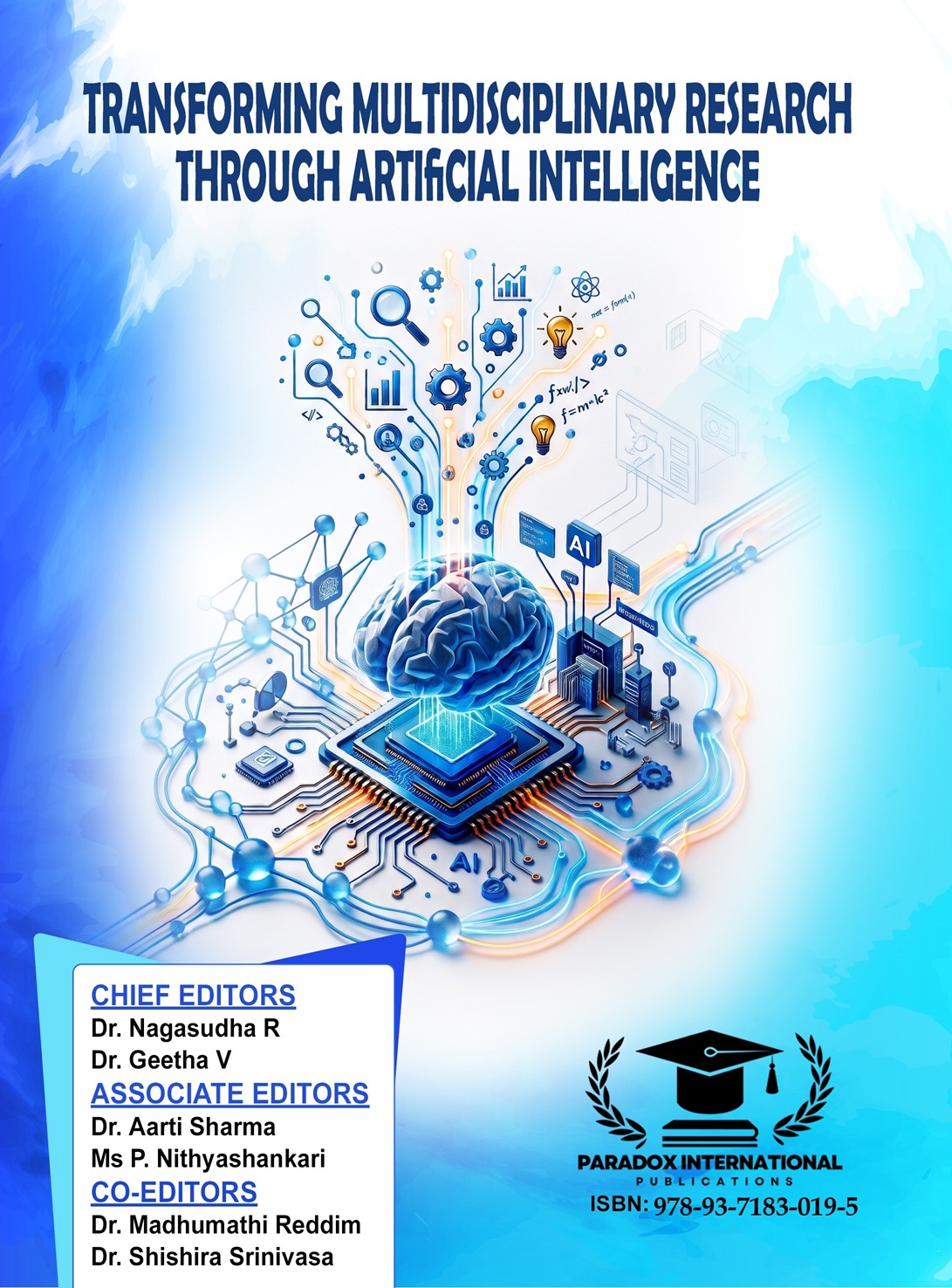
Chief Editors: Dr. Nagasudha R and Dr. Geetha V
Associate Editors: Dr. Aarti Sharma and Ms. P. Nithyashankari
Co-Editors: Dr. Madhumathi Reddim and Dr. Shishira Srinivasa
ISBN: 978-93-7183-019-5
DOI: https://doi.org/10.59646/804
Date of Publication: August 29, 2026
Cite this book: Nagasudha R, Geetha V, Aarti S, Nithyashankari P, Madhumathi R and Shishira S, (2026), Transforming Multidisciplinary Research Through Artificial Intelligence, Paradox International Publications & San International Scientific Publications, ISBN: 978-93-7183-019-5, DOI: https://doi.org/10.59646/804
Chapters and Authors
Chapter 2: AI-Powered Phishing Detection – Banumathi R
Chapter 3: Habitat Fragmentation and Wildlife Species Decline – Charu Bhatt
Chapter 9: FinTech Innovations and the Future of Banking Operations – Dr. M. Prakash
Chapter 12: Impact of Mobile Banking on Customer Satisfaction and Loyalty – Dr. N. Thyagaraju
Chapter 13: Digital Leadership and Employee Resilience in Hybrid Workplaces – Dr. S. Mahalakshmi
Chapter 22: A Comprehensive Study of Cloud Computing – Ms. S. Girija
Chapter 23: Safeguarding Personal Data in AI-Driven Systems – R N Sruthilaya, and Dr K Nirmala
Chapter 26: Blended Learning and Student Engagement in Higher Education – Dr N. Thyagaraju
Chapter 27: Digital Currency Adoption and its Impact on Monetary Policy – Dr. Santosh Laxman Adamane
Preface
Artificial Intelligence (AI) has emerged as one of the most transformative forces shaping contemporary research, industry, education, governance, and society. Its rapid evolution from a specialized computational technology into a powerful multidisciplinary research enabler has created new opportunities for analysing complex problems, generating knowledge, improving decision-making, and developing innovative solutions. The book Transforming Multidisciplinary Research Through Artificial Intelligence brings together diverse scholarly perspectives that demonstrate how AI, digital technologies, data-driven methodologies, and emerging computational approaches are influencing research across business, economics, finance, cybersecurity, environmental sciences, healthcare, education, linguistics, social sciences, and cultural studies.
The central theme of this volume is the convergence of disciplines through intelligent technologies. AI-driven predictive analytics, explainable AI, machine translation, cloud computing, digital banking, FinTech, cybersecurity, and data protection illustrate the growing importance of intelligent systems in organizational and technological environments. At the same time, the application of interdisciplinary perspectives extends beyond conventional technological domains. The chapters addressing habitat fragmentation, wildlife decline, biodiversity, green economy, urbanization, indigenous communities, cultural rituals, workplace well-being, gratitude, mindfulness, curiosity, and lifelong learning demonstrate how contemporary research can benefit from integrating technological perspectives with social, environmental, economic, and human dimensions.
A significant strength of this book is its emphasis on AI as a bridge between knowledge domains rather than merely as a technological tool. Predictive analytics can support strategic corporate decisions, while explainable AI can contribute to transparency and accountability in enterprise systems. AI-powered phishing detection highlights the role of intelligent technologies in addressing evolving cybersecurity threats, whereas AI applications in language learning and machine translation demonstrate their potential to transform communication and education. Similarly, the chapters on digital leadership, hybrid workplaces, employer branding, financial-service digitalization, mobile banking, personal finance, and digital currencies reveal the profound influence of technological transformation on contemporary economic and organizational life.
The volume also recognizes that technological advancement must be accompanied by responsible, inclusive, and human-centred approaches. Issues related to personal data protection, transparency, sustainability, mental well-being, customer satisfaction, student engagement, and social structures remind us that innovation should ultimately contribute to human welfare and sustainable development. By bringing these perspectives together, the book encourages researchers, educators, practitioners, policymakers, and students to view AI not in isolation but as an interdisciplinary catalyst capable of connecting theories, methods, evidence, and applications.
The diverse contributions included in this volume collectively reflect the changing nature of multidisciplinary scholarship. They encourage readers to explore how established disciplines can be strengthened through data-driven thinking and how AI can be responsibly integrated into research and practice.
It is hoped that Transforming Multidisciplinary Research Through Artificial Intelligence will serve as a valuable academic reference for understanding emerging research directions, stimulate further interdisciplinary collaboration, and inspire innovative investigations at the intersection of artificial intelligence, technology, society, economy, environment, and human development.