
Transformative Approaches in Multidisciplinary Research (TAMR)
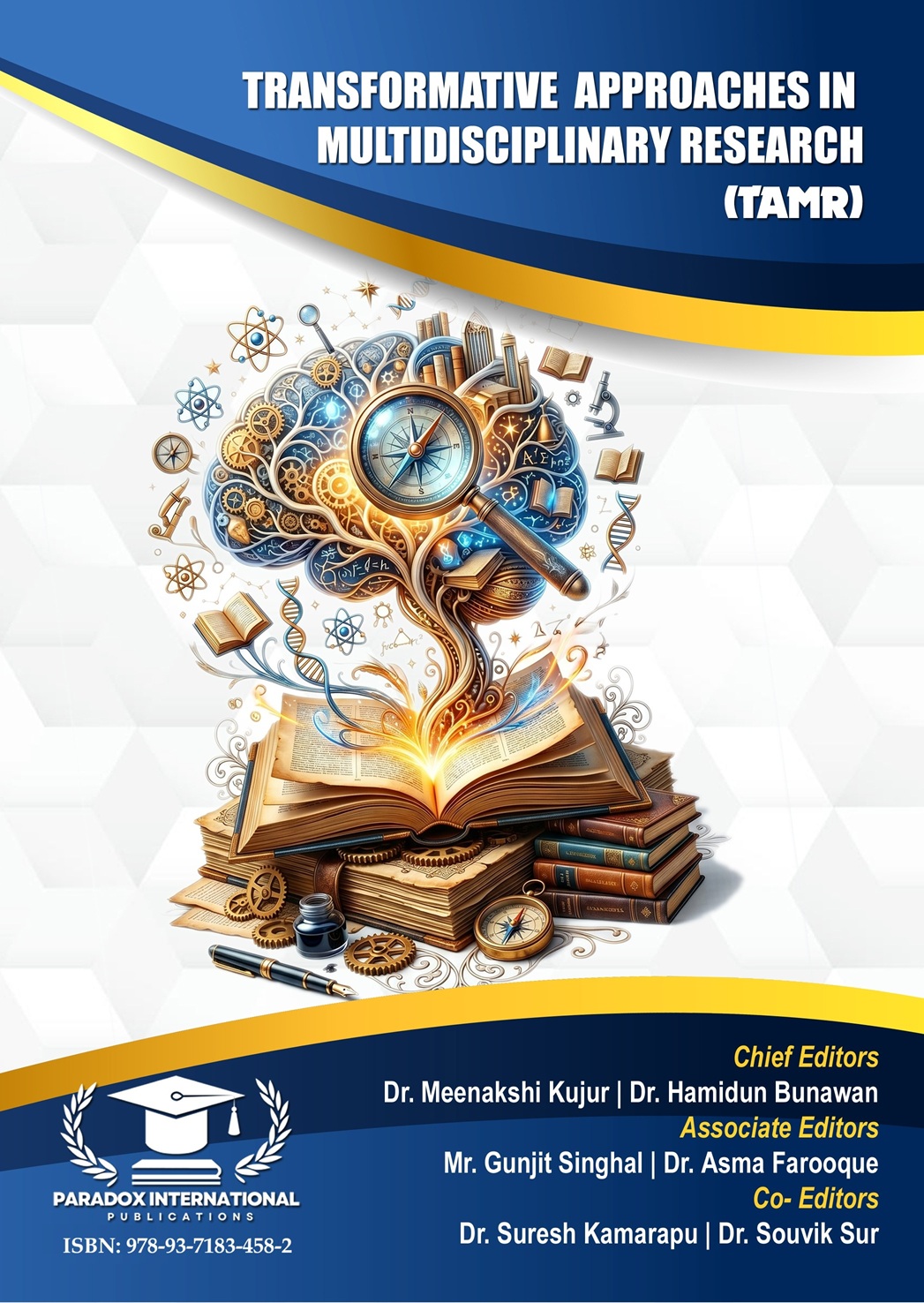
Transformative Approaches in Multidisciplinary Research (TAMR)
Chief Editors: Dr. Meenakshi Kujur, and Dr. Hamidun Bunawan
Associate Editors: Mr. Gunjit Singhal, and Dr. Asma Farooque
Co-Editors: Dr. Suresh Kamarapu, and Dr. Souvik Sur
ISBN: 978-93-7183-458-2
DOI: https://doi.org/10.59646/672
Date of Publication: April 28, 2026
Cite this book: Meenakshi K, Hamidun B, Gunjit S, Asma F, Suresh K, Souvik S, (2026), Transformative Approaches in Multidisciplinary Research (TAMR), Paradox International Publications & San International Scientific Publications, ISBN: 978-93-7183-458-2, DOI: https://doi.org/10.59646/672
Preface
In an era defined by rapid technological advancement, global interconnectedness, and complex societal challenges, the need for multidisciplinary research has never been more urgent. The book Transformative Approaches in Multidisciplinary Research (TAMR) emerges as a scholarly response to this evolving landscape, bringing together diverse perspectives from science, technology, social sciences, economics, education, and environmental studies. This volume aims to bridge disciplinary boundaries and foster integrative thinking that can address real-world problems in a holistic and sustainable manner.
The chapters in this book collectively reflect the transformative potential of integrating emerging technologies such as Artificial Intelligence (AI), Machine Learning (ML), Internet of Things (IoT), and Virtual Reality (VR) with traditional domains. From healthcare systems enhanced by IoT and ML to AI-driven innovations in plant science and education, the contributions highlight how technological convergence is reshaping research paradigms and practical applications alike.
A significant portion of this volume is dedicated to ecological and biological studies, emphasizing the importance of understanding natural systems in the face of environmental change. Topics such as habitat fragmentation, freshwater biodiversity, and neuroethological behavior provide valuable insights into the intricate balance of ecosystems and the consequences of human intervention.
Education and human development form another central theme of this book. Chapters exploring AI tutors, experiential learning through virtual reality, and support mechanisms for students with special needs demonstrate how pedagogy is being reimagined in the 21st century. These discussions are complemented by explorations into leadership, emotional intelligence, and mental health, underscoring the human dimensions of progress and innovation.
The book also delves into economic and policy-oriented research, examining behavioral economics, sustainable financial strategies, and the transformation of trade and finance in alignment with the Sustainable Development Goals (SDGs). These contributions highlight the critical role of informed policy design and innovative economic thinking in shaping a resilient and inclusive future.
Furthermore, emerging topics such as AI ethics in human resource management, digital marketing influences on consumer behavior, and the evolution of gendered language reflect the dynamic interplay between technology, society, and culture. The inclusion of practical perspectives, such as startup guidance and hospitality innovation, ensures that the book remains grounded in real-world applicability.
Each chapter in this volume contributes uniquely to the overarching goal of fostering interdisciplinary collaboration and knowledge integration. While the subjects may vary widely, they are united by a shared commitment to innovation, sustainability, and societal impact.
This book is intended for researchers, academicians, policymakers, industry professionals, and students who seek to explore the intersections of multiple disciplines and gain insights into contemporary challenges and opportunities. It serves not only as a repository of knowledge but also as a catalyst for future research and collaboration.
We extend our sincere gratitude to all the authors for their valuable contributions and dedication. Their work exemplifies the spirit of multidisciplinary inquiry and the pursuit of transformative solutions.
It is our hope that Transformative Approaches in Multidisciplinary Research (TAMR) will inspire readers to think beyond traditional boundaries, embrace interdisciplinary approaches, and contribute meaningfully to the advancement of knowledge and society.
Chapters and Authors
Chapter 6: AI Tutors in the 21st Century: Revolutionizing Student Learning Pathways – Dr. Nithya BN
Chapter 8: Ethics of AI in HR: Impacts on Trust and Engagement – Dr. S. Jayakani
Chapter 16: Support Mechanisms for Students with Special Needs a Comprehensive Review – M. Ramya
Chapter 24: From Idea to Startup: A Guide for Students – Nikita, and Mr. Pranjal Rawat
Chapter 26: Impact of AI-Driven Digital Marketing on Consumer Behavior – Sabeela K Abdulsalam