The Dynamics of Governance: Theory, Practice, and Reform
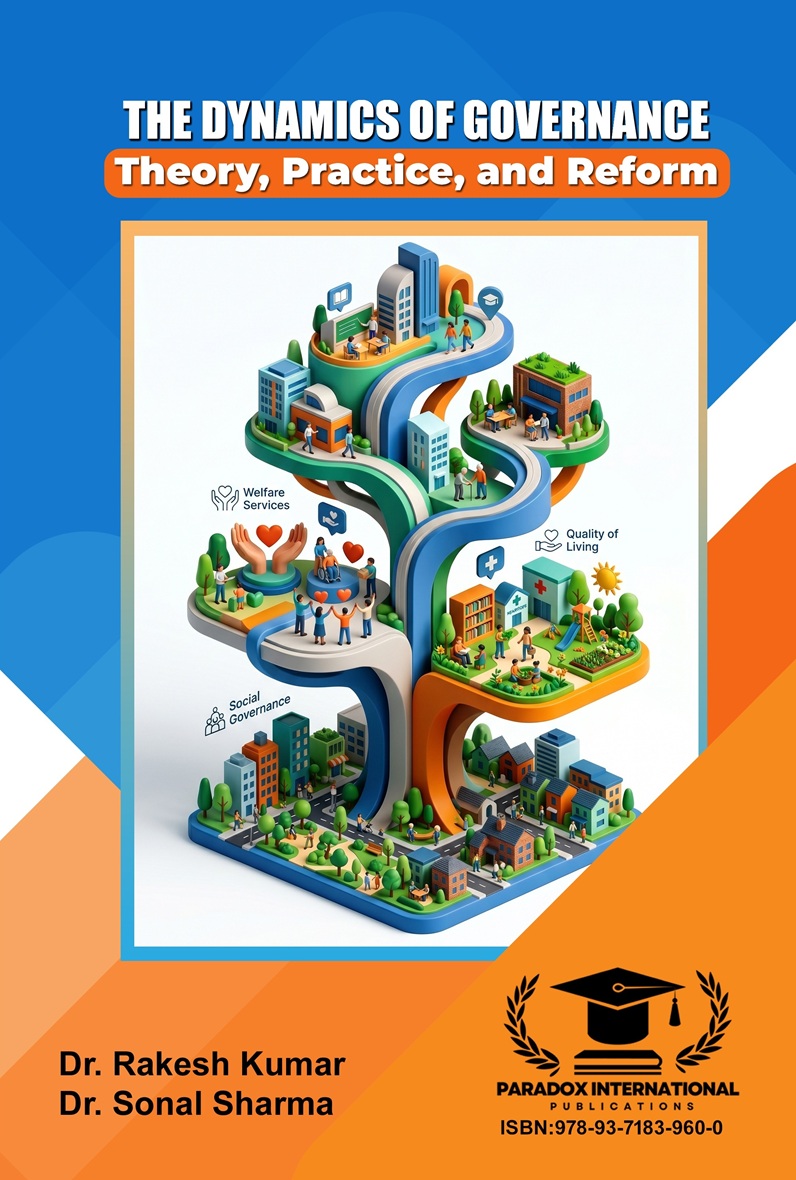
The Dynamics of Governance: Theory, Practice, and Reform
Authors: Dr. Rakesh Kumar, and Dr. Sonal Sharma
ISBN: 978-93-7183-960-0
DOI: https://doi.org/10.59646/660
Date of Publication: April 15, 2025
Cite this book: Rakesh K, and Sonal S, (2025), The Dynamics of Governance: Theory, Practice, and Reform, Paradox International Publications & San International Scientific Publications, ISBN: 978-93-7183-960-0, DOI: https://doi.org/10.59646/660
Preface
Governance has emerged as one of the most significant and widely debated concepts in contemporary public administration, political science, and management studies. Over the past few decades, the understanding of governance has evolved beyond the traditional confines of government structures to encompass complex interactions among state institutions, markets, civil society, and global actors. This transformation reflects a shift from hierarchical control to more networked, participatory, and adaptive forms of decision-making.
This book, “The Dynamics of Governance: Theory, Practice, and Reform,” is conceived as a comprehensive and interdisciplinary exploration of governance in its multiple dimensions. It seeks to bridge the gap between theoretical frameworks and real-world practices, while also critically examining the processes of reform that shape governance systems across different contexts. Governance is not a static construct; rather, it is dynamic, evolving in response to economic pressures, political transformations, technological advancements, and societal expectations.
The primary objective of this textbook is to provide readers with a robust conceptual foundation in governance theories, including classical, institutional, network, and participatory approaches. At the same time, it emphasizes the practical realities of governance by examining how policies are formulated, implemented, and evaluated in diverse institutional settings. By integrating theory with practice, the book aims to equip students, researchers, and practitioners with the analytical tools required to understand and navigate complex governance environments.
A distinctive feature of this work is its focus on governance reform. In recent decades, governments around the world have undertaken significant reforms aimed at improving efficiency, transparency, accountability, and citizen engagement. These reforms, often influenced by globalization, technological innovation, and changing public expectations, have redefined the role of the state and its relationship with society. Understanding these reforms is essential for evaluating the effectiveness and sustainability of governance systems in the modern era.
The book is structured to guide readers progressively—from foundational theories to applied practices and finally to contemporary reform initiatives. Each chapter is designed to encourage critical thinking, supported by case studies, comparative perspectives, and analytical insights. Special attention is given to emerging challenges such as digital governance, public sector innovation, ethical accountability, and global governance complexities. This textbook is intended for undergraduate and postgraduate students of public administration, political science, management, and related disciplines. It will also serve as a valuable resource for policymakers, administrators, and professionals seeking to deepen their understanding of governance processes and reforms.
In preparing this volume, efforts have been made to present content that is both academically rigorous and accessible. The authors hope that this book will not only inform but also inspire readers to engage critically with governance issues and contribute meaningfully to the development of more effective, inclusive, and sustainable governance systems.