Text book of Biochemistry
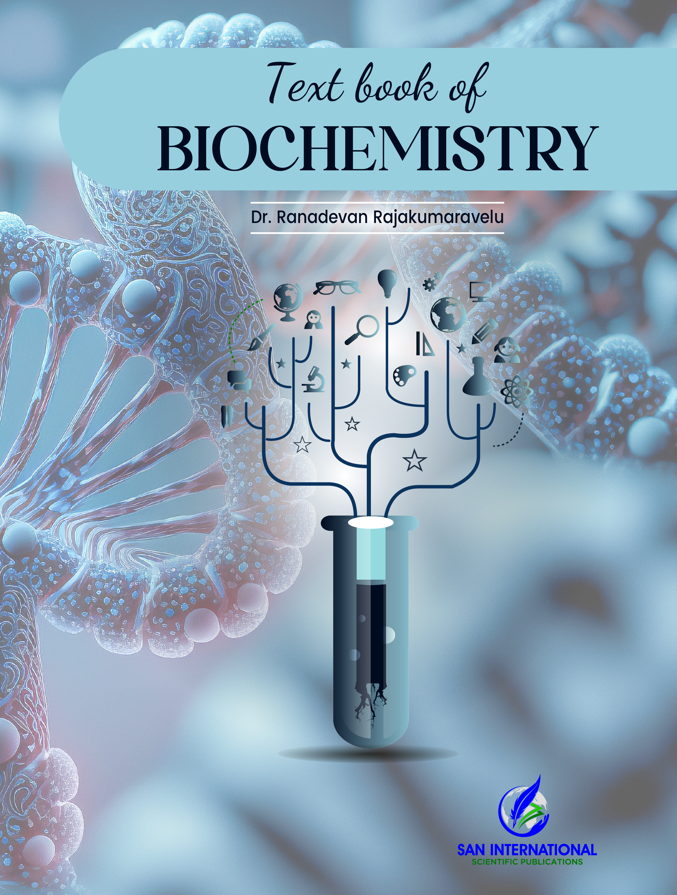
Text book of Biochemistry
Author: Dr. Ranadevan Rajakumaravelu
ISBN: 978-81-988533-4-9
DOI: https://doi.org/10.59646/bc/395
Date of Publication: July 13, 2025
About the Book:
The Textbook of Biochemistry is a thorough and detailed guide to the biochemical processes that are fundamental to life, structured to provide an in-depth understanding of both foundational concepts and advanced biochemical topics. The book begins with Unit 1: Introduction to Biochemistry, which outlines the scope and significance of biochemistry, introducing the chemical foundations of life, including atoms, molecules, and bonds. It explores the importance of water, pH, and buffer systems in maintaining homeostasis within living organisms, followed by an overview of biomolecules that are essential for cellular functions. Unit 2: Carbohydrates delves into the classification, structure, and physical and chemical properties of carbohydrates, discussing monosaccharides, disaccharides, and polysaccharides, as well as their biological roles. Carbohydrate metabolism is examined in detail, covering processes like glycolysis, gluconeogenesis, glycogen metabolism, and the Hexose Monophosphate Pathway (PPP). Unit 3: Proteins and Amino Acids focuses on the structure and classification of amino acids, the formation of peptide bonds, and the four levels of protein structure, emphasizing protein folding, denaturation, and function. It also explores protein purification and sequencing techniques and provides insight into nitrogen metabolism and the urea cycle. In Unit 4: Lipids, the book explores lipid classification, structure, and function, highlighting triglycerides, phospholipids, glycolipids, and cholesterol. Lipid metabolism, including β-oxidation, ketogenesis, and fatty acid biosynthesis, is covered alongside the role of lipoproteins in health. Unit 5: Nucleic Acids focuses on the structure of DNA and RNA, purines and pyrimidines, and the various types of RNA, their functions, and the processes of DNA replication, repair, recombination, transcription, and translation. It also explains mutations and purine/pyrimidine metabolism. Unit 6: Enzymes introduces the nature, classification, and mechanism of enzyme action, including enzyme kinetics and factors influencing enzyme activity, with an emphasis on enzyme inhibition and regulation through allosteric interactions and feedback inhibition. Unit 7: Vitamins and Coenzymes classifies vitamins as fat- or water-soluble, explaining their biochemical roles and the functions of coenzymes like NAD⁺, FAD, and CoA. The book details vitamin deficiencies, their clinical significance, and therapeutic uses. Unit 8: Metabolism and Bioenergetics provides a detailed discussion of metabolic pathways, distinguishing between anabolic and catabolic processes and the role of high-energy compounds like ATP. It also covers the electron transport chain, oxidative phosphorylation, and the mitochondria’s role in energy balance. Unit 9: Hormones and Signal Transduction examines the various types of hormones, their mechanisms of action, and receptor-mediated signaling pathways, discussing their regulation of metabolism and the impact of endocrine disorders. Finally, Unit 10: Clinical Biochemistry and Applications provides a clinical perspective, focusing on biochemical tests for liver, kidney, and cardiac functions, as well as diagnostic tests for blood glucose, lipids, and electrolytes. The biochemical basis of diseases like diabetes, cancer, and metabolic disorders is explored, along with advances in biomarkers, molecular diagnostics, and personalized medicine, including a focus on HIV/AIDS. The book serves as a comprehensive resource for students and professionals in biochemistry and related fields, offering a solid foundation in both theoretical and applied biochemistry.