Supply Chain Management
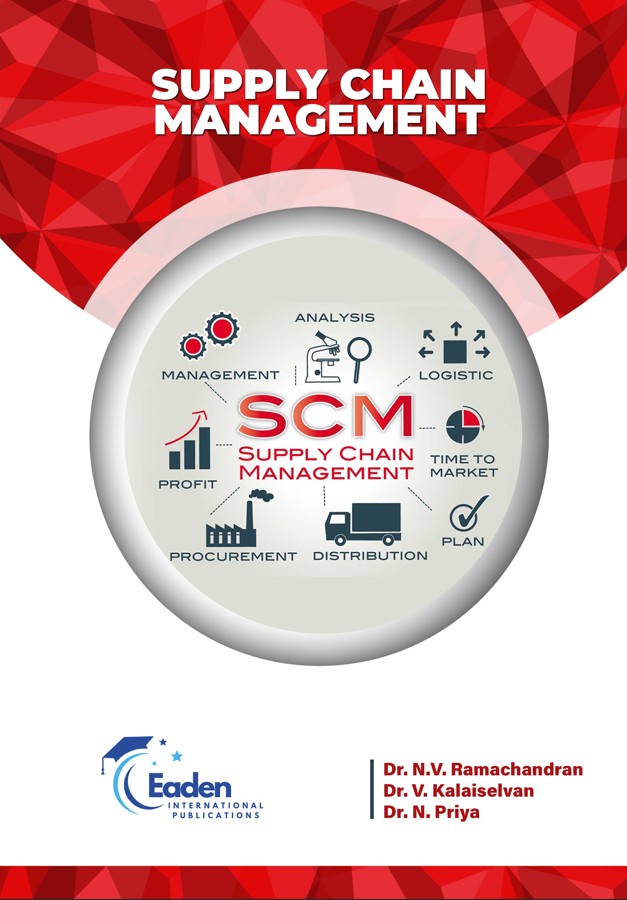
Supply Chain Management
Authors: Dr. N. V. Ramachandran, Dr. V. Kalaiselvan and Dr. N. Priya
ISBN: 978-81-993993-2-7
DOI: https://doi.org/10.59646/474
Date of Publication: September 30, 2025
About the Book:
In today’s globalized economy, organizations no longer compete as individual entities but as members of dynamic supply chains. The ability to design, manage, and continuously improve supply chains has become a critical determinant of success across industries. Recognizing this, Supply Chain Management has been developed to provide students, practitioners, and researchers with a comprehensive understanding of the principles, practices, and strategies that shape effective supply chain systems.
This textbook integrates theory with practice, balancing conceptual frameworks with real-world applications. It introduces readers to the fundamental components of supply chains—procurement, production, logistics, distribution, and customer service—while also addressing contemporary issues such as sustainability, digitalization, resilience, and global risk management. Case studies and practical examples have been included to bridge the gap between classroom learning and industry challenges.
A distinguishing feature of this book is its emphasis on both the strategic and operational aspects of supply chain management. Readers will find insights into how supply chains contribute to competitive advantage, how technology is reshaping supply networks, and how collaborative partnerships create value across stakeholders.
This work is intended for undergraduate and postgraduate students of management, engineering, and related fields, as well as professionals seeking to enhance their knowledge of supply chain dynamics. The material is organized to facilitate progressive learning, beginning with foundational concepts and advancing toward more complex, strategic perspectives.
We hope this book inspires readers to not only understand but also to critically analyze and improve supply chain practices. As supply chains continue to evolve in response to global changes, the need for innovative thinking, ethical decision-making, and sustainable approaches will only become more pressing.
Finally, we would like to express my gratitude to colleagues, industry practitioners, and students whose feedback and experiences have enriched the development of this book. Their contributions have ensured that this text reflects both academic rigor and practical relevance.