
Spaces Reimagined: Principles and Practices of Interior Design
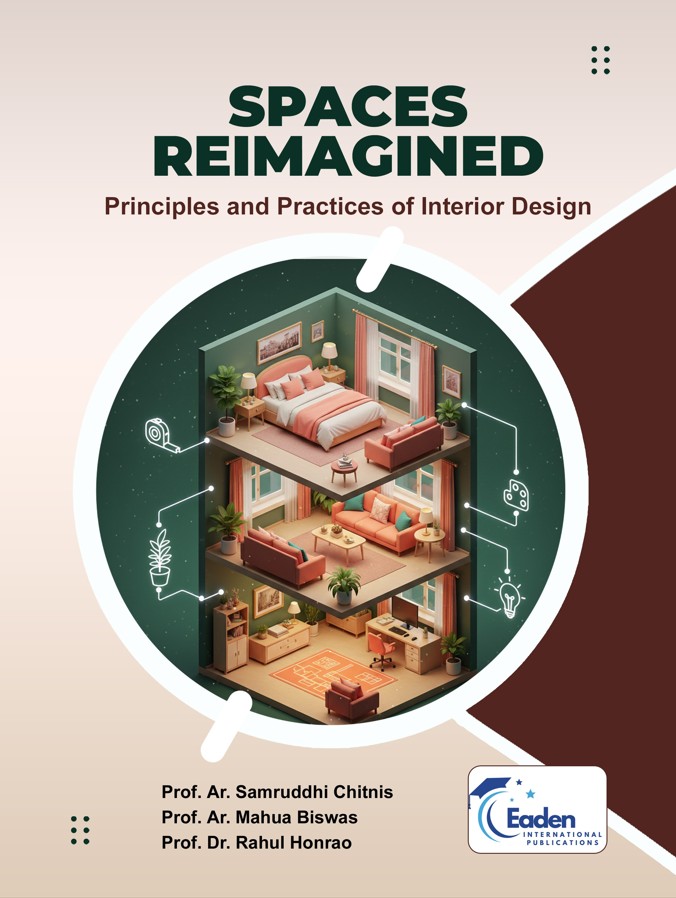
Spaces Reimagined: Principles and Practices of Interior Design
Authors: Prof. Ar. Samruddhi Chitnis, Prof. Ar. Mahua Biswas, and Prof. Dr. Rahul Honrao
ISBN: 978-81-994623-8-0
DOI: https://doi.org/10.59646/502
Date of Publication: October 17, 2025
About the Book:
The world we inhabit is defined not only by its physical structures but by the emotions, experiences, and interactions that unfold within them. Interior design, at its essence, is the art and science of shaping spaces that enhance human well-being with increasing comfort level and reflect cultural, aesthetic, and functional aspirations. “Spaces Reimagined: Principles and Practices of Interior Design” emerges from the need to bridge timeless design philosophies with the evolving dynamics of contemporary living and technological innovation.
This textbook has been conceptualized to serve as both a foundation and a framework for understanding the multifaceted discipline of interior design. It delves into the core principles of design—space, light, colour, form, and texture— while also addressing the modern imperatives of sustainability, ergonomics, and digital design tools. Each chapter blends theory with practical application, encouraging readers to not only analyse and visualize design concepts but to engage critically with the broader social and environmental implications of their work.
This book is designed for students of interior design, architecture, and environmental studies, as well as for professionals and educators seeking a comprehensive yet accessible resource that integrates classical design wisdom with contemporary relevance. It aims to inspire a deeper appreciation for the designer’s responsibility—to craft spaces that are not only beautiful and functional but also ethical, inclusive, and future-oriented.
Creating “Spaces Reimagined” has been a journey of exploration, reflection, and collaboration. We extend heartfelt gratitude to our colleagues, students, and mentors whose insights have shaped this work, and to the design practitioners whose creativity continues to redefine how we experience our built environments.
It is our hope that this book will ignite curiosity, nurture creativity, and empower a new generation of designers to envision spaces not as static enclosures, but as living narratives of human experience—spaces truly reimagined.