
Social Life in the Digital Era: Opportunities and Risks
Social Life in the Digital Era: Opportunities and Risks
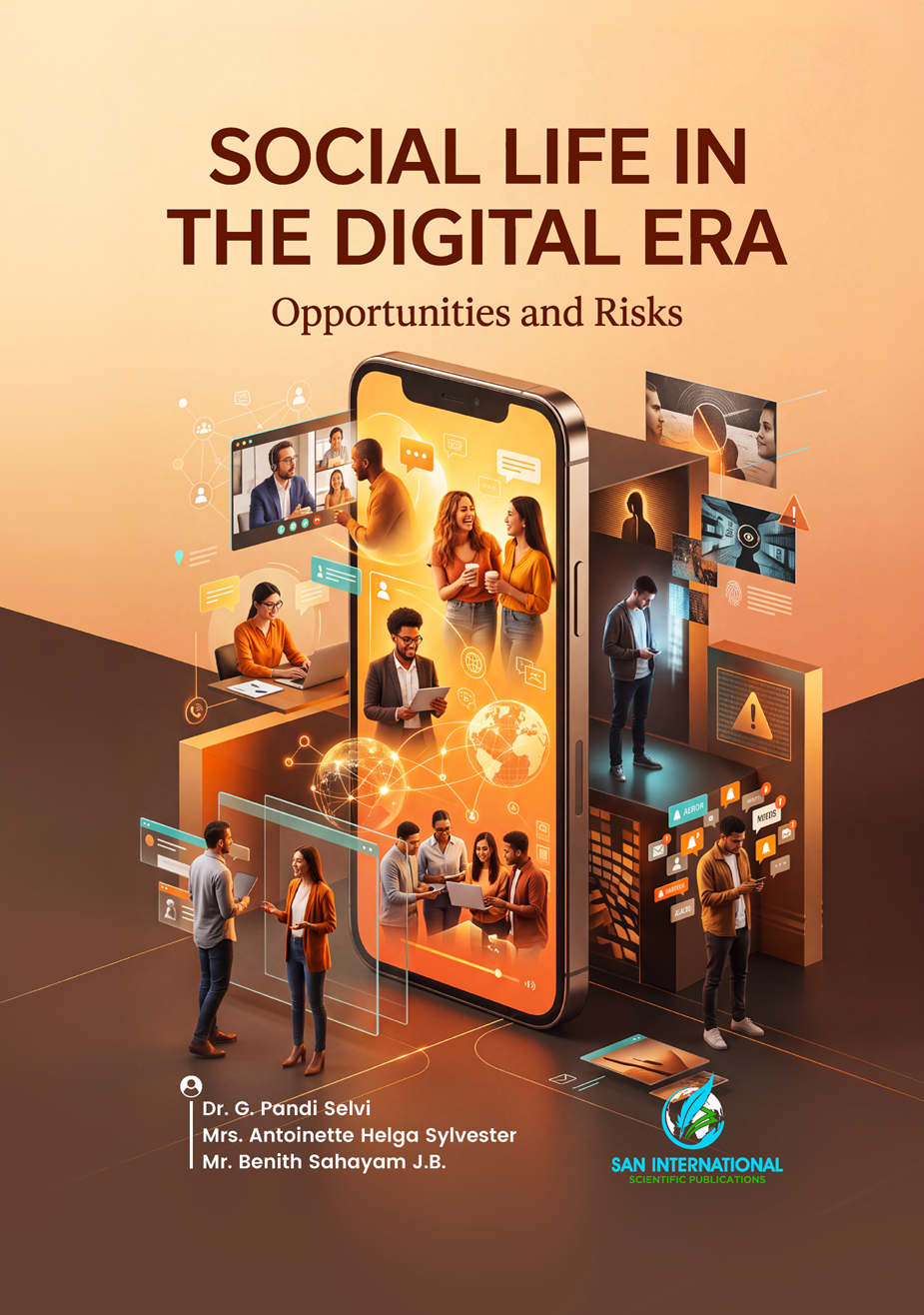
Authors: Dr. G. Pandi Selvi, Mrs. Antoinette Helga Sylvester, and Mr. Benith Sahayam J.B
ISBN: 978-81-17787-26-7
DOI: https://doi.org/10.59646/879
Date of Publication: November 06, 2026
Preface
The rapid advancement of digital technologies has fundamentally transformed the way individuals communicate, interact, build relationships, access information, and participate in society. The widespread adoption of the internet, social media platforms, smartphones, artificial intelligence, and digital communication systems has created a highly interconnected social environment in which personal relationships, educational activities, professional engagements, economic opportunities, and community interactions increasingly take place through digital platforms. While these developments have opened new possibilities for social participation, knowledge sharing, economic empowerment, and global connectivity, they have also introduced significant challenges involving privacy, cyberbullying, social isolation, digital dependency, misinformation, and psychological well-being. Understanding these transformations is essential for examining the opportunities and risks associated with contemporary digital life.
The book Social Life in the Digital Era: Opportunities and Risks provides a comprehensive examination of the influence of digital technologies on individuals, relationships, communities, and broader social structures. It explores the evolution of digital society, networked communities, social media interactions, virtual identities, and changing interpersonal relationships. Particular attention is given to the ways in which digital platforms reshape family interactions, friendships, professional relationships, educational environments, and community participation. The book also highlights the growing importance of digital citizenship, social capital, online identity formation, and participatory digital cultures in shaping contemporary social experiences.
The five units are systematically organized to provide a broad understanding of the social dimensions of digital transformation. Unit I – Digital Society, Social Transformation, and Networked Communities introduces the foundations of digital society, networked social structures, virtual communities, online identities, digital citizenship, and the transformation of everyday social institutions. Unit II – Social Media, Digital Communication, and Relationship Dynamics examines the influence of social networking platforms on interpersonal communication, digital self-presentation, online friendships, digital intimacy, influencer culture, parasocial relationships, and relationship formation. Unit III – Opportunities for Social, Educational, and Economic Development focuses on the positive contributions of digital technologies through online education, remote employment, digital entrepreneurship, financial inclusion, telehealth, e-governance, digital activism, crowdsourcing, and rural empowerment. Unit IV – Psychological, Social, and Behavioural Risks of Digital Life investigates the challenges associated with excessive screen exposure, problematic social media use, digital addiction, loneliness, cyberbullying, social comparison, fear of missing out, misinformation, information overload, and changing family relationships. Unit V – Digital Well-Being, Social Responsibility, and Future Society emphasizes balanced technology engagement, media literacy, responsible online participation, digital rights, accessibility, intergenerational digital literacy, platform accountability, sustainable digital lifestyles, and the evolving nature of human relationships in increasingly intelligent societies.
This book is intended for undergraduate and postgraduate students, research scholars, academicians, social science professionals, and readers interested in understanding the relationship between technology and society. It provides an interdisciplinary perspective connecting sociology, psychology, communication studies, education, economics, and digital technology. The concepts and discussions presented throughout the chapters aim to strengthen critical understanding of digital interactions, encourage responsible technology use, and develop awareness of the social and behavioural consequences of technological advancement.
As digital technologies continue to influence almost every aspect of human existence, developing a balanced understanding of their opportunities and limitations has become increasingly important. Digital connectivity should contribute not only to technological progress but also to meaningful relationships, inclusive development, social responsibility, and collective well-being. It is hoped that this book will serve as a valuable academic resource and encourage readers to critically examine the changing nature of social life while promoting a more inclusive, responsible, and sustainable digital society.