Silent Poison in Water: Experimental Insights from Nile Tilapia Biology
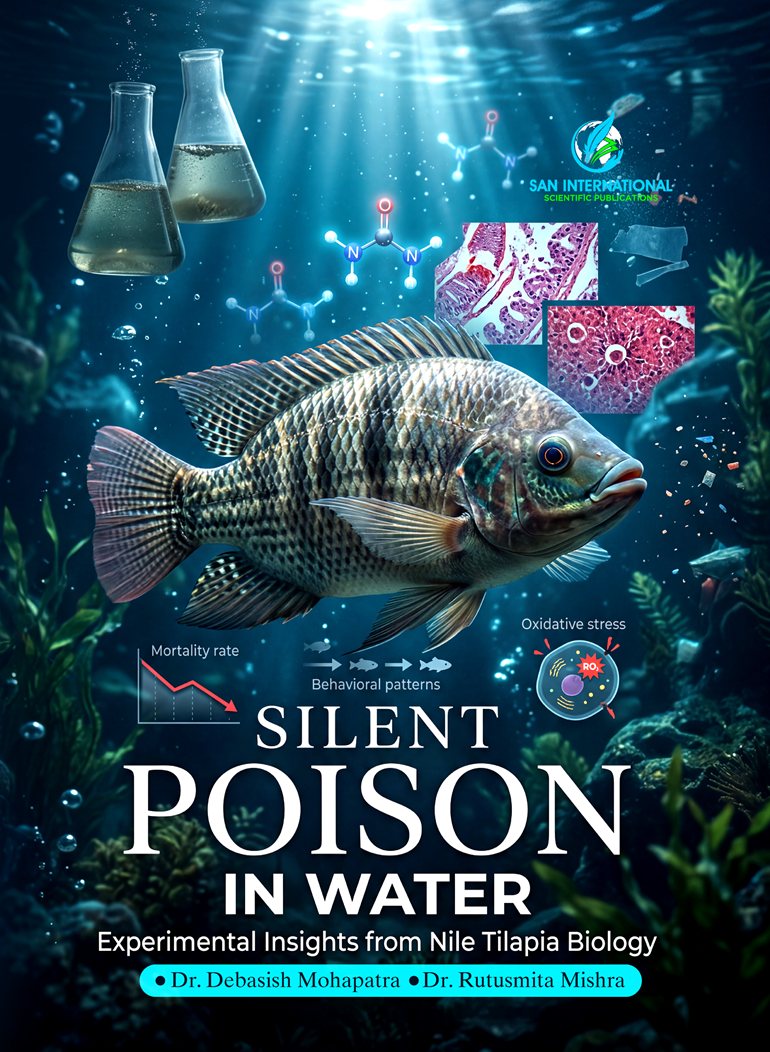
Silent Poison in Water: Experimental Insights from Nile Tilapia Biology
Authors: Dr. Debasish Mohapatra, & Dr. Rutusmita Mishra
ISBN: 978-81-69297-44-8
DOI: https://doi.org/10.59646/689
Date of Publication: May 20, 2026
Cite this book: Debasish M, & Rutusmita M, (2026), Silent Poison in Water: Experimental Insights from Nile Tilapia Biology, San International Scientific Publications, ISBN: 978-81-69297-44-8, DOI: https://doi.org/10.59646/689
Preface
Water is the foundation of life, yet it is increasingly burdened by pollutants that silently threaten aquatic ecosystems and human health alike. Among these pollutants, agricultural chemicals such as pesticides and nitrogen-based fertilizers have emerged as major environmental contaminants, entering freshwater systems through runoff, leaching, and improper disposal. Their toxic effects often remain unnoticed until severe ecological damage becomes evident. This hidden danger inspired the title of this book, Silent Poison in Water: Experimental Insights from Nile Tilapia Biology.
The present work is an attempt to understand the biological consequences of toxicant exposure in aquatic organisms, with special emphasis on the Nile tilapia, Oreochromis niloticus. Nile tilapia is one of the most widely cultured freshwater fish species in the world and serves as an excellent experimental model due to its ecological importance, adaptability, and sensitivity to environmental stressors. Through detailed experimental observations, this book explores how pesticides and urea-based compounds influence fish physiology, oxidative stress mechanisms, tissue architecture, blood parameters, and survival patterns. This book has been organized systematically to guide readers from the basic biological background of Nile tilapia to advanced experimental analyses of toxicant-induced damage. The initial chapters introduce the animal model, its taxonomy, morphology, habitat, and ecological relevance. Subsequent chapters focus on oxidative stress, reactive oxygen species, antioxidant defense systems, and the role of enzymes such as superoxide dismutase in combating cellular damage. Considerable attention has also been given to histological alterations caused by oxidative stress and environmental toxicants.
Further chapters discuss the broader impacts of pesticides on fish, including chromosomal aberrations, endocrine disruption, immune suppression, and biochemical toxicity. Particular emphasis is placed on pesticide compounds such as Folidol 600 and cypermethrin, along with the toxicological effects of urea exposure in Nile tilapia. Experimental methodologies employed for toxicity assessment, oxidative stress evaluation, histological examination, haematological analysis, and biochemical assays are described in detail to provide researchers and students with practical scientific approaches. The experimental findings presented in this book reveal that prolonged exposure to urea and pesticides can induce severe physiological stress, mortality, lipid peroxidation, tissue degeneration, and oxidative imbalance in Nile tilapia. These observations highlight the urgent need for responsible agricultural practices and effective environmental monitoring to safeguard aquatic biodiversity and water quality.
This book is intended for students, researchers, academicians, environmental scientists, toxicologists, fisheries biologists, and policy makers interested in aquatic toxicology and environmental health. It is hoped that the information compiled here will contribute to a deeper understanding of pollutant-induced toxicity and encourage future research toward sustainable ecosystem management.
I sincerely hope that this work will serve as a valuable scientific resource and inspire greater awareness regarding the silent yet devastating effects of chemical contaminants in aquatic environments.