Principles Without Pollution: The Foundations of Green Chemistry
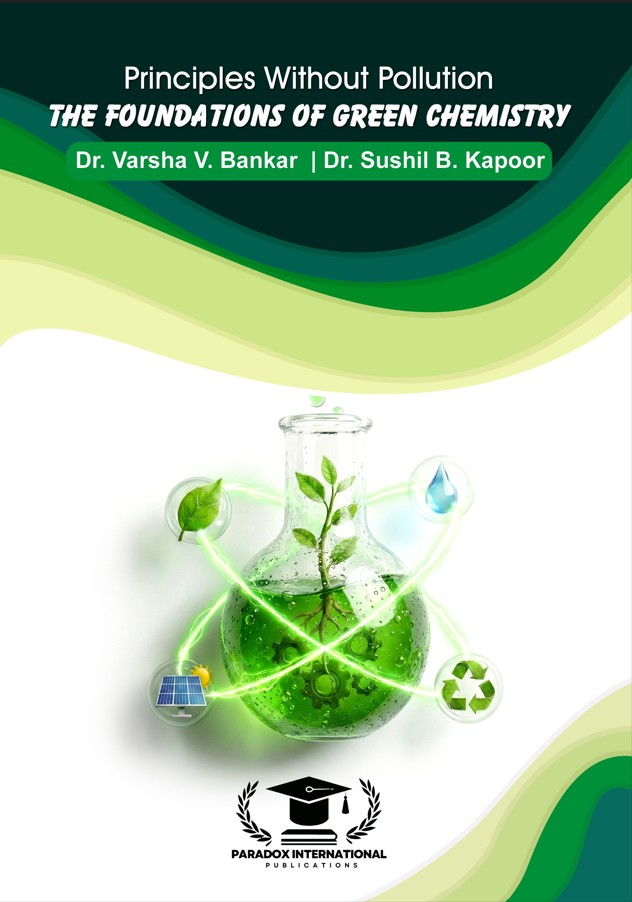
Principles Without Pollution: The Foundations of Green Chemistry
Authors: Dr. Varsha V. Bankar, and Dr. Sushil B. Kapoor
ISBN: 978-93-7183-279-3
DOI: https://doi.org/10.59646/564
Date of Publication: January 14, 2026
About the Book:
The dramatic challenges of the 21st century—climate change, environmental degradation, resource scarcity, and human health impacts from toxic chemicals—have compelled scientists, educators, and practitioners to rethink the role of chemistry in society. Traditional chemical practices have delivered remarkable benefits to human civilization, yet they have also contributed to significant ecological and health concerns. In response, the discipline of Green Chemistry has emerged not merely as a set of techniques or tools, but as a transformative philosophy that redefines how chemical products and processes are conceived, designed, and implemented.
Principles Without Pollution: The Foundations of Green Chemistry was conceived with a clear purpose: to provide a rigorous, accessible, and holistic introduction to the core tenets of green chemistry for students, educators, researchers, and industry professionals. This textbook articulates the foundational concepts of green chemistry, situating them within both scientific and ethical frameworks, and demonstrates how these principles can guide real-world problem solving in a manner that safeguards human health and the environment.
The structure of this book is organized around the twelve guiding principles of green chemistry, each explored in depth through conceptual discussion, practical examples, and case studies that reflect contemporary research and industrial innovation. Beginning with the imperative to prevent waste and extend through the design of safer chemicals and energy efficiency, these principles collectively form a robust foundation for sustainable chemical science and engineering. In writing this book, we have remained committed to several core values:
- Clarity and Accessibility: Complex ideas in chemistry and sustainability are presented in clear language supported by diagrams, worked examples, and student-centered activities. Wherever possible, we aim to bridge the gap between theory and practical application.
- Scientific Rigor: Each chapter draws on peer-reviewed literature and established research to ensure that discussions are grounded in current scientific knowledge. References and further reading materials are provided to encourage deeper exploration.
- Ethical and Environmental Awareness: Green chemistry is inherently linked to questions of ethics, equity, and environmental stewardship. Throughout the text, we emphasize the broader implications of chemical design for communities, ecosystems, and future generations.
- Interdisciplinary Integration: While rooted in chemistry, the subject intersects with engineering, materials science, policy, economics, and education. This book encourages readers to think beyond disciplinary boundaries in order to address complex sustainability challenges.
As educators and researchers, we recognize that the next generation of scientists will play a critical role in shaping a more sustainable future. It is our hope that this textbook not only equips readers with foundational knowledge, but also inspires innovation, responsibility, and a lifelong commitment to integrating sustainability into chemical practice.
We extend our gratitude to the many students, colleagues, and reviewers whose insights helped refine this work. We also acknowledge the broader community of green chemists whose pioneering research continues to expand the horizons of what chemistry can achieve without pollution.
May this book serve as a catalyst for learning, discovery, and meaningful change.