Political Ideologies: An Introduction
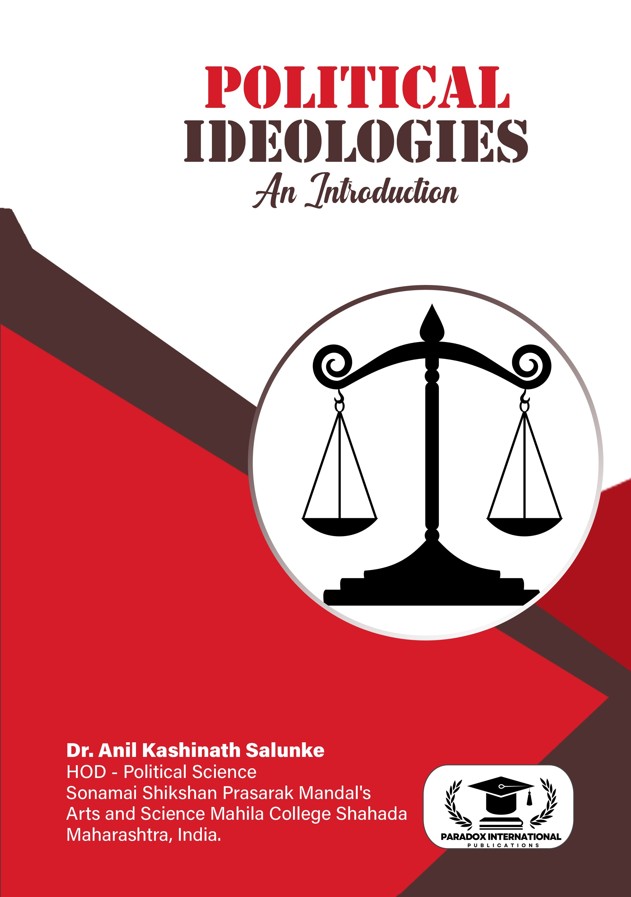
Political Ideologies: An Introduction
Author: Dr. Anil Kashinath Salunke
ISBN: 978-93-7183-764-4
DOI: https://doi.org/10.59646/pi/455
Date of Publication: September 12, 2025
About the Book:
Political ideologies shape the way societies understand power, authority, and justice. They provide the frameworks through which individuals interpret the world, define their identities, and imagine possible futures. From liberalism and conservatism to socialism, nationalism, feminism, and beyond, ideologies remain central to both academic inquiry and everyday political practice.
The purpose of Political Ideologies: An Introduction is to offer readers a clear and comprehensive guide to these systems of thought. Designed for students, educators, and anyone seeking to understand the ideas that influence political life, this textbook provides both historical context and contemporary perspectives. By examining the origins, core principles, internal debates, and practical applications of key ideologies, the book aims to equip readers with the critical tools necessary to analyze political discourse in an informed and balanced way.
This edition emphasizes accessibility without sacrificing depth. Each chapter introduces the historical evolution of an ideology, explains its central concepts, and highlights its influence on political institutions, policies, and movements worldwide. Case studies, comparative discussions, and reflective questions encourage readers to engage actively with the material and to consider the relevance of political ideologies in today’s complex and interconnected world.
The book has been guided by three central objectives:
- To present political ideologies as dynamic, contested, and evolving rather than fixed or monolithic.
- To highlight the global dimension of ideologies, showing how they adapt across different cultural and historical contexts.
- To foster critical thinking, enabling readers not only to understand ideologies but also to reflect on their implications for democracy, governance, and citizenship.
I am indebted to colleagues, students, and scholars whose insights have enriched this work, and to the many voices—both past and present—that continue to shape debates on political thought. My hope is that this book will not only serve as an academic resource but also as an invitation to ongoing dialogue, encouraging readers to question, compare, and explore the ideas that define our political world.