Plant Taxonomy, Ecology and Medicinal Botany
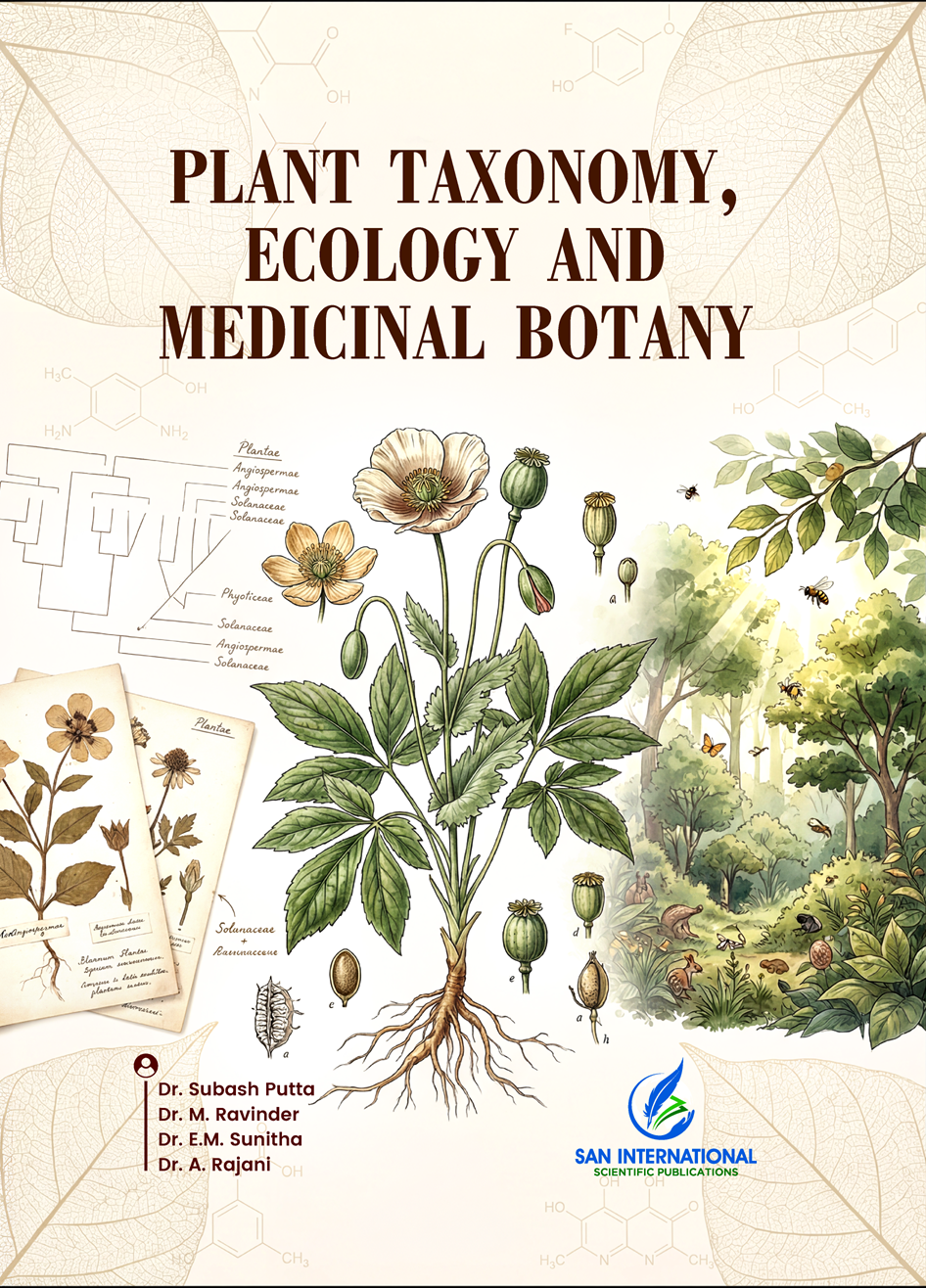
Plant Taxonomy, Ecology and Medicinal Botany
Authors: Dr. Subash Putta, Dr. M. Ravinder, Dr. E.M. Sunitha, and Dr. A. Rajani
ISBN: 978-81-69297-23-3
DOI: https://doi.org/10.59646/645
Date of Publication: March 31, 2026
Cite this book: Subash P, M. Ravinder, E.M. Sunitha, and A. Rajani, (2026), Plant Taxonomy, Ecology and Medicinal Botany, San International Scientific Publications, ISBN: 978-81-69297-23-3, DOI: https://doi.org/10.59646/645
Preface
This book, Plant Taxonomy, Ecology and Medicinal Botany, is designed to provide a comprehensive and integrated understanding of plant science by combining the foundational principles of taxonomy, the dynamic interactions of ecology, and the practical applications of medicinal botany. Beginning with an exploration of the history, principles, objectives, and modern developments in plant taxonomy and systematics, the text introduces learners to classical and contemporary classification systems, including those of Linnaeus, Bentham & Hooker, Engler & Prantl, and the Angiosperm Phylogeny Group, while also highlighting the importance of nomenclature, herbarium techniques, and botanical gardens in taxonomic research. The systematic study of economically important plant families offers students insight into plant diversity and their practical significance in human life. The ecological component emphasizes the structure and function of ecosystems, energy flow, food chains and webs, plant population dynamics, and vegetation analysis methods, along with plant adaptations and succession processes such as hydrosere and xerosere. The final section on medicinal botany bridges traditional knowledge and modern science by discussing the history, scope, and interdisciplinary nature of medicinal plant studies, including ethnomedicine and major traditional systems like Ayurveda, Siddha, Unani, and Homeopathy, alongside detailed accounts of commonly used medicinal plants, their morphology, active principles, and therapeutic uses. Altogether, this book aims to equip students with both theoretical knowledge and practical relevance, fostering a deeper appreciation of plant diversity, ecological balance, and the invaluable role of plants in healthcare and sustainable development.