Pharmacognosy of Medicinal Plants
Pharmacognosy of Medicinal Plants
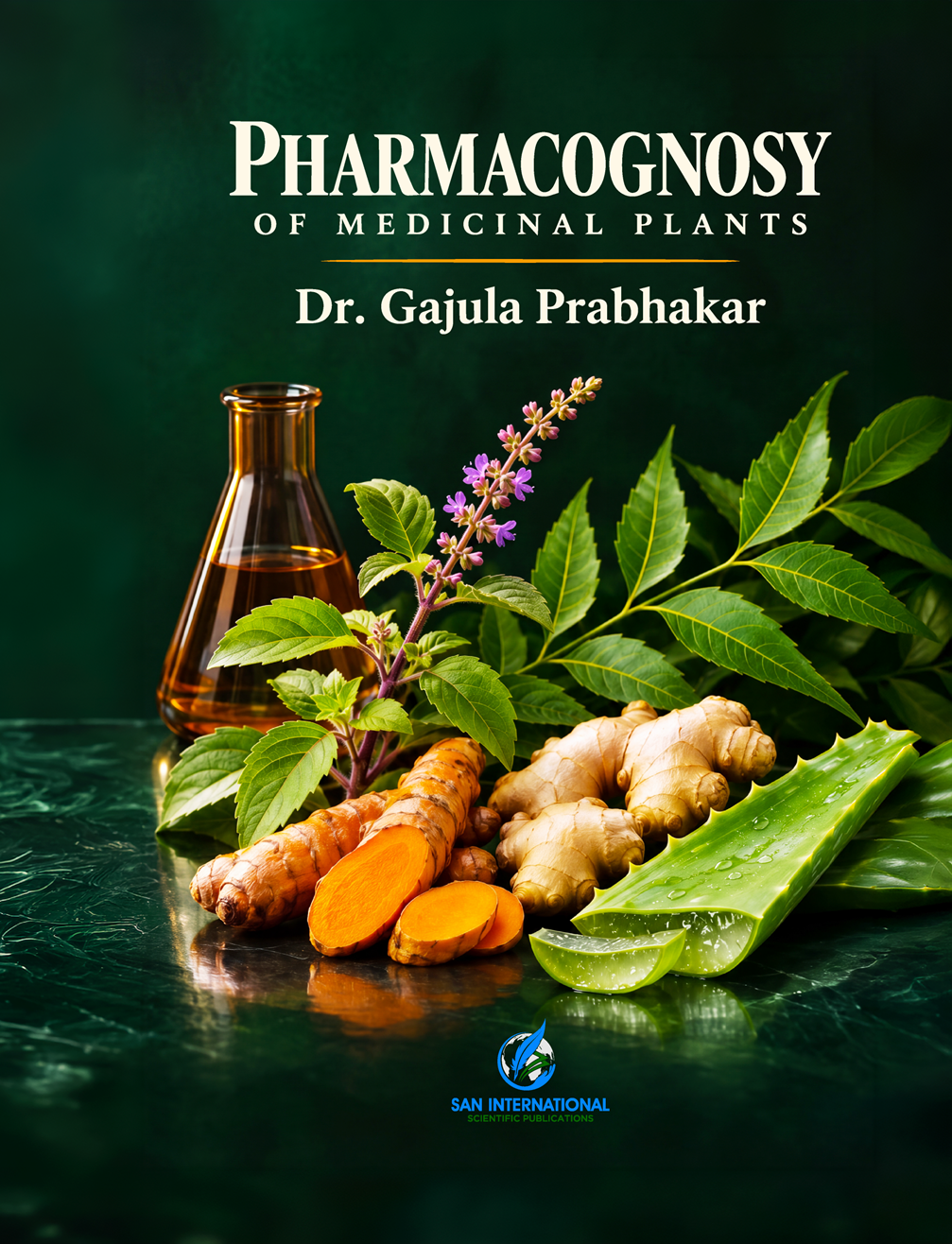
Author: Dr. Gajula Prabhakar
ISBN: 978-81-17787-40-3
DOI: https://doi.org/10.59646/897
Date of Publication: November 20, 2026
Preface
Pharmacognosy is an important branch of pharmaceutical science that focuses on the study of medicinal substances obtained from natural sources, particularly plants, and their chemical constituents, therapeutic properties, identification, evaluation, and applications. Medicinal plants have played a significant role in traditional healthcare systems and continue to serve as valuable sources of bioactive compounds for modern drug discovery and pharmaceutical development.
The first unit introduces the fundamental concepts of pharmacognosy, highlighting its scope, importance, classification of crude drugs, and the systematic procedures involved in the collection, preservation, and storage of raw medicinal materials. It also discusses commercially important crude drugs, their substitutes and adulterants, phytopharmaceuticals, herbal medicines, and the major challenges and opportunities associated with herbal drug development. The second unit explores the phytochemical aspects of medicinal plants, with particular emphasis on selected root, leaf, bark, seed, and flower drugs. Important medicinal species, including Asparagus racemosus, Boerhavia diffusa, Rauvolfia serpentina, Withania somnifera, Andrographis paniculata, Senna angustifolia, Centella asiatica, Terminalia arjuna, Cinnamomum zeylanicum, Cinchona officinalis, Piper longum, Crocus sativus, and Clitoria ternatea, are discussed in detail. The third unit focuses on analytical pharmacognosy and the application of modern analytical techniques in the identification, characterization, standardization, and quality assessment of medicinal plants. It covers important chromatographic methods, including thin-layer chromatography (TLC), high-performance thin-layer chromatography (HPTLC), high-performance liquid chromatography (HPLC), and gas chromatography (GC), along with spectroscopic techniques such as Fourier-transform infrared spectroscopy (FT-IR), nuclear magnetic resonance spectroscopy (NMR), and mass spectrometry (MS). The structure elucidation of menthol and kaempferol using UV, FT-IR, mass spectrometry, and proton and carbon NMR techniques provides practical insight into the characterization of natural bioactive compounds. The unit further examines quality-control parameters, standardization, quality assurance, adverse effects, herbal drug interactions, and AYUSH guidelines for safety monitoring.
This book integrates traditional knowledge of medicinal plants with contemporary pharmaceutical and analytical approaches, providing a scientific perspective on the identification, evaluation, and utilization of natural drugs. It is intended to serve as a useful academic resource for undergraduate and postgraduate students of pharmacy, pharmaceutical sciences, pharmacognosy, medicinal plant sciences, and related disciplines. It may also benefit research scholars, academicians, and professionals involved in natural product research, herbal medicine development, phytochemical investigations, and pharmaceutical quality control.