Perspectives on Teacher Education and Professional Development
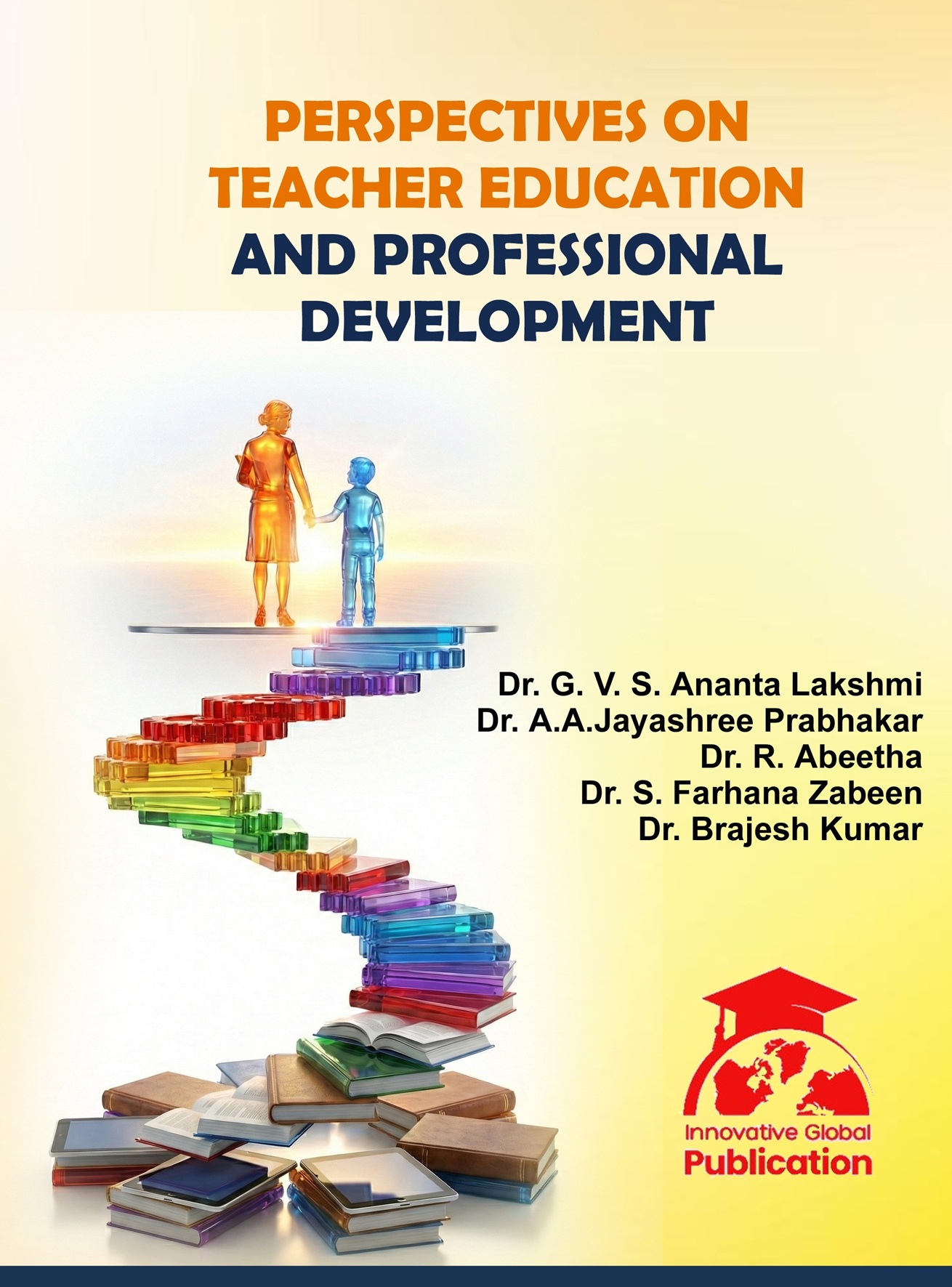
Perspectives on Teacher Education and Professional Development
Authors: Dr. G. V. S. Ananta Lakshmi, Dr. A.A. Jayashree Prabhakar, Dr. R. Abeetha, Dr. S. Farhana Zabeen, and Dr. Brajesh Kumar
ISBN: 978-81-999190-3-7
DOI: https://doi.org/10.59646/605
Date of Publication: February 20, 2026
Preface
Education systems across the world are continually reshaped by social change, technological advancement, policy reform, and evolving conceptions of knowledge. At the heart of these transformations stands the teacher. The preparation and continued professional growth of teachers therefore demand thoughtful inquiry, critical reflection, and sustained scholarly engagement. It is in this context that Perspectives on Teacher Education and Professional Development has been conceived.
As a collaborative effort of five scholars deeply engaged in teacher education, curriculum studies, educational psychology, and policy research, this volume seeks to present a comprehensive and integrated understanding of teacher education. Our collective experiences in teacher preparation programs, institutional leadership, research supervision, and policy engagement have shaped the vision of this book. We have aimed to provide not merely a descriptive account of teacher education, but a critical and reflective exploration of its philosophical foundations, psychological dimensions, institutional structures, and future directions.
The book is organized into eight carefully structured units that together map the intellectual and professional landscape of teacher education.
Unit I: Foundations of Teacher Education establishes the conceptual, philosophical, and sociological grounding of the discipline. By tracing the evolution of teacher education and examining major philosophical traditions—Idealism, Realism, Pragmatism, Naturalism, Existentialism, and Constructivism—we highlight how ideas about knowledge and reality shape curriculum and pedagogy. The sociological dimensions further position teachers as agents of social transformation, emphasizing equity, inclusion, diversity, and cultural responsiveness in contemporary contexts.
Unit II: Psychological Perspectives in Teacher Development explores learning theories, developmental psychology, and the formation of teacher identity. Understanding behaviorist, cognitivist, humanist, and socio-cultural frameworks enables teacher educators to design meaningful learning experiences. We also foreground the importance of motivation, self-efficacy, beliefs, and professional commitment, recognizing that teacher development is both an intellectual and deeply personal journey.
Unit III: Models and Approaches to Teacher Education presents traditional and contemporary frameworks, from apprenticeship models to inquiry-oriented and reflective practitioner approaches. Special attention is given to pre-service and in-service education, continuing professional development (CPD), mentoring, induction, and communities of practice. These models reflect the shift from transmission-oriented preparation to practice-based, collaborative, and research-informed professional learning.
Unit IV: Professional Development of Teachers conceptualizes professional growth as lifelong learning. The unit discusses professional standards, teacher leadership, autonomy, reflective practice, and action research. By presenting the teacher as researcher and collaborator within professional learning communities, we underscore the importance of collective knowledge-building and institutional culture in sustaining professional excellence.
Unit V: Teacher Education Curriculum and Pedagogy examines curriculum design principles, outcome-based approaches, and the integration of theory and practice. It explores experiential, problem-based, and inquiry-based pedagogies, along with micro-teaching, simulations, and authentic assessment strategies such as portfolios and reflective journals. This unit aims to bridge conceptual understanding with classroom realities.
Unit VI: Technology and Innovation in Teacher Education addresses the growing centrality of digital literacy, blended learning, open educational resources, artificial intelligence, and data-informed professional development. Rather than treating technology as an add-on, we position it as an integral dimension of contemporary teacher preparation and professional growth.
Unit VII: Policy, Governance, and Quality Assurance situates teacher education within national and international policy frameworks. It explores reforms, accreditation mechanisms, standards, and quality indicators that influence institutional practices. By engaging with policy perspectives and global best practices, we aim to equip readers with a critical understanding of governance structures shaping teacher education.
Unit VIII: Contemporary Issues and Future Directions examines pressing challenges, including teacher shortages, ethical responsibilities, accountability, well-being, and burnout. The discussions on inclusive and sustainable teacher education highlight universal design for learning, gender equity, and education for sustainable development. The final chapter reimagines teacher education in a rapidly changing world, inviting readers to envision innovative and resilient models for the future.
Throughout this book, we have attempted to integrate theory with practice, global discourse with local realities, and policy frameworks with classroom experience. While the text draws upon international scholarship, it also pays careful attention to the Indian context and other developing educational systems where teacher education is undergoing significant transformation.
This volume is intended for pre-service and in-service teachers, teacher educators, educational administrators, researchers, policy makers, and postgraduate students in education. We hope that it will serve both as a foundational text and as a stimulus for further research and dialogue. The preparation of this book has been enriched by discussions with colleagues, feedback from students, and insights gained from classroom and field experiences. We express our gratitude to the academic communities and institutions that have supported our work and inspired this collaborative effort.
Ultimately, teacher education is not merely about preparing individuals for classroom instruction; it is about nurturing reflective practitioners, ethical professionals, and transformative leaders. We offer this book as a contribution to that ongoing endeavor and invite readers to engage with its perspectives critically, reflectively, and constructively.