People Analytics 4.0: The Future of HRM with Artificial Intelligence
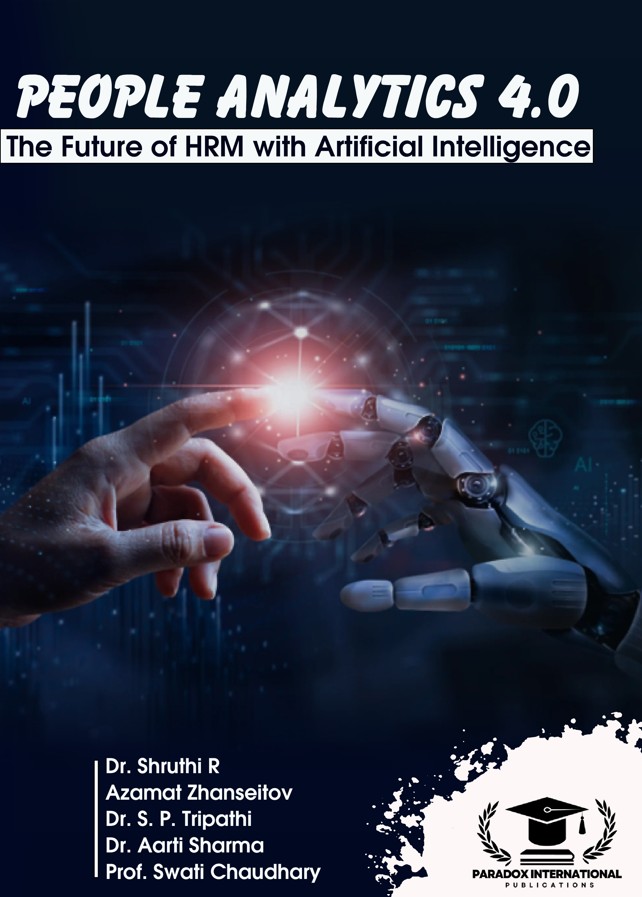
People Analytics 4.0: The Future of HRM with Artificial Intelligence
Authors: Dr. Shruthi R, Azamat Zhanseitov, Dr. S. P. Tripathi, Dr. Aarti Sharma and Swati Chaudhary
ISBN: 978-93-7183-811-5
DOI: https://doi.org/10.59646/480
Date of Publication: October 06, 2025
About the Book:
The field of Human Resource Management (HRM) is undergoing a profound transformation. As organizations embrace the Fourth Industrial Revolution, technology is no longer a supporting tool but a strategic driver of decision-making. Artificial Intelligence (AI), advanced analytics, and machine learning have ushered in a new era of People Analytics 4.0—one where data-driven insights redefine how talent is hired, developed, retained, and engaged. This book was conceived to bridge the gap between traditional HR practices and the emerging world of AI-powered workforce intelligence. While HRM has always been about people, the challenge today is managing complexity, scale, and speed in ways that were unimaginable only a decade ago. People Analytics 4.0 provides leaders, managers, and students with both conceptual foundations and practical tools to harness the power of data for human capital decisions. The text is structured to take the reader on a journey. It begins with the evolution of HR analytics, tracing how organizations moved from descriptive reporting (Analytics 1.0) to predictive and prescriptive intelligence (Analytics 3.0), culminating in the integrated, AI-enabled ecosystem of People Analytics 4.0. From there, it explores core applications such as recruitment and selection, performance management, employee engagement, learning and development, workforce planning, and diversity and inclusion. Special emphasis is given to the ethical, legal, and organizational challenges that accompany the use of AI in HR, highlighting the importance of transparency, fairness, and responsible innovation. Each chapter combines theoretical perspectives with real-world case studies, global examples, and practical frameworks. Readers will find not only insights into advanced analytical techniques but also guidance on building a culture of evidence-based HR. The book draws on interdisciplinary research—from organizational behaviour, data science, economics, and psychology—to provide a holistic perspective on the future of work. The intended audience includes students of HRM and organizational studies, HR professionals seeking to upgrade their skills, data scientists interested in human capital applications, and leaders aiming to shape a more agile and intelligent workforce strategy. It is our hope that this textbook will inspire readers to view people analytics not merely as a technical tool but as a transformational philosophy—one that balances efficiency with empathy, and precision with purpose. By embracing People Analytics 4.0, organizations can unlock the full potential of their workforce while fostering workplaces that are more inclusive, adaptive, and human-centric.