Nourished by Nature to Prevent Nutritional Disorders – The Traditional Special Foods of Tamil Nadu: A Siddha Outlook
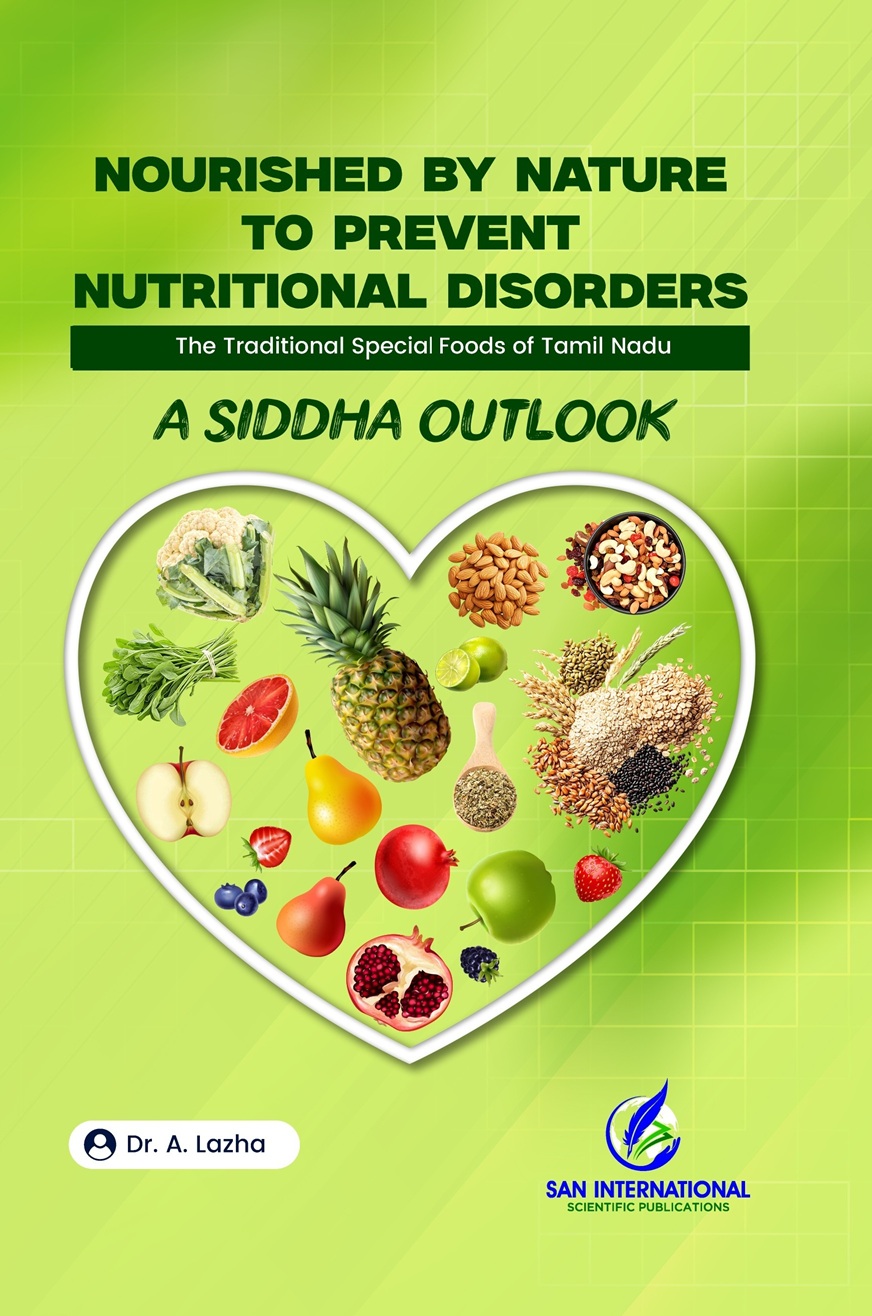
Nourished by Nature to Prevent Nutritional Disorders – The Traditional Special Foods of Tamil Nadu: A Siddha Outlook
Author: Dr. A. Lazha
ISBN: 978-81-999190-4-4
DOI: https://doi.org/10.59646/507
Date of Publication: February 16, 2026
Preface
Nourished by Nature to Prevent Nutritional Disorders – The Traditional Special Foods of Tamil Nadu: A Siddha Outlook is conceived as a comprehensive tribute to the time-tested food wisdom of Tamil Nadu—a land where agriculture, medicine, spirituality, and daily living have long been interwoven into a unified philosophy of nourishment. In this cultural landscape, food has never been regarded as a mere combination of nutrients; it has been understood as marunthu (medicine), as ritual offering, as seasonal adaptation, and as a foundation for physical strength, mental clarity, and spiritual balance. Guided primarily by the principles of Siddha medicine—one of India’s oldest codified healing traditions—this volume examines how dietary practices were designed to harmonize the three fundamental humors (Vali, Azhal, and Iyyam), maintain digestive fire, cleanse toxins, and prevent disease before its manifestation. Complemented by the insights of Ayurveda and enriched by Tamil folk healing knowledge passed through generations of households and village healers, the region’s culinary practices reveal an advanced preventive healthcare system embedded within everyday meals. Historically, Tamil dietary culture evolved alongside dynastic, ecological, and social transformations. The agrarian simplicity and millet-centered sustenance of the Sangam Age laid the foundation for region-specific eating patterns aligned with landscapes such as Kurinji, Mullai, Marutham, Neithal, and Palai. Agricultural expansion and irrigation innovations under the Chola dynasty and Pandya dynasty diversified grains, pulses, and spices, strengthening food security and trade. Culinary refinement during the Vijayanagar Empire introduced temple cuisines and royal elaborations, while colonial encounters reshaped ingredients and cooking techniques without erasing indigenous knowledge. Across centuries, however, the essential Tamil philosophy remained constant: food must be seasonal, locally sourced, appropriately combined, and mindful of individual constitution.
This book is structured to reflect that holistic continuum. It begins by situating Tamil Nadu’s food heritage within global and local discussions of “superfoods,” demonstrating that many internationally celebrated health foods have long existed in Tamil households in the form of millets, fermented batters, native greens, cold-pressed oils, and traditional sweeteners. It traces the scientific logic of seasonal eating, circadian meal rhythms, festive symbolism, and community-based food sharing practices that sustained both social cohesion and metabolic balance. The narrative then moves to the revival of ancient grains and climate-resilient millets, exploring their macronutrient density, micronutrient richness, phytochemical potential, and role in glycemic regulation—particularly in combating modern epidemics such as type 2 diabetes and obesity.
Further chapters examine life-cycle nutrition—from infancy to old age—demonstrating how traditional Tamil meal plans addressed growth, reproductive health, bone integrity, cognitive resilience, and longevity. Therapeutic dietary adaptations for chronic conditions such as hypertension, renal disorders, liver ailments, and digestive imbalances are contextualized within Siddha dietary frameworks and correlated with contemporary nutritional science. Detailed explorations of fermentation, stone grinding, earthenware cooking, and indigenous preservation techniques reveal how culinary methods themselves enhanced bioavailability, gut microbiota diversity, and nutrient retention. Forgotten foods—such as minor millets, native rice varieties, medicinal greens, forest fruits, and palm-based sweeteners—are reintroduced not as relics of the past but as functional foods capable of addressing micronutrient deficiencies and metabolic stress in the present era.
Equally significant is the book’s focus on sustainability and food sovereignty. It highlights indigenous farming systems, seed conservation movements, rain-fed agriculture, agroforestry traditions of the Western Ghats, women-led rural enterprises, and emerging millet entrepreneurship. By bridging heritage knowledge with modern data tools, clinical dietetics, food policy, and digital documentation, this work envisions a model in which traditional food systems are not marginalized by globalization but revitalized through innovation, research, and responsible commercialization. At its heart, this volume argues that the prevention of nutritional disorders does not require imported solutions; rather, it calls for rediscovering and recontextualizing the wisdom already embedded within Tamil kitchens, farms, temples, and communities. The integration of traditional dietary frameworks with contemporary biomedical understanding offers a powerful, culturally resonant pathway toward metabolic health, ecological resilience, and intergenerational well-being. This preface thus invites scholars, healthcare practitioners, nutritionists, policymakers, entrepreneurs, and families to engage with Tamil Nadu’s culinary heritage not merely as a cultural archive, but as a living, evidence-aligned blueprint for preventive nutrition and sustainable health—where culture, science, and nature unite on every plate.