Next-Generation Human Resource Management: Workforce Analytics, Leadership, and Learning
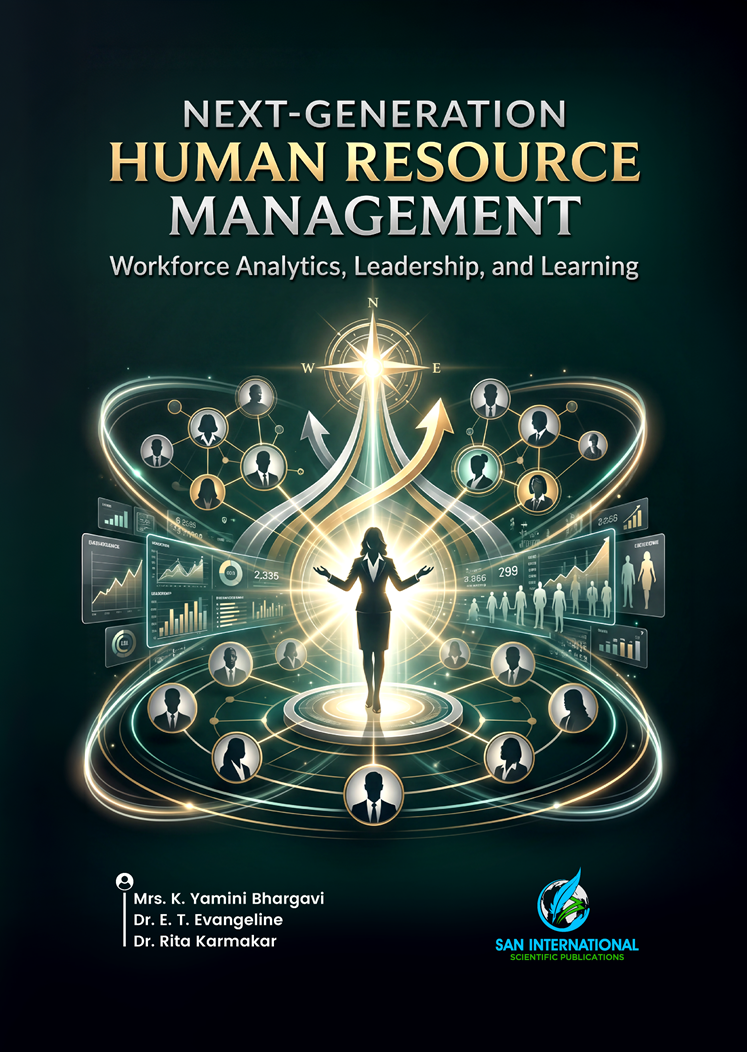
Next-Generation Human Resource Management: Workforce Analytics, Leadership, and Learning
Authors: Mrs. K. Yamini Bhargavi, Dr. E.T. Evangeline, and Dr. Rita Karmakar
ISBN: 978-81-69297-89-9
DOI: https://doi.org/10.59646/742
Date of Publication: June 26, 2026
Cite this book: KY Bhargavi, ET Evangeline, and R Karmakar, Next-Generation Human Resource Management: Workforce Analytics, Leadership, and Learning, San International Scientific Publications, ISBN: 978-81-69297-89-9, DOI: https://doi.org/10.59646/742
Preface
Human Resource Management (HRM) has evolved from a traditional administrative function into a strategic organizational capability that shapes business sustainability, innovation, and competitive advantage. In today’s rapidly transforming global economy, organizations operate in an environment characterized by digital disruption, workforce diversity, remote and hybrid work models, artificial intelligence, automation, and data-driven decision-making. These developments have fundamentally redefined how organizations attract, develop, engage, and retain talent. Human resources are no longer viewed merely as organizational assets; they are recognized as the primary drivers of innovation, organizational resilience, and long-term business success. Consequently, modern HR professionals are expected to combine strategic thinking with technological expertise, analytical capabilities, and people-centered leadership to build agile and future-ready organizations. This book has been carefully designed to address these emerging demands by providing a comprehensive understanding of next-generation human resource management practices.
Next-Generation Human Resource Management: Workforce Analytics, Leadership, and Learning presents an integrated perspective that combines the principles of strategic HRM with the latest developments in workforce analytics, digital transformation, leadership excellence, organizational behavior, diversity management, talent development, and lifelong learning. Rather than treating these topics as isolated domains, the book demonstrates how they collectively contribute to organizational effectiveness in an increasingly interconnected and technology-driven world. The content emphasizes the transition from intuition-based HR decisions toward evidence-based workforce management powered by analytics, artificial intelligence, cloud technologies, and predictive modeling while maintaining a strong focus on employee well-being, organizational culture, and ethical leadership.
The book begins by exploring the future of work, examining evolving organizational structures, hybrid workplaces, digital collaboration platforms, workforce agility, and organizational resilience. It discusses how businesses are redesigning work environments to accommodate flexibility, productivity, and employee-centered practices while preparing for emerging employment models. The subsequent chapters investigate leadership, emotional intelligence, and organizational behavior, highlighting how effective leaders foster collaboration, psychological safety, conflict resolution, diversity, and high-performance organizational cultures. Particular emphasis is placed on emotional intelligence as a critical competency for modern leaders managing complex and multicultural workforces. Talent management occupies a central position in contemporary organizations, and this book provides an in-depth examination of strategic workforce planning, succession management, employee engagement, motivation, performance management, career development, rewards, recognition systems, and workforce analytics. Readers are introduced to advanced HR metrics, key performance indicators, and predictive analytical techniques that enable organizations to identify high-potential employees, forecast workforce requirements, reduce turnover, and optimize organizational performance. These concepts are presented with a practical orientation that bridges academic theory and managerial application.
Recognizing that organizations increasingly operate across geographical, cultural, and generational boundaries, the book further explores diversity, equity, inclusion, global workforce management, cross-cultural leadership, international HRM, expatriate management, and cultural intelligence. These topics prepare readers to understand the complexities of managing globally distributed workforces while promoting inclusive organizational cultures that encourage innovation, collaboration, and employee engagement. The discussions demonstrate how diversity serves not only as a social responsibility but also as a strategic advantage for organizational growth and sustainable business development.
Digital transformation represents one of the defining characteristics of modern HRM, and this volume provides extensive coverage of Human Resource Information Systems (HRIS), cloud-based HR platforms, artificial intelligence in recruitment, HR automation, employee self-service systems, workforce analytics, predictive HR models, and digital decision-support systems. The integration of data science with human resource management enables organizations to make informed strategic decisions, improve operational efficiency, and create personalized employee experiences. Alongside technological advancements, the book also addresses ethical considerations, legal compliance, employee privacy, and responsible governance of workforce data, ensuring a balanced understanding of innovation and accountability.
The final section focuses on the future of learning, organizational development, and the rapidly expanding gig economy. It examines freelance and platform-based employment models, workforce ecosystems, organizational change management, digital learning platforms, knowledge management, competency development, reskilling, and upskilling initiatives essential for sustaining organizational competitiveness in an era of continuous technological change. By emphasizing continuous learning and adaptability, the book illustrates how organizations can cultivate resilient workforces capable of responding effectively to evolving market demands and emerging technologies.
Designed for undergraduate and postgraduate students, management scholars, HR professionals, corporate executives, trainers, consultants, researchers, and policymakers, this book combines conceptual clarity with contemporary industry practices. Each chapter systematically presents foundational concepts, emerging trends, practical applications, and strategic perspectives that support both academic learning and professional development. The interdisciplinary approach adopted throughout the text reflects the increasingly integrated nature of human resource management in the digital economy.
It is our sincere hope that Next-Generation Human Resource Management: Workforce Analytics, Leadership, and Learning will serve as a valuable academic resource and practical guide for understanding the future of human capital management. By integrating leadership excellence, workforce intelligence, digital innovation, organizational learning, and human-centered management practices, this book seeks to inspire readers to build resilient, inclusive, technology-enabled, and high-performing organizations capable of thriving in an increasingly dynamic global business environment.