
Multidisciplinary Research in the Age of Artificial Intelligence
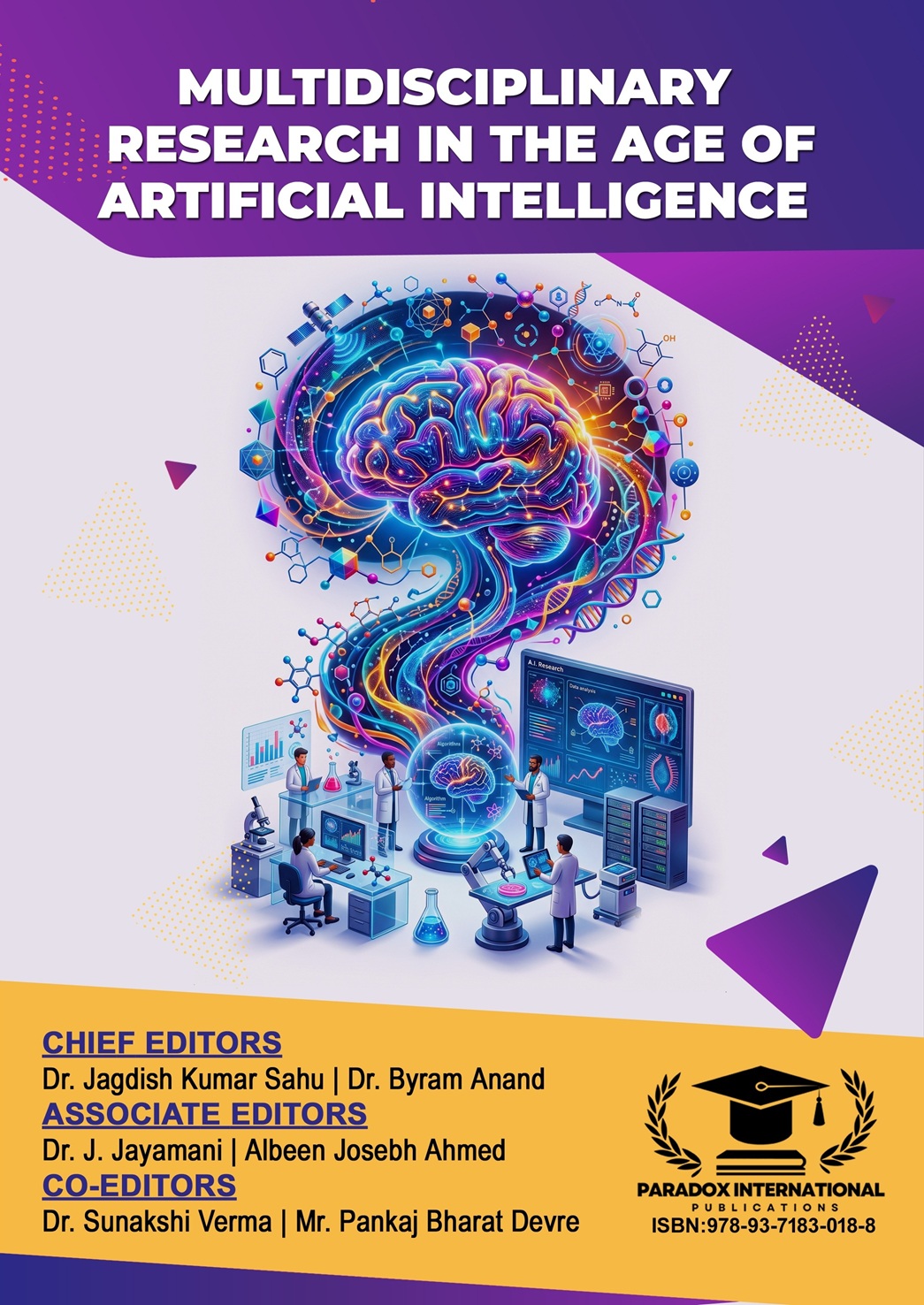
Multidisciplinary Research in the Age of Artificial Intelligence
Chief Editors: Dr. Jagdish Kumar Sahu, and Dr. Byram Anand
Associate Editors: Dr. J. Jayamani, and Albeen Josebh Ahmed
Co-Editors: Dr. Sunakshi Verma, and Mr. Pankaj Bharat Devre
ISBN: 978-93-7183-018-8
DOI: https://doi.org/10.59646/781
Date of Publication: July 31, 2026
Cite this book: Jagdish KS, Byram A, Jayamani J, Albeen JA, Sunakshi V, and Pankaj BD, (2026), Multidisciplinary Research in the Age of Artificial Intelligence, Paradox International Publications & San International Scientific Publications, ISBN: 978-93-7183-018-8, DOI: https://doi.org/10.59646/781
Chapters and Authors
Chapter 7: Behavioral Economics and Consumer Decision-Making Patterns – Dr. Jagdish Kumar Sahu
Chapter 15: Role of Indigenous Knowledge in Biodiversity Conservation – Dr. Vilas D. Doifode
Chapter 16: Innovation and Entrepreneurship in the Digital Economy – Harini. I
Chapter 18: Identifying Agile Managerial Competencies Expected by Employers – M. Swetha
Chapter 19: Green Business Models for Sustainable Development – Ms. M. S. Reethiswari
Chapter 27: Generative Artificial Intelligence in Novel Drug Design – Syeda Nishat Fathima
Preface
The rapid advancement of artificial intelligence (AI) has ushered humanity into a transformative era in which knowledge creation, technological innovation, and interdisciplinary collaboration are reshaping every aspect of society. The boundaries that once separated traditional academic disciplines are becoming increasingly interconnected, giving rise to multidisciplinary research that integrates diverse perspectives, methodologies, and technologies to address complex global challenges.
The book “Multidisciplinary Research in the Age of Artificial Intelligence” is a reflection of this intellectual transformation, presenting a comprehensive collection of scholarly contributions that demonstrate how AI and emerging digital technologies are influencing research, professional practice, policy formulation, and human life across numerous domains. This volume brings together researchers, academicians, and practitioners whose work exemplifies the power of multidisciplinary inquiry in generating innovative solutions for the contemporary world.
The chapters presented in this book encompass a remarkable diversity of themes, ranging from pharmacological investigations of medicinal plants and AI-driven financial systems to sociolinguistics, psychology, banking, management, education, cloud computing, cybersecurity, agriculture, literature, tourism, entrepreneurship, sustainability, and healthcare. Such diversity highlights the growing realization that the challenges of the twenty-first century cannot be solved within the boundaries of a single discipline. Instead, meaningful progress requires the integration of scientific knowledge, technological innovation, social understanding, economic insights, and ethical considerations. Artificial intelligence serves as a common thread throughout many of these studies, acting not merely as a technological tool but as a transformative force that enhances decision-making, predictive analytics, automation, personalized services, intelligent learning, and data-driven research across multiple sectors.
Several chapters explore the revolutionary role of AI in finance, education, cloud security, language learning, and drug discovery, illustrating how intelligent algorithms are redefining traditional practices while introducing new opportunities and challenges. Other contributions examine critical issues related to human behavior, including decision fatigue, emotional intelligence, groupthink in digital communities, consumer behavior, employee engagement in remote work environments, and the algorithmic influence of social media. These investigations remind readers that technological advancement must always be understood alongside its psychological, social, and cultural implications. Equally important are the chapters devoted to sustainable agriculture, biodiversity conservation, green business models, cultural heritage, tourism, entrepreneurship, and women’s empowerment, emphasizing that technological progress must ultimately contribute to inclusive, sustainable, and socially responsible development.
A distinguishing feature of this volume is its balanced integration of theoretical perspectives, conceptual analyses, empirical investigations, and application-oriented research. Readers will encounter discussions on emerging paradigms such as edge intelligence, hybrid neural-rule systems, alternate credit scoring, adaptive anomaly detection, digital banking transformation, and generative AI in pharmaceutical innovation, alongside studies that preserve indigenous knowledge, literary analysis, and cultural identity.
This book is intended to serve a wide audience, including researchers, faculty members, postgraduate and doctoral scholars, policymakers, industry professionals, technology developers, financial analysts, healthcare researchers, management practitioners, and students seeking to understand the evolving relationship between artificial intelligence and multidisciplinary research. The diverse collection of chapters provides valuable theoretical foundations, practical insights, research methodologies, and future research directions that will inspire further scholarly exploration and collaborative innovation.
The editors express their sincere appreciation to all the authors for their valuable contributions, scholarly commitment, and dedication to advancing knowledge through multidisciplinary research. Their expertise and diverse perspectives have made this volume a rich academic resource that reflects the dynamic landscape of contemporary research. Gratitude is also extended to the reviewers, editorial team, and publishing professionals whose meticulous efforts have ensured the quality and integrity of this publication.
It is our hope that “Multidisciplinary Research in the Age of Artificial Intelligence” will become a meaningful reference for researchers and practitioners across disciplines, encouraging interdisciplinary collaboration, critical thinking, responsible innovation, and lifelong learning. As artificial intelligence continues to redefine the future of science, technology, society, and human interaction, this book stands as a testament to the importance of integrating knowledge across disciplines to build intelligent, sustainable, and inclusive solutions for generations to come.