Molecular Diagnostics and Genomic Medicine: Transforming Healthcare with AI
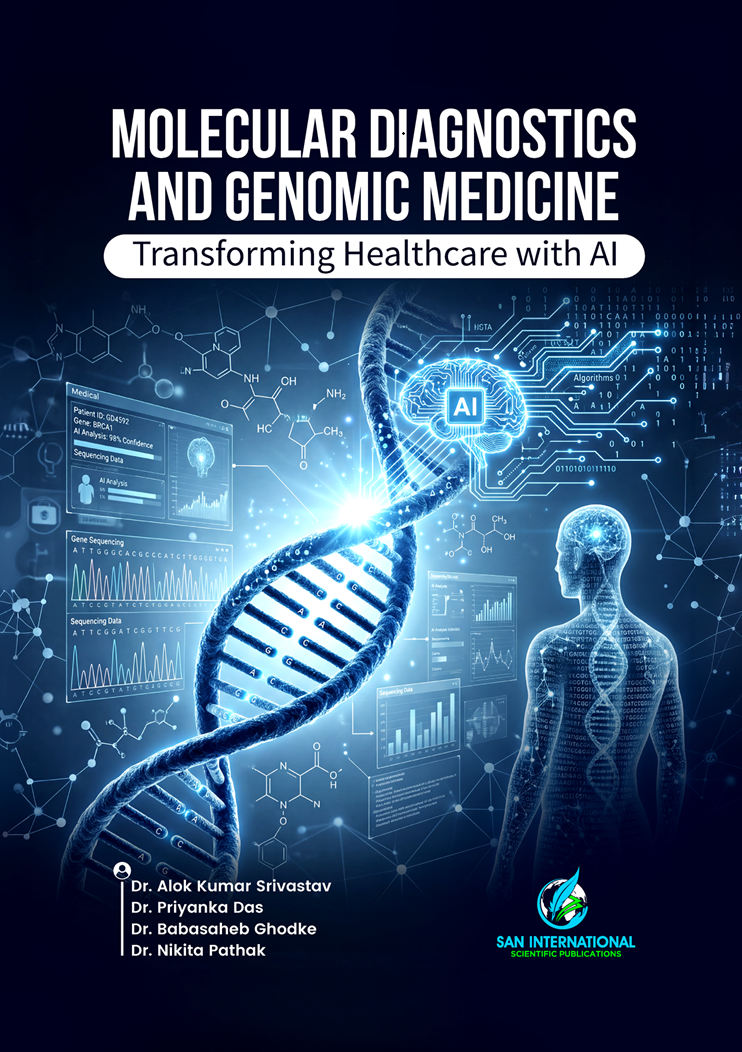
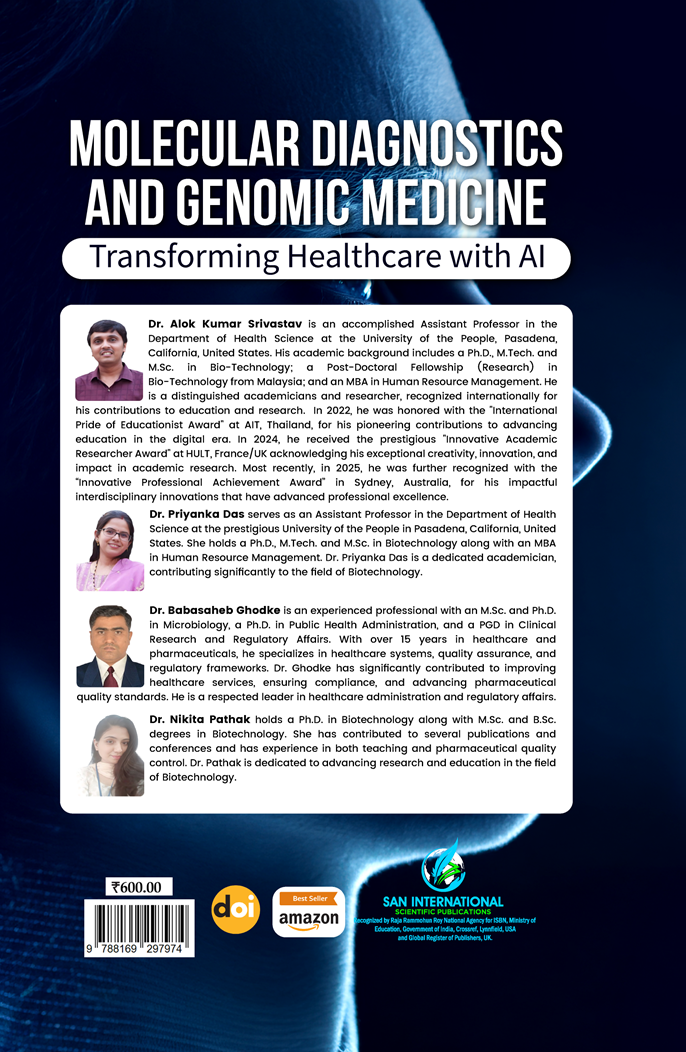
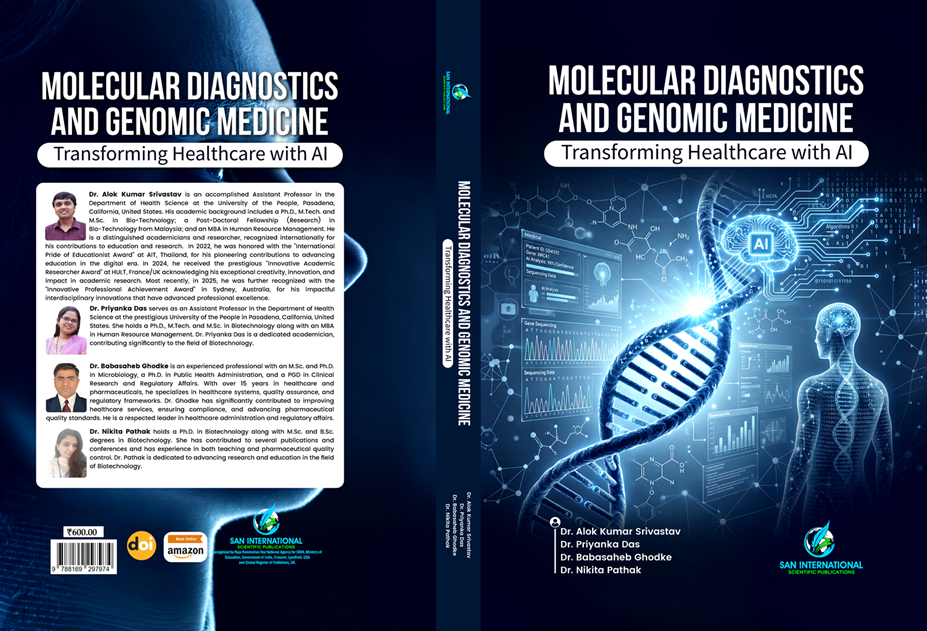
Molecular Diagnostics and Genomic Medicine: Transforming Healthcare with AI
Editors: Dr. Alok Kumar Srivastav, Dr. Priyanka Das, Dr. Babasaheb Ghodke, and Dr. Nikita Pathak
ISBN: 978-81-69297-97-4
DOI: https://doi.org/10.59646/978-81-69297-97-4
Date of Publication: April 10, 2026
Cite this book: Alok KS, Priyanka D, Babasaheb G, and Nikita P, (2026), Molecular Diagnostics and Genomic Medicine: Transforming Healthcare with AI, San International Scientific Publications, ISBN: 978-81-69297-97-4, DOI: https://doi.org/10.59646/978-81-69297-97-4
Preface
The discipline of Molecular Diagnostics and Genomic Medicine has emerged as a pivotal force in shaping contemporary healthcare, redefining the ways in which diseases are understood, identified, and managed. Through the integration of molecular biology, biochemistry, computational sciences, and advanced technologies, diagnostic science has evolved into a critical component of clinical decision-making. It now enables early disease detection, supports individualized treatment strategies, and allows precise monitoring of therapeutic outcomes.
Molecular Diagnostics and Genomic Medicine: Transforming Healthcare with AI has been carefully developed as a comprehensive and authoritative resource for learners, researchers, clinicians, and laboratory professionals engaged in this rapidly advancing field. The book adopts an integrated approach that combines essential theoretical foundations with recent technological developments, offering clarity into both the biological mechanisms and diagnostic innovations that define modern molecular medicine.
The text begins by establishing a strong foundation in genome biology, focusing on the structure and function of DNA, RNA, and proteins, along with chromosomal organization and genetic variability that influence disease susceptibility and drug response. Building on this groundwork, it introduces a wide array of genomic analysis techniques, ranging from conventional PCR-based methods to advanced high-throughput sequencing technologies, microarray systems, and bioinformatics tools that facilitate accurate data interpretation.
Subsequent sections explore the expanding field of diagnostic metabolomics, emphasizing the identification of metabolic patterns in biological samples that serve as indicators of disease states. The book also addresses microbial diagnostics, highlighting molecular approaches for detecting pathogens, particularly those that are difficult to culture or exhibit antimicrobial resistance.
Recognizing the importance of hereditary conditions, dedicated chapters focus on the molecular diagnosis of genetic disorders, including Fragile X syndrome and von Hippel–Lindau disease, and discuss their implications for patient care and genetic counseling. The domain of molecular oncology is presented with emphasis on genetic alterations in cancer, predictive biomarkers, and the development of targeted therapeutic strategies.
In addition to nucleic acid–based diagnostics, the text provides detailed insight into enzyme immunoassays and immunodiagnostic techniques, underscoring their significance in clinical microbiology and immunology. The importance of maintaining high standards in laboratory practice is addressed through comprehensive coverage of quality assurance, regulatory compliance, and validation processes essential for reliable diagnostic outcomes.
A distinctive aspect of this book is its focus on the growing role of artificial intelligence in molecular diagnostics. It examines how AI and machine learning contribute to genomic analysis, disease prediction, and laboratory workflow optimization, while also addressing associated ethical and regulatory considerations.
Each chapter has been structured to ensure a logical progression of concepts, supported by scientific rigor, practical applications, and clinical relevance. Care has been taken to present the material in a clear and accessible manner, making the text suitable for both newcomers to the field and experienced professionals seeking to enhance their knowledge.
In the era of precision medicine, this book aims to serve as both a foundational guide and a forward-looking resource, equipping readers with the understanding and skills necessary to navigate and contribute to the evolving landscape of molecular diagnostics and genomic medicine.
Chapters and Authors