
Modern Kabaddi: Skills, Strategies and Training
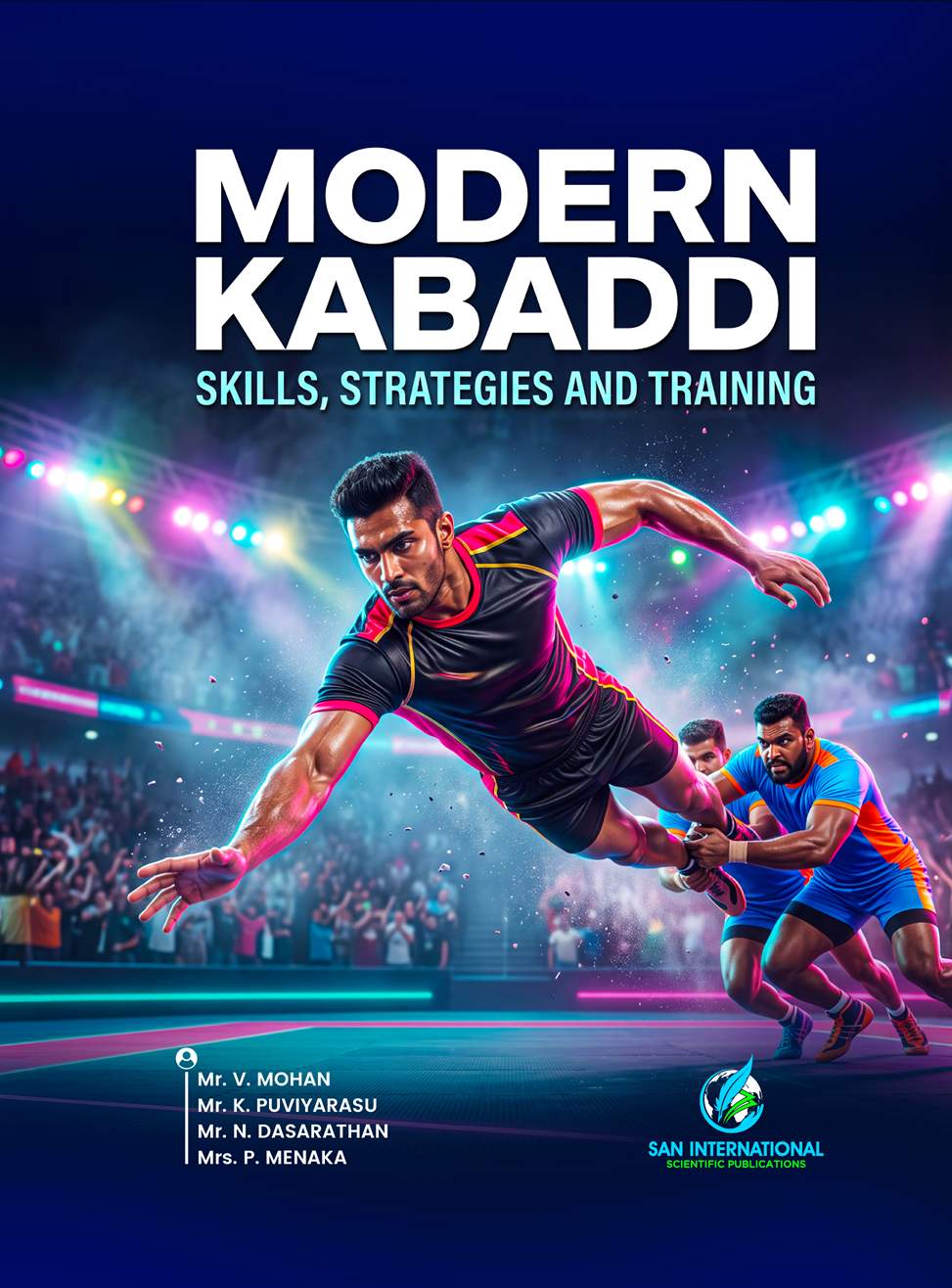
Modern Kabaddi: Skills, Strategies and Training
Authors: Mr. V. Mohan, Mr. K. Puviyarasu, Mr. N. Dasarathan, and Mrs. P. Menaka
ISBN: 978-81-69857-41-3
DOI: https://doi.org/10.59646/789
Date of Publication: August 07, 2026
Cite this book: V. Mohan, Mr. K. Puviyarasu, N. Dasarathan, and P. Menaka, (2026), Modern Kabaddi: Skills, Strategies and Training, San International Scientific Publications, ISBN: 978-81-69857-41-3, DOI: https://doi.org/10.59646/789
Preface
Kabaddi has evolved from a traditional indigenous sport into one of the fastest-growing professional games in the world. With the emergence of organized leagues, international championships, advanced coaching methodologies, and technology-driven performance analysis, the game has undergone a remarkable transformation. Modern Kabaddi demands not only exceptional physical fitness and technical proficiency but also tactical intelligence, psychological resilience, scientific training, and data-informed decision-making. This book, Modern Kabaddi: Skills, Strategies and Training, has been developed to provide a comprehensive and contemporary understanding of the sport by integrating traditional playing principles with modern sports science, performance analytics, and professional coaching practices.
The content of this book has been carefully organized into seven comprehensive units that systematically guide readers from the fundamental concepts of Kabaddi to advanced professional applications. The opening unit introduces the foundations of the game, including its history, rules, court specifications, player roles, scoring systems, match management, and the growth of the Pro Kabaddi League along with global competitions. This establishes a strong conceptual framework for understanding the technical and competitive structure of modern Kabaddi.
The second unit focuses on the development of essential technical skills required for high-level performance. Detailed explanations of raiding mechanics, defensive positioning, tackling techniques, movement patterns, body control, agility development, and technical error correction provide practical guidance for mastering the fundamental competencies required in competitive play. These techniques are supported by structured training principles that enable players to improve efficiency, precision, and consistency.
Building upon technical mastery, the third unit explores tactical systems and strategic decision-making. Offensive planning, coordinated defensive formations, raid management, super raid and super tackle strategies, situational awareness, opponent analysis, and leadership communication are presented to help players and coaches understand the complexities of match execution. Emphasis is placed on developing game intelligence and making effective decisions under high-pressure competitive situations.
Recognizing the increasing importance of sports science in elite performance, the fourth unit presents evidence-based approaches to physical conditioning. Functional anatomy, biomechanics, strength development, aerobic and anaerobic conditioning, flexibility, nutrition, hydration, recovery, fatigue management, and injury prevention are discussed in detail to support long-term athletic excellence while reducing the risk of injury.
The fifth unit introduces the rapidly expanding role of technology in modern sports. Readers are exposed to video-based performance analysis, wearable monitoring systems, GPS tracking, motion analysis, artificial intelligence-assisted coaching, tactical analytics, digital coaching platforms, and sports data analytics for talent identification. These technologies are transforming the manner in which athletes are evaluated, trained, and prepared for competition, making them indispensable components of contemporary Kabaddi coaching.
Elite performance extends beyond physical preparation; therefore, the sixth unit examines the psychological dimensions of success. Topics such as sports psychology, mental toughness, concentration, emotional intelligence, leadership, communication, conflict management, stress management, and long-term athlete development are presented to cultivate mentally resilient and emotionally balanced athletes capable of sustaining peak performance throughout their sporting careers.
The final unit explores the professional ecosystem of Kabaddi and its future trajectory. High-performance coaching systems, tournament management, athlete branding, sports entrepreneurship, academy development, sustainable sports management, virtual and augmented reality training, artificial intelligence-based coaching, smart stadium technologies, and the global expansion of professional Kabaddi demonstrate how innovation is reshaping the sport. These emerging trends prepare readers to understand the future landscape of competitive Kabaddi and the opportunities available within the sports industry.
Throughout the book, emphasis has been placed on integrating practical training methodologies with scientific knowledge, enabling readers to connect theory with real-world performance. The content reflects current developments in coaching science, athlete monitoring, biomechanics, sports analytics, and professional sports management while maintaining the fundamental values and spirit of Kabaddi. Numerous concepts are presented in a structured and learner-friendly manner to support academic study, coaching certification, athlete development, and professional training programs.
It is hoped that this book will serve as a valuable reference for undergraduate and postgraduate students of physical education and sports sciences, coaches, trainers, sports administrators, researchers, academicians, and aspiring Kabaddi professionals. By combining technical expertise, tactical intelligence, scientific principles, psychological preparation, and technological innovation, Modern Kabaddi: Skills, Strategies and Training aims to contribute to the continued advancement of Kabaddi as a globally respected, professionally managed, and scientifically supported sport.