Microbiology Made Simple: A Compact Guide for Health Sciences
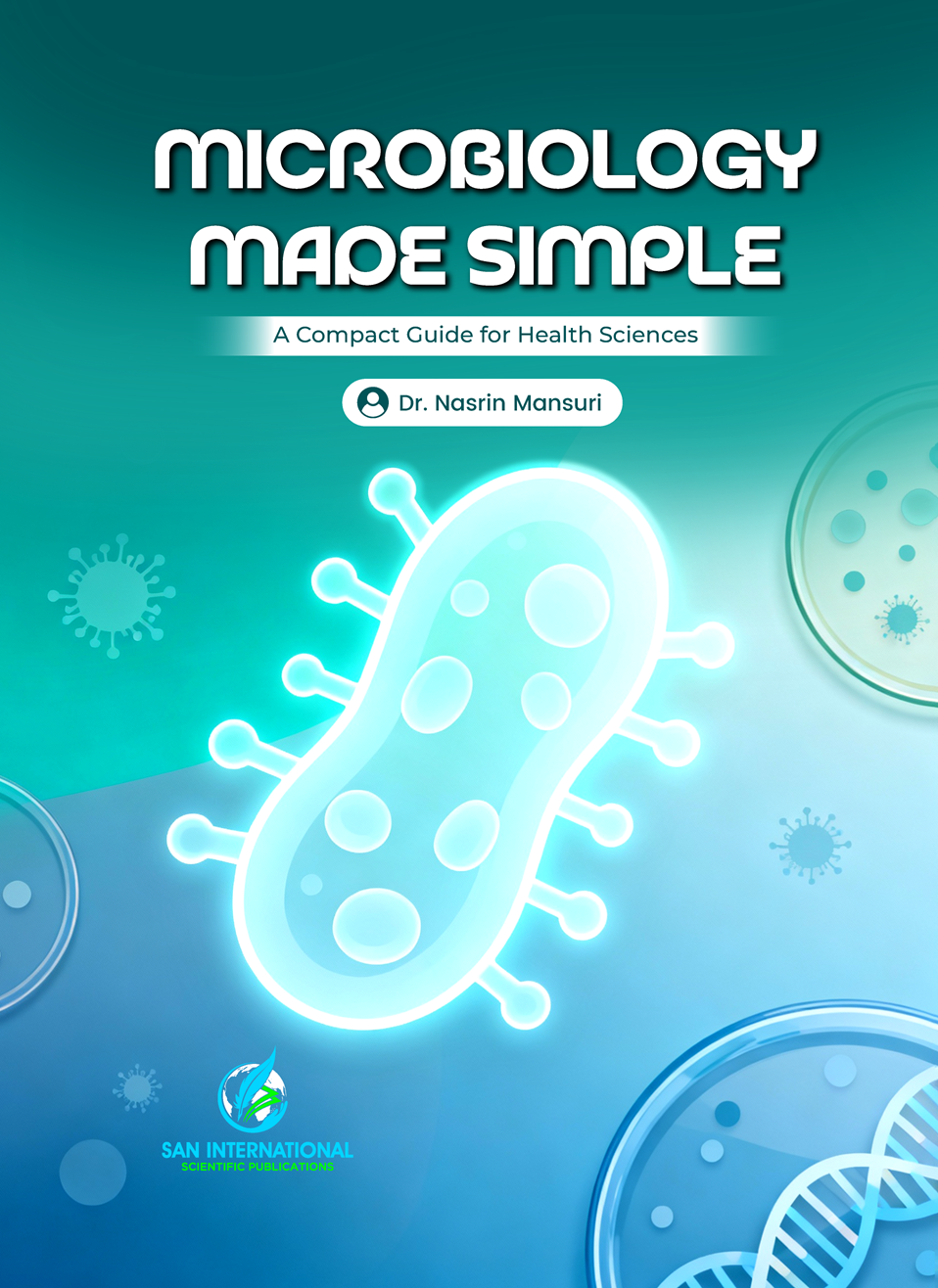
Microbiology Made Simple: A Compact Guide for Health Sciences
Author and Editor: Dr. Nasrin Mansuri
ISBN: 978-81-996233-7-8
DOI: https://doi.org/10.59646/542
Date of Publication: December 30, 2025
Cite this book: Nasrin M, (2025), Microbiology Made Simple: A Compact Guide for Health Sciences, San International Scientific Publications, ISBN: 978-81-996233-7-8, DOI: https://doi.org/10.59646/542
Preface
Microbiology forms the foundation of modern health sciences, offering essential insights into the invisible world of microorganisms and their profound impact on human health, disease, and the environment. Microbiology Made Simple: A Compact Guide for Health Sciences has been carefully designed to present this vast and complex subject in a clear, concise, and student-friendly manner. This book aims to bridge the gap between fundamental concepts and their clinical, industrial, and real-world applications, making it especially valuable for students and professionals in medical, allied health, and life science disciplines. The content of this book is systematically organized into ten comprehensive chapters, beginning with an introduction to microbiology, its historical development, scope, and significance. It then progresses through essential topics such as microbial structure, microscopy, growth, and control, providing a strong conceptual foundation. Core areas including immunology, bacteriology, virology, mycology, and parasitology are presented with a focus on clinical relevance, pathogenesis, laboratory diagnosis, and prevention strategies. Special emphasis has been given to diagnostic microbiology and infection control practices, which are crucial in modern healthcare settings. The final chapter explores applied microbiology, highlighting its role in environmental sustainability, industrial processes, and emerging interdisciplinary fields such as physiotherapy and sports science. This book has been structured to facilitate easy understanding and quick revision, with well-organized headings, logical flow of concepts, and review questions at the end of each chapter to reinforce learning. Care has been taken to ensure that the language remains simple without compromising scientific accuracy, enabling learners at various levels to grasp key principles effectively. By integrating theoretical knowledge with practical applications, this guide aspires to equip readers with the competence required to understand microbial processes and their implications in health and disease. It is hoped that this compact guide will serve as a reliable companion for students, educators, and healthcare professionals, fostering a deeper appreciation of microbiology and its indispensable role in advancing human health and scientific progress.