International Relations: Theories and Realities of Global Diplomacy
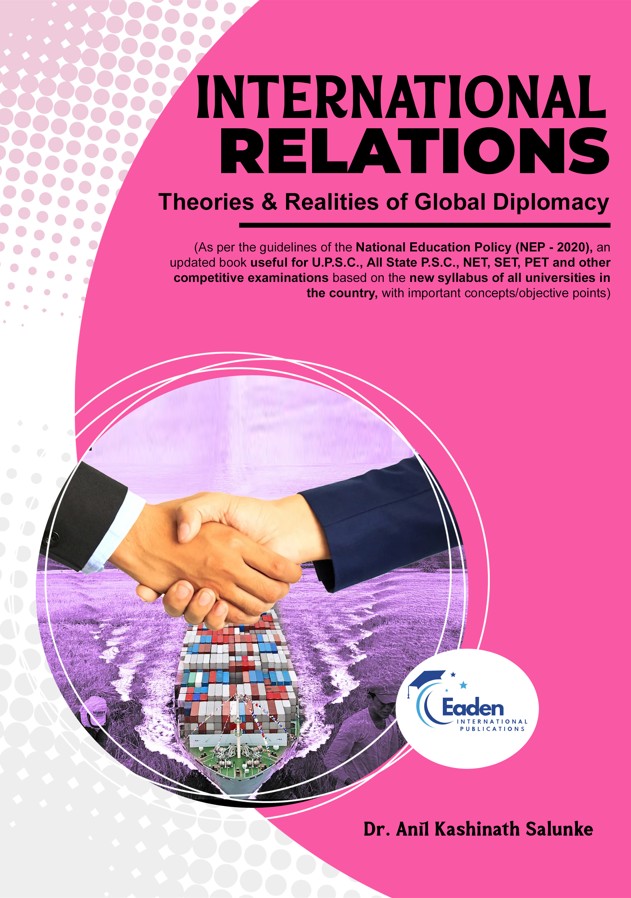
International Relations: Theories and Realities of Global Diplomacy
Author: Dr. Anil Kashinath Salunke
ISBN: 978-81-994205-7-1
DOI: https://doi.org/10.59646/483
Date of Publication: October 2025
About the Book:
The study of international relations is both timeless and ever-evolving. Since the emergence of the modern state system, questions of power, security, cooperation, and conflict have occupied scholars and practitioners alike. In the twenty-first century, globalization, technological change, transnational challenges, and shifting power dynamics demand fresh insights into how nations interact and how diplomacy is conducted on the world stage.
International Relations: Theories and Realities of Global Diplomacy is designed to bridge the gap between abstract theoretical frameworks and the practical realities of international politics. It introduces students to the classical and contemporary theories of international relations—realism, liberalism, constructivism, Marxism, feminism, postcolonialism, and others—while also grounding these perspectives in the actual practices of diplomacy, negotiation, and conflict management.
The purpose of this text is threefold. First, it seeks to provide readers with a comprehensive foundation in the intellectual traditions of international relations. Second, it aims to illuminate how these theories shape and are shaped by the real-world actions of states, institutions, and non-state actors. Finally, it emphasizes critical engagement, encouraging students to assess the strengths and limitations of competing perspectives and to apply them to contemporary global challenges such as climate change, terrorism, migration, pandemics, and the rise of new powers.
Each chapter combines conceptual clarity with empirical case studies, allowing readers to connect theory to practice. Key debates are presented in accessible terms, while historical and contemporary examples—from the Cold War and decolonization to humanitarian interventions and digital diplomacy—demonstrate the ongoing relevance of international relations scholarship.
This book is intended primarily for undergraduate and graduate students of international relations, political science, and global studies, but it will also serve policymakers, practitioners, and informed citizens seeking to better understand the forces shaping global order.
It is my hope that International Relations: Theories and Realities of Global Diplomacy will not only provide a foundation for academic study but also inspire readers to think critically about the possibilities of cooperation, the persistence of conflict, and the future of diplomacy in an increasingly interconnected world.