
Inside Computing: The Role of Operating Systems
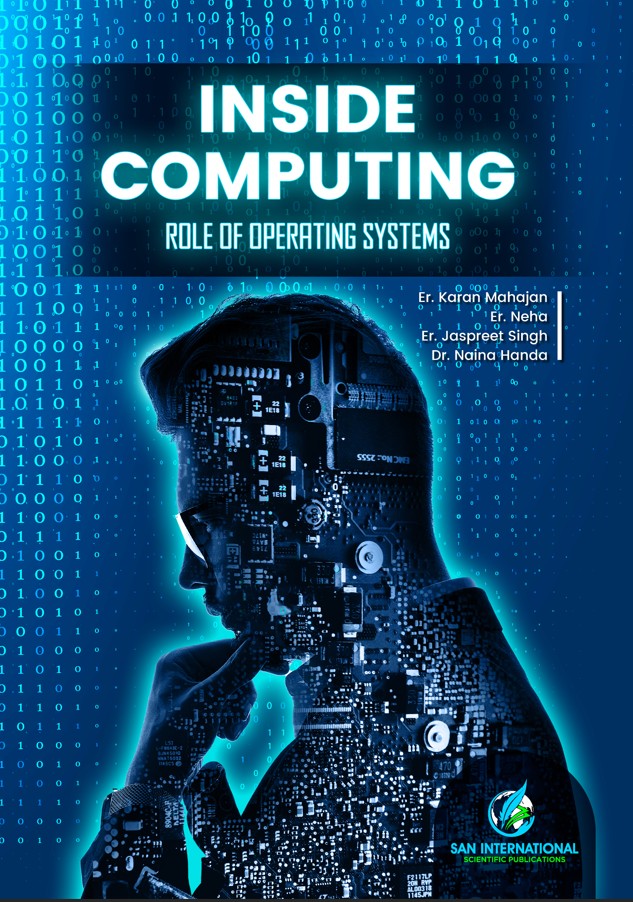
Inside Computing: The Role of Operating Systems
Authors: Er. Karan Mahajan, Er. Neha, Er. Jaspreet Singh and Dr. Naina Handa
ISBN: 978-81-988877-5-7
DOI: https://doi.org/10.59646/ic/408
Date of Publication: July 25, 2025
About the Book:
Operating systems (OS) are at the heart of every modern computing device, from personal computers to mobile phones, cloud systems, and embedded devices. They serve as an essential bridge between hardware and software, managing the computer’s resources and ensuring that different applications and users can operate simultaneously without conflict. Inside Computing: The Role of Operating Systems delves into the critical functions of operating systems, explaining their various components, architectures, and responsibilities in a comprehensive manner. At their core, operating systems control fundamental system resources such as the CPU, memory, input/output devices, and storage. They ensure that hardware resources are efficiently allocated, tasks are executed in a timely manner, and processes are synchronized to avoid conflicts. The book covers a range of essential concepts, beginning with an introduction to operating systems and their objectives, goals, and components. The functions of an OS—such as process management, memory management, file management, and device management—are explored in detail, providing a foundational understanding of how an OS operates. Process management is particularly significant as it involves creating, scheduling, and terminating processes, along with managing process states and context switching, which are critical to multitasking. Memory management is another key aspect, as it handles the allocation of memory resources to processes and manages virtual memory to optimize performance. File and storage management ensure that data is stored securely, accessed efficiently, and protected from unauthorized access. The chapter on system security and protection further expands on these topics, addressing how operating systems protect against malicious attacks and safeguard user data. Operating systems are also responsible for booting systems, initializing hardware, and managing system configurations. These tasks are crucial for ensuring that the system runs smoothly from startup to shutdown. The book highlights the various OS architectures, including monolithic systems, layered architectures, and microkernel systems, each offering distinct approaches to system design with trade-offs between performance, modularity, and flexibility. Furthermore, virtualization technology, particularly virtual machines (VMs) and hypervisors, has become a prominent feature of modern operating systems, enabling multiple virtual environments to run on a single physical machine, optimizing resource utilization and providing isolation. As the book progresses, it delves into more advanced topics such as process scheduling algorithms, deadlocks, and synchronization mechanisms, offering a detailed examination of how operating systems manage multiple tasks concurrently. The challenges of memory fragmentation, paging, and efficient memory allocation are also covered, providing insights into how operating systems ensure that memory resources are used optimally. Moreover, the security aspects of operating systems are given significant attention, emphasizing the importance of securing user data, implementing access control, and utilizing encryption to protect sensitive information. These concepts are critical as operating systems evolve to meet the demands of modern applications, cloud computing, and multi-user environments. Operating systems also play a central role in file system management, ensuring that files are organized, accessed, and stored in a way that supports both performance and security. Through various allocation methods and disk scheduling algorithms, the OS manages how data is written to and retrieved from storage devices. File system security and access control are equally important, with systems needing to ensure that only authorized users can access sensitive data. The book’s thorough exploration of advanced memory management techniques provides further insight into how modern operating systems handle complex tasks such as memory swapping, page replacement algorithms, and memory protection. Techniques like buddy allocation, slab allocation, and the use of translation lookaside buffers (TLB) are discussed in depth, shedding light on how operating systems ensure efficient memory usage and system performance. The evolving role of operating systems in managing large-scale systems and virtualized environments underscores their centrality in today’s computing world. With the continuous advancements in hardware, operating systems must adapt to new technologies such as multi-core processors, cloud computing, and artificial intelligence. This book explores how OS are engineered to take advantage of these technologies, ensuring that resources are allocated efficiently and securely. The increasing need for scalability, flexibility, and security in computing systems makes understanding operating systems crucial for anyone working in the field of computing. The insights provided throughout this book serve as a guide for students, professionals, and enthusiasts, enabling them to grasp the fundamental principles of operating systems and their role in modern computing. As the world becomes more interconnected, with applications running on various platforms and devices, operating systems will continue to play a pivotal role in ensuring that these systems operate seamlessly and efficiently. With a thorough understanding of operating systems, one can appreciate their importance in managing the hardware and software interaction, ensuring that applications function smoothly, and addressing the ever-growing demands of modern computing. In summary, Inside Computing: The Role of Operating Systems provides an in-depth exploration of the essential concepts, architectures, and practices that define modern operating systems. By offering both theoretical insights and practical knowledge, it prepares readers to understand and navigate the complex world of operating systems, a foundation upon which much of the computing world is built.