
Innovative Teacher Education: Preparing Educators for the 21st Century Classroom
Innovative Teacher Education: Preparing Educators for the 21st Century Classroom
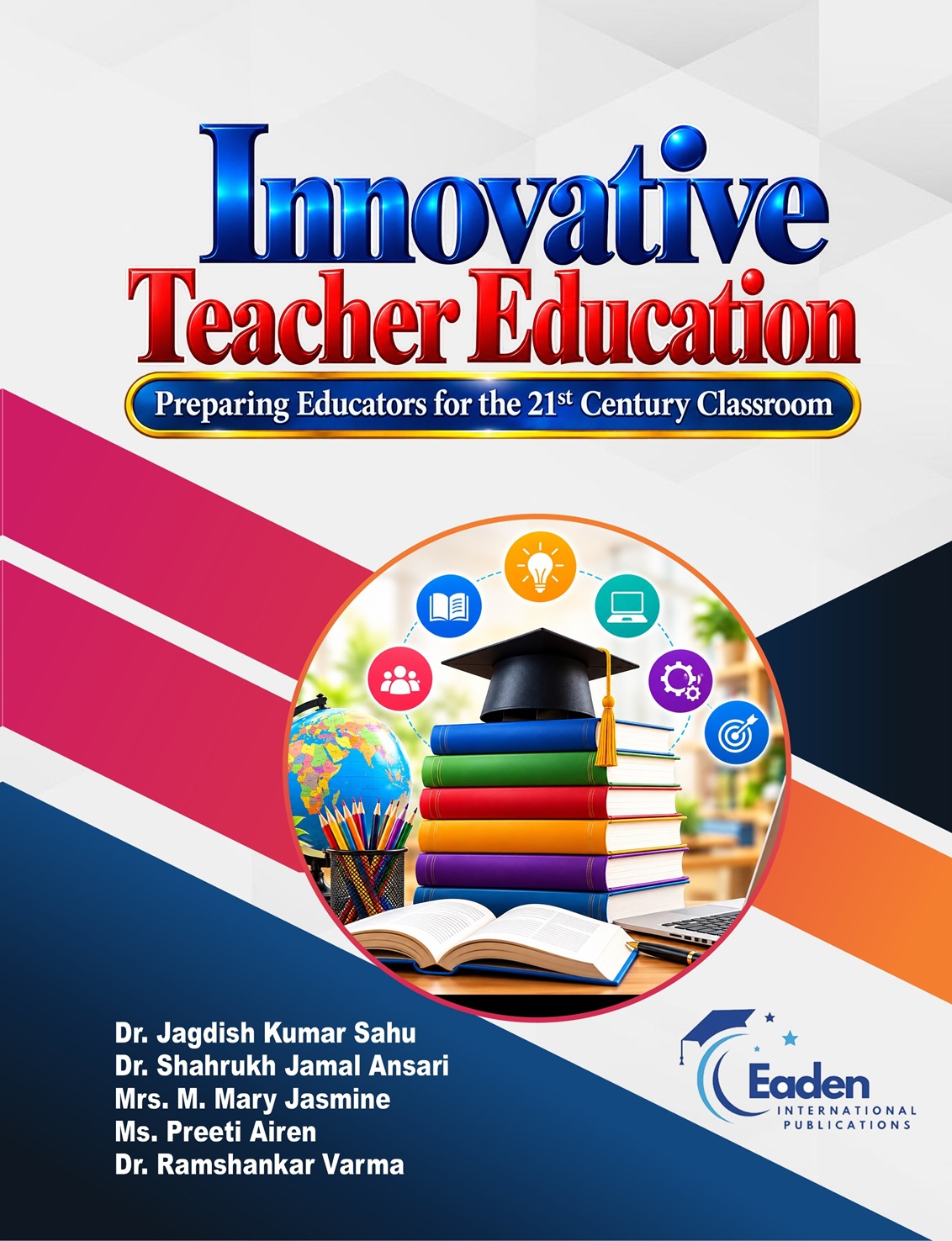
Authors: Dr. Jagdish Kumar Sahu, Dr. Shahrukh Jamal Ansari, Mrs. M. Mary Jasmine, Ms. Preeti Airen and Dr. Ramshankar Varma
ISBN: 978-81-69857-88-8
DOI: https://doi.org/10.59646/846
Date of Publication: October 06, 2026
Preface
Education is undergoing a profound transformation. The rapid advancement of digital technologies, artificial intelligence, changing learner expectations, globalization, and the growing emphasis on inclusive and sustainable development have fundamentally reshaped the nature of teaching and learning. In this evolving educational landscape, the teacher is no longer viewed merely as a transmitter of knowledge. The contemporary educator is expected to be a facilitator, mentor, innovator, researcher, technology-enabled practitioner, and lifelong learner. Preparing teachers for these diverse responsibilities requires a teacher education system that is innovative, reflective, flexible, and responsive to the needs of the twenty-first century.
The textbook Innovative Teacher Education: Preparing Educators for the 21st Century Classroom has been developed with this changing context in mind. It explores the emerging dimensions of teacher education and provides a comprehensive foundation for understanding how teachers can be prepared to address the academic, technological, social, emotional, and professional needs of contemporary learners. The book seeks to bridge the gap between traditional teacher preparation and the competencies required in modern classrooms.
A central focus of this book is the integration of innovative pedagogical approaches into teacher education. Contemporary classrooms increasingly require active, experiential, collaborative, problem-based, inquiry-based, and learner-centred approaches. Teachers need to understand not only what to teach but also how learners acquire knowledge, develop competencies, communicate ideas, solve problems, collaborate with others, and apply learning to real-world situations. Accordingly, this textbook emphasizes pedagogical innovation as an essential component of effective teacher preparation.
Technology has become an important component of modern education, and its responsible integration has created both opportunities and challenges for educators. Digital learning environments, learning management systems, educational applications, virtual and augmented learning experiences, multimedia resources, data-driven instruction, and artificial intelligence are influencing classroom practices. The book therefore examines technology-enabled teacher education and considers how educators can use emerging technologies meaningfully while maintaining pedagogical purpose, human interaction, ethical responsibility, and learner well-being.
Artificial intelligence presents a particularly significant development in contemporary education. AI-enabled tools can support personalized learning, assessment, content development, feedback, lesson planning, and educational research. At the same time, their use raises important questions concerning academic integrity, privacy, bias, transparency, digital dependency, and the changing professional responsibilities of teachers.
This textbook approaches AI not simply as a technological innovation but as an educational phenomenon that requires informed, ethical, and critically reflective teachers. Another important dimension addressed in the book is inclusive and equitable education. Twenty-first century teachers work with learners from diverse linguistic, cultural, socioeconomic, cognitive, and learning backgrounds. Effective teacher education must therefore prepare educators to recognize learner diversity, reduce barriers to participation, design accessible learning experiences, and create classrooms where every learner feels respected and supported. Inclusive pedagogies, differentiated instruction, universal design for learning, and culturally responsive teaching are consequently important areas of consideration.
The textbook also recognizes the importance of social-emotional learning and teacher well-being. Teaching is a demanding profession requiring emotional intelligence, resilience, communication skills, empathy, adaptability, and reflective capacity. Teacher education should consequently extend beyond subject knowledge and instructional techniques to include professional identity, ethical practice, interpersonal competence, classroom relationships, stress management, and continuous professional development.
Assessment is another area undergoing substantial transformation. Conventional examination-oriented approaches are increasingly complemented by formative assessment, authentic assessment, competency-based evaluation, digital assessment, peer assessment, self-assessment, and portfolio-based approaches. Teachers must be capable of selecting and designing assessment strategies that measure not only factual knowledge but also critical thinking, creativity, communication, collaboration, problem-solving, and practical application. The book highlights the need to develop assessment literacy as an essential teacher competency.
Reflective practice and educational research are also central to effective teacher development. A professionally prepared teacher should be capable of examining classroom experiences, identifying learning challenges, evaluating instructional practices, interpreting evidence, and making informed improvements. Action research, reflective teaching, professional learning communities, and continuous professional development can contribute significantly to the development of teachers as practitioner-researchers.
The book further emphasizes the significance of 21st-century competencies. Critical thinking, creativity, communication, collaboration, digital literacy, information literacy, problem-solving, adaptability, ethical reasoning, and lifelong learning are increasingly important for both teachers and students. Teacher education institutions therefore have a crucial responsibility to create learning environments in which future educators themselves experience the innovative pedagogies and technologies they are expected to implement. Sustainability and global citizenship also form important dimensions of contemporary teacher education. Teachers can play a vital role in developing environmentally responsible, socially conscious, and globally aware learners. Integrating sustainable development, environmental education, citizenship education, human values, and responsible digital behaviour into teacher preparation can help educators contribute to broader societal transformation.
This textbook is intended for student teachers, teacher educators, education researchers, faculty members, academic administrators, and professionals interested in educational innovation. It can serve as a reference for undergraduate and postgraduate teacher education programmes while also providing useful perspectives for in-service teachers seeking to update their professional knowledge and practices.
The chapters are designed to combine conceptual foundations with contemporary applications. The objective is not merely to introduce new educational technologies or pedagogical models but to encourage readers to critically examine their relevance, effectiveness, limitations, and ethical implications. Innovation in education should ultimately be measured by its contribution to meaningful learning, learner inclusion, teacher effectiveness, and educational quality rather than by technology alone.
The future of education will depend significantly on the quality of teachers prepared today. A teacher education system that encourages innovation, critical reflection, ethical awareness, technological competence, inclusivity, creativity, and lifelong learning can equip educators to respond confidently to an increasingly complex educational environment. Preparing teachers for the twenty-first century therefore means preparing them not only to teach in changing classrooms but also to become active contributors to the transformation of education itself.
It is hoped that Innovative Teacher Education: Preparing Educators for the 21st Century Classroom will serve as a meaningful academic resource for understanding the changing landscape of teacher education and inspire educators to embrace innovation while preserving the human values at the heart of education.