Human Resources Management
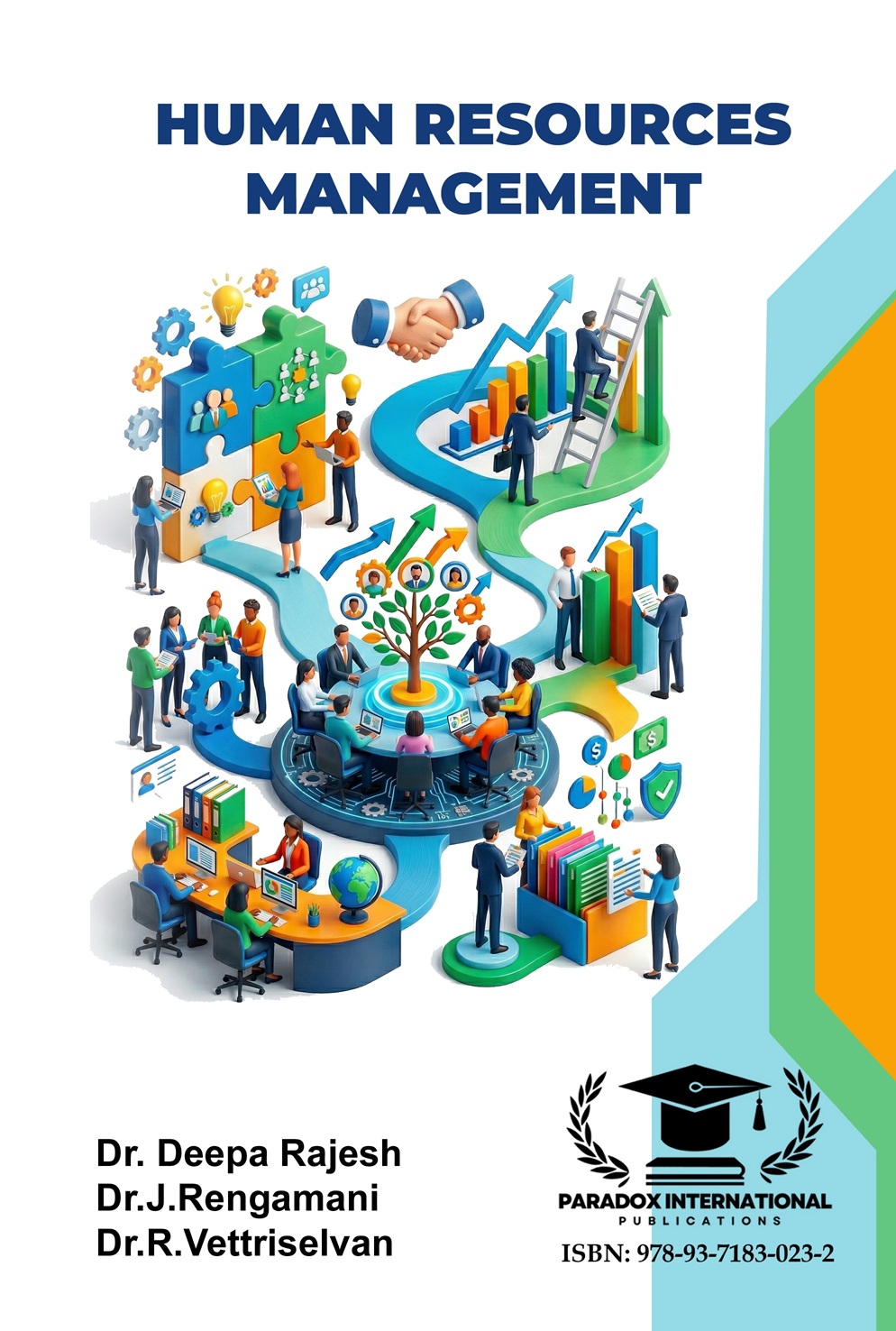
Human Resources Management
Authors: Dr. Deepa Rajesh, Dr. J. Rengamani, Dr. R. Vettriselvan
ISBN: 978-93-7183-023-2
DOI: https://doi.org/10.59646/632
Date of Publication: March 21, 2026
Cite this book: Deepa R, J. Rengamani, R. Vettriselvan, (2026), Human Resources Management, Paradox International Publications & San International Scientific Publications, ISBN: 978-93-7183-023-2, doi: https://doi.org/10.59646/632
Preface
The Human Resource Management (HRM) has evolved from a traditional administrative function into a strategic and integral component of organizational success in today’s highly competitive and dynamic business environment. This book, Human Resources Management, is designed to provide a detailed and systematic understanding of the concepts, principles, and practices that govern the effective management of human capital. It begins by exploring the nature and scope of HRM, establishing a strong conceptual foundation by examining its objectives, functions, and significance in modern organizations. Building on this base, the book moves into planning and procurement, emphasizing the processes of forecasting human resource needs, recruitment, selection, and placement to ensure that organizations are staffed with competent and capable individuals. The discussion on compensation highlights the importance of equitable and motivating reward systems, covering wages, salaries, incentives, and benefits that contribute to employee satisfaction and organizational performance. Performance appraisal is examined as a critical evaluative mechanism that not only measures employee effectiveness but also supports career development, feedback, and organizational growth. Further, the book addresses training and development as continuous processes aimed at enhancing employee skills, knowledge, and adaptability in a rapidly changing work environment. Recognizing the growing importance of aligning HR practices with organizational strategy, the text elaborates on strategic human resource management, demonstrating how HR can contribute to long-term competitive advantage through effective policy formulation and implementation. Finally, the book explores international HRM and the emerging horizons of HRM, shedding light on the challenges and opportunities presented by globalization, cultural diversity, technological advancements, remote work trends, and evolving employment relationships. With a balanced blend of theoretical insights and practical applications, this book serves as a valuable resource for students, educators, and professionals, enabling them to understand, analyze, and apply HRM concepts effectively in real-world organizational settings.