Human Resource Management Practices in India and the United States: A Comparative Analysis
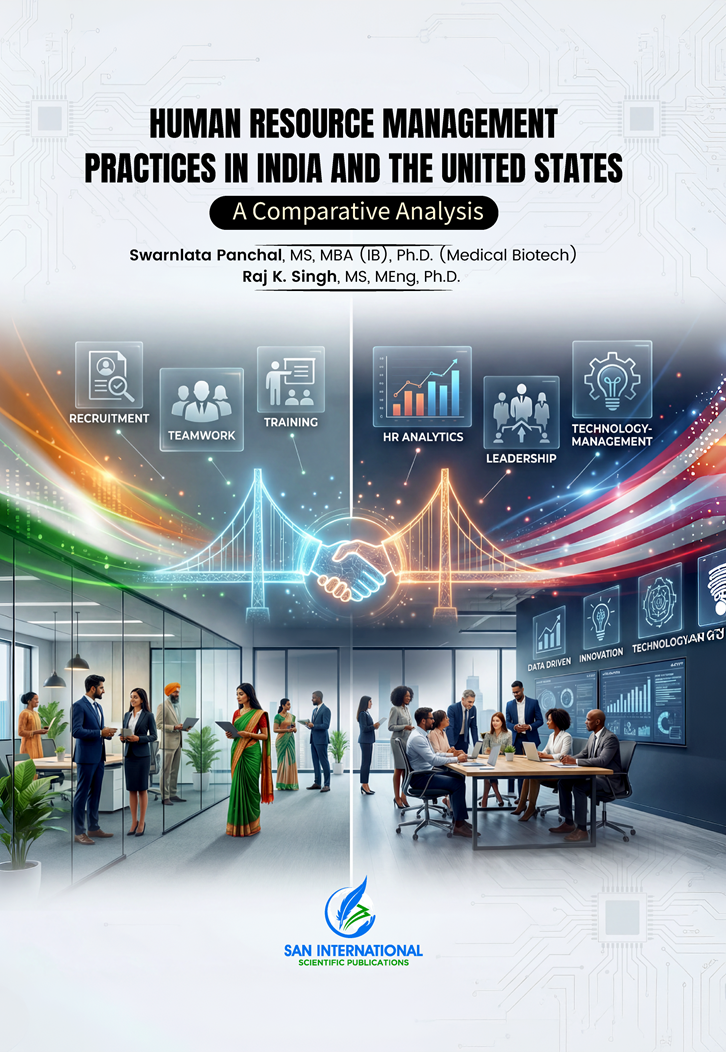
Human Resource Management Practices in India and the United States: A Comparative Analysis
Authors: Swarnlata Panchal, MS, MBA (IB), Ph.D. (Medical Biotech) and Raj K. Singh, MS, MEng, Ph.D.
ISBN: 978-81-69297-72-1
DOI: https://doi.org/10.59646/650
Date of Publication: May 01, 2026
Cite this book: Swarnlata P, and Raj KS, (2026), Human Resource Management Practices in India and the United States: A Comparative Analysis, San International Scientific Publications, ISBN: 978-81-69297-72-1, DOI: https://doi.org/10.59646/650
Preface
Human Resource Management (HRM) has evolved significantly from its traditional administrative role into a strategic function that is central to organizational success in today’s globalized and dynamic business environment. With the increasing integration of economies and the rise of multinational organizations, understanding HRM from a comparative and cross-cultural perspective has become essential. This book, Human Resource Management Practices in India and the United States: A Comparative Analysis, aims to provide a comprehensive understanding of HRM by examining its principles, practices, and challenges within two of the world’s most influential and diverse economies. While the United States represents a highly structured, performance-driven, and technologically advanced HR environment, India reflects a unique blend of traditional values and rapidly modernizing practices shaped by globalization and economic transformation.
Through a systematic exploration of key HR functions including workforce planning, recruitment, training and development, performance management, compensation, and employee relations—this book highlights both the similarities and differences in HR approaches across these two contexts. It also emphasizes the role of cultural, institutional, and legal factors in shaping HR policies and practices, while addressing contemporary challenges such as talent acquisition, diversity management, employee engagement, and work-life balance. Designed for students, academicians, and HR practitioners, this book seeks to bridge the gap between theory and practice by offering a structured and comparative framework that enhances understanding of global HRM. It is hoped that this work will enable readers to develop a broader perspective, think critically about HR strategies, and adopt more effective, inclusive, and culturally responsive practices in managing human resources in an increasingly interconnected world.