Green Pathways: Sustainable Chemistry and Innovation
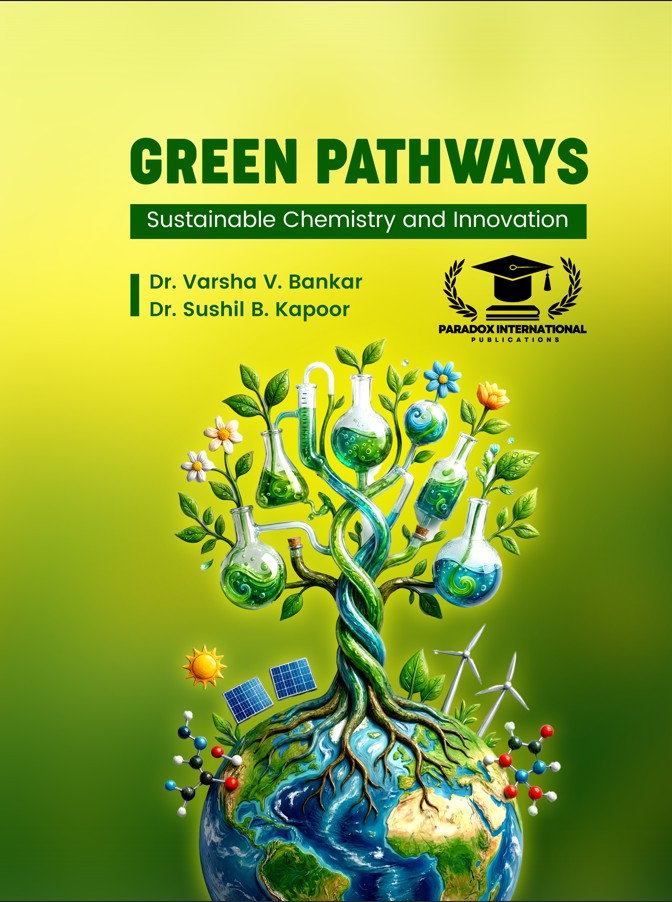
Green Pathways: Sustainable Chemistry and Innovation
Authors: Dr. Varsha V. Bankar, Dr. Sushil B. Kapoor
ISBN: 978-93-7183-754-5
DOI: https://doi.org/10.59646/575
Date of Publication:
The accelerating pace of global environmental change, coupled with unprecedented technological advancement, calls for a fundamental rethinking of how chemistry contributes to sustainable development. Chemistry lies at the heart of modern society—from the materials we use and the energy we consume to the medicines that sustain our health and the technologies that shape our future. Yet traditional chemical processes have often exacted a heavy toll on the environment through the depletion of natural resources, hazardous waste generation, and toxic emissions. In response to these challenges, the discipline of green chemistry has emerged as a transformative paradigm—one that reimagines chemical science not merely as a driver of industrial productivity but as a catalyst for ecological integrity, social wellbeing, and long-term economic resilience.
Green Pathways: Sustainable Chemistry and Innovation is designed to illuminate this transformative journey. It integrates foundational theory with practical insights, bridging the molecular underpinnings of chemical science with system-level considerations of sustainability. The book offers both depth and breadth—starting with the core principles of green chemistry, progressing through innovative methodologies and technologies, and culminating in real-world applications that demonstrate environmental stewardship in action.
This textbook is grounded in the conviction that sustainability is not an optional add-on to chemical education but an essential framework for innovation. The chapters are structured to serve a diverse audience: undergraduate and postgraduate students in chemistry and environmental science; educators developing sustainability-oriented curricula; researchers exploring eco-innovative methods; and professionals seeking to apply green principles in industrial and policy contexts.
Each unit blends rigorous scientific content with applied case studies, emerging trends, and ethical considerations. Students will encounter critical concepts such as atom economy, benign solvent systems, catalysis, renewable feedstocks, energy-efficient processes, and life-cycle assessment. Equally important is the contextualization of these topics within broader environmental challenges such as climate change mitigation, circular economy strategies, and ecosystem resilience. The book also highlights the role of digital technologies, interdisciplinary research, and policy frameworks in furthering sustainable chemical innovation. The development of this book has been driven by a collaborative vision—uniting expert contributions, contemporary research insights, and pedagogical clarity. We have sought to balance theory with practice, providing tools and frameworks that empower readers to think creatively and act responsibly in addressing complex sustainability problems. We believe that this text will not only deepen understanding of green chemistry principles but also inspire meaningful action. As educators, learners, and practitioners engage with the material, we hope it fosters a community of informed, ethical, and innovative thinkers who are equipped to navigate the challenges of the twenty-first century with confidence and care.
The dedication of this book is to all those who seek to make chemistry a force for positive change—advancing human wellbeing while safeguarding the natural world upon which all life depends.