English in the Age of AI: Language, Literature, and Digital Imagination
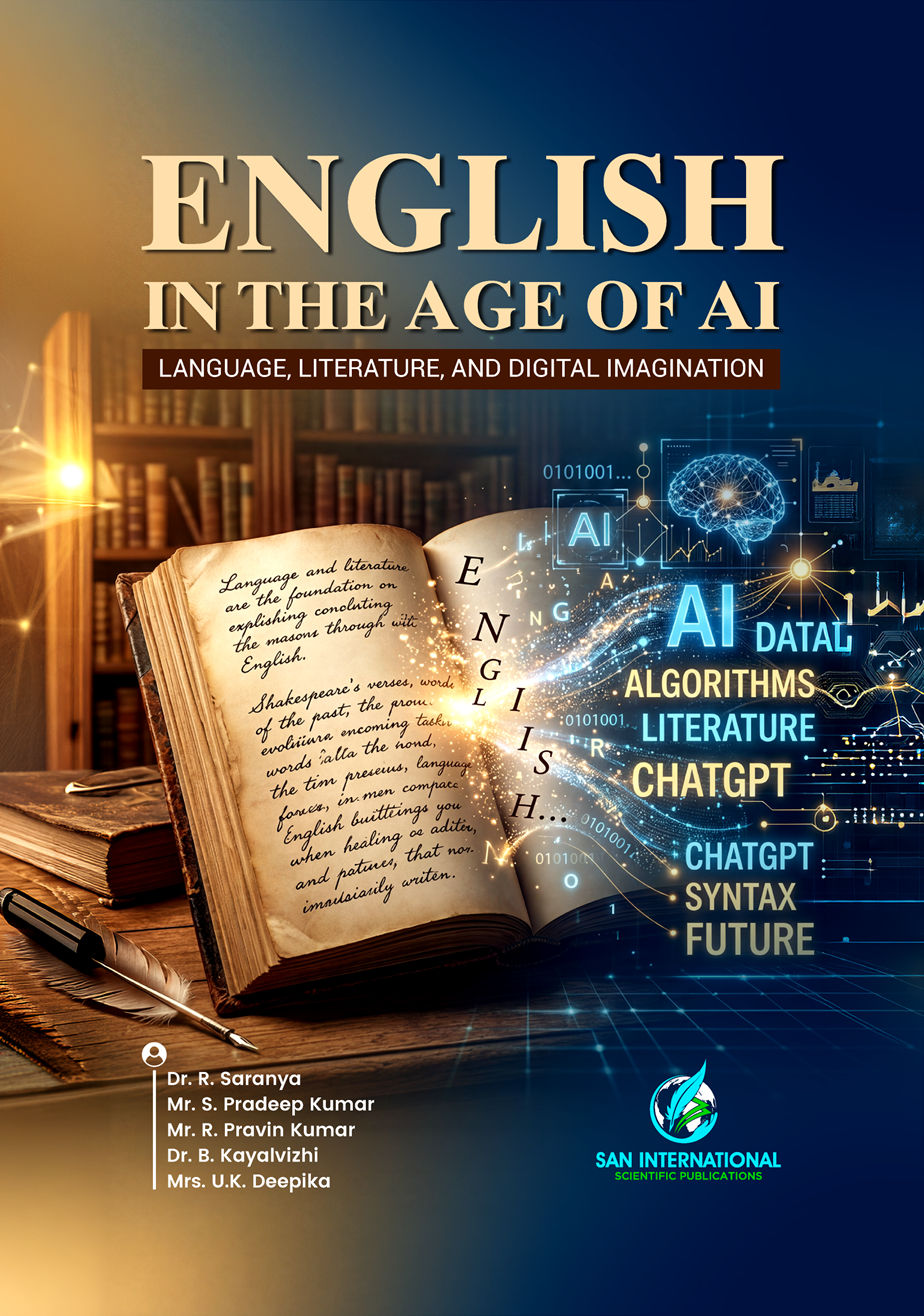
English in the Age of AI: Language, Literature, and Digital Imagination
Authors: Dr. R. Saranya, Mr. S. Pradeep Kumar, Mr. R. Pravin Kumar, Dr. B. Kayalvizhi, and Mrs. U.K. Deepika
ISBN: 978-81-69297-99-8
DOI: https://doi.org/10.59646/625
Date of Publication: March 25, 2026
Cite this book: R. Saranya, S.P. Kumar, R.P. Kumar, B. Kayalvizhi, and U.K. Deepika, (2026), English in the Age of AI: Language, Literature, and Digital Imagination, San International Scientific Publications, ISBN: 978-81-69297-99-8, doi: https://doi.org/10.59646/625
Preface
The book English in the Age of AI: Language, Literature, and Digital Imagination emerges from the recognition that the study of English is undergoing a profound transformation in an era shaped by artificial intelligence, digital media, and algorithmic thinking. No longer confined to traditional boundaries of textual analysis and literary interpretation, English studies today intersect dynamically with computational linguistics, digital humanities, and machine-assisted creativity. This volume brings together a comprehensive exploration of how language, literature, and communication evolve when human imagination encounters intelligent systems. Beginning with the conceptual foundations of AI as a cultural and linguistic phenomenon, the book traces the shift from conventional grammar and semantics to data-driven language models and generative technologies. It examines the rise of AI-generated narratives, poetry, and digital storytelling, while also engaging with deeper philosophical and cognitive questions about authorship, creativity, and the nature of thought itself. By situating literary studies within the broader frameworks of machine learning, discourse analysis, and digital reading cultures, the text highlights both the possibilities and challenges of this transformation, including issues of ethics, bias, representation, and authenticity. The later units extend the discussion into pedagogy, demonstrating how AI is reshaping classrooms, writing practices, and academic integrity, while also demanding new forms of critical and digital literacy. Throughout, the book maintains a balanced perspective, acknowledging the power of AI as a tool for innovation and exploration, while reaffirming the enduring significance of human creativity, critical thinking, and cultural sensitivity. Designed for students, researchers, and educators, this work aims to provide not only theoretical insights but also practical frameworks for understanding and engaging with English studies in an increasingly intelligent and interconnected world.