
Energy Management and Auditing
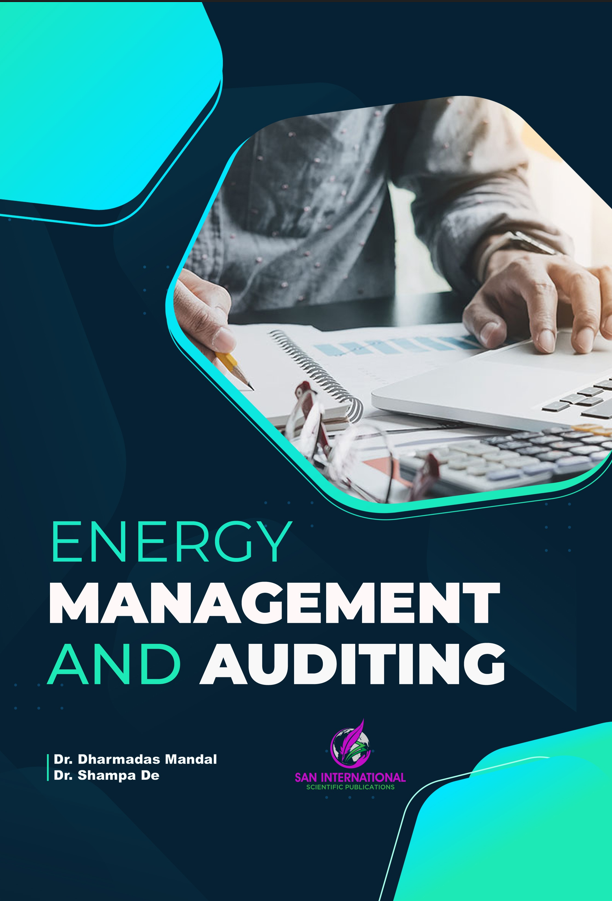
Energy Management and Auditing
Authors: Dr. Dharmadas Mandal and Dr. Shampa De
ISBN: 978-81-988877-9-5
DOI: https://doi.org/10.59646/em/385
Date of Publication: June 25, 2025
About the Book:
Energy Management and Auditing is a comprehensive and methodically structured reference that provides an in-depth exploration of the principles, methodologies, technologies, and practical strategies for optimizing energy consumption and enhancing energy efficiency across industrial, commercial, and institutional sectors. Designed for engineers, energy managers, auditors, students, and sustainability professionals, the book begins with a foundational understanding of energy management—its goals, implementation processes, and critical economic, environmental, and geopolitical imperatives driving global energy efficiency initiatives. The early chapters delve into the basics of energy forms, terminology, measurement units, and the pivotal role of benchmarking and demand profiling, setting the stage for a nuanced appreciation of energy systems.
Subsequent chapters guide the reader through the design and execution of effective energy management programs, including cost-benefit analysis, renewable integration, behavioral interventions, and auditing techniques. The book rigorously covers electricity accounting, energy monitoring techniques such as MT&R (Monitoring, Targeting & Reporting), and decentralized energy accountability through Energy Cost Centers (ECCs). A significant portion of the book is dedicated to sector-specific conservation measures—detailing strategies and case studies for electric heating, electrolytic processes, refrigeration plants, boiler systems, and industrial operations. Each section blends theoretical underpinnings with real-world applications and technical calculations, demonstrating how energy savings translate into operational efficiency and environmental responsibility.
The volume also traces the evolution of electrical metering—from electromechanical to digital devices—highlighting their role in energy surveys, safety, and measurement accuracy. In later chapters, the book shifts its focus to cutting-edge advancements in energy auditing technologies, including data analytics, predictive tools, IoT-enabled devices, artificial intelligence, blockchain, and digital twins, which are shaping the future of energy oversight. The text closes with dedicated discussions on electrical and thermal energy management, industrial energy systems, and the implementation of emerging energy-efficient technologies such as VFDs, smart lighting, high-efficiency motors, and intelligent building controls.
By incorporating policy frameworks, global energy trends, Sustainable Development Goals (SDGs), and behavioral considerations, Energy Management and Auditing positions itself as a holistic guide for fostering long-term energy resilience. It stands as an authoritative resource for anyone seeking to reduce energy costs, minimize carbon footprints, and align organizational practices with global environmental and economic goals.