
Economic Mechanism for the Development of Agricultural E-Commerce
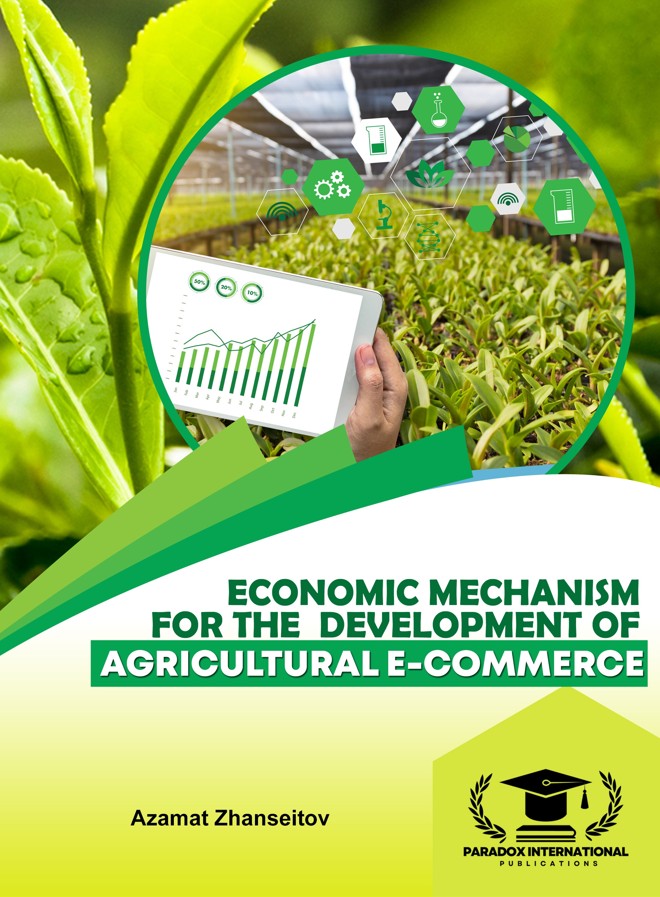
Economic Mechanism for the Development of Agricultural E-Commerce
Author: Azamat Zhanseitov
ISBN: 978-93-7183-788-0
DOI: https://doi.org/10.59646/500
Date of Publication: October 22, 2024
About the Book:
In the rapidly transforming landscape of the global economy, agriculture continues to hold a pivotal position as both a livelihood and a lifeline for millions. The integration of information and communication technologies into agricultural systems has opened new frontiers of opportunity, particularly through the emergence of Agricultural E-Commerce. However, while technological progress has been swift, the economic mechanisms underpinning sustainable and equitable digital transformation in agriculture remain complex and insufficiently explored.
This textbook, Economic Mechanism for the Development of Agricultural E-Commerce, seeks to bridge that gap. It presents a comprehensive framework for understanding, designing, and implementing the economic structures that drive digital agricultural markets. The text combines theoretical insights from economics, e-commerce, and agribusiness with practical models for policy formulation, enterprise development, and rural digital inclusion.
The book is organized into systematic units that progress from foundational principles to applied models. Early chapters examine the economic rationale for agricultural digitization, the structure of e-commerce ecosystems, and the challenges of integrating smallholders into digital supply chains. Later sections focus on mechanism design, pricing strategies, value chain optimization, logistics, financing models, and policy interventions necessary to sustain e-commerce growth in rural economies.
Intended for students, researchers, policymakers, and practitioners in agricultural economics, business management, and rural development, this volume aims to serve both as an academic resource and a guide for real-world application. By exploring the synergy between digital technologies and economic policy, it aspires to foster an understanding of how inclusive e-commerce can transform agriculture into a more efficient, transparent, and resilient sector.
This work is the culmination of years of research, observation, and dialogue with farmers, entrepreneurs, policy experts, and scholars. I extend my deepest gratitude to all those whose insights and experiences enriched the perspectives presented here. Special thanks are due to academic peers and institutional collaborators whose feedback refined the analytical depth of this book.
It is my sincere hope that this textbook will contribute to ongoing efforts to modernize agriculture through innovation-driven and economically sustainable e-commerce mechanisms, empowering farmers and strengthening the digital foundations of rural economies worldwide.