
Ecology of the South East Coast of Tamil Nadu, India
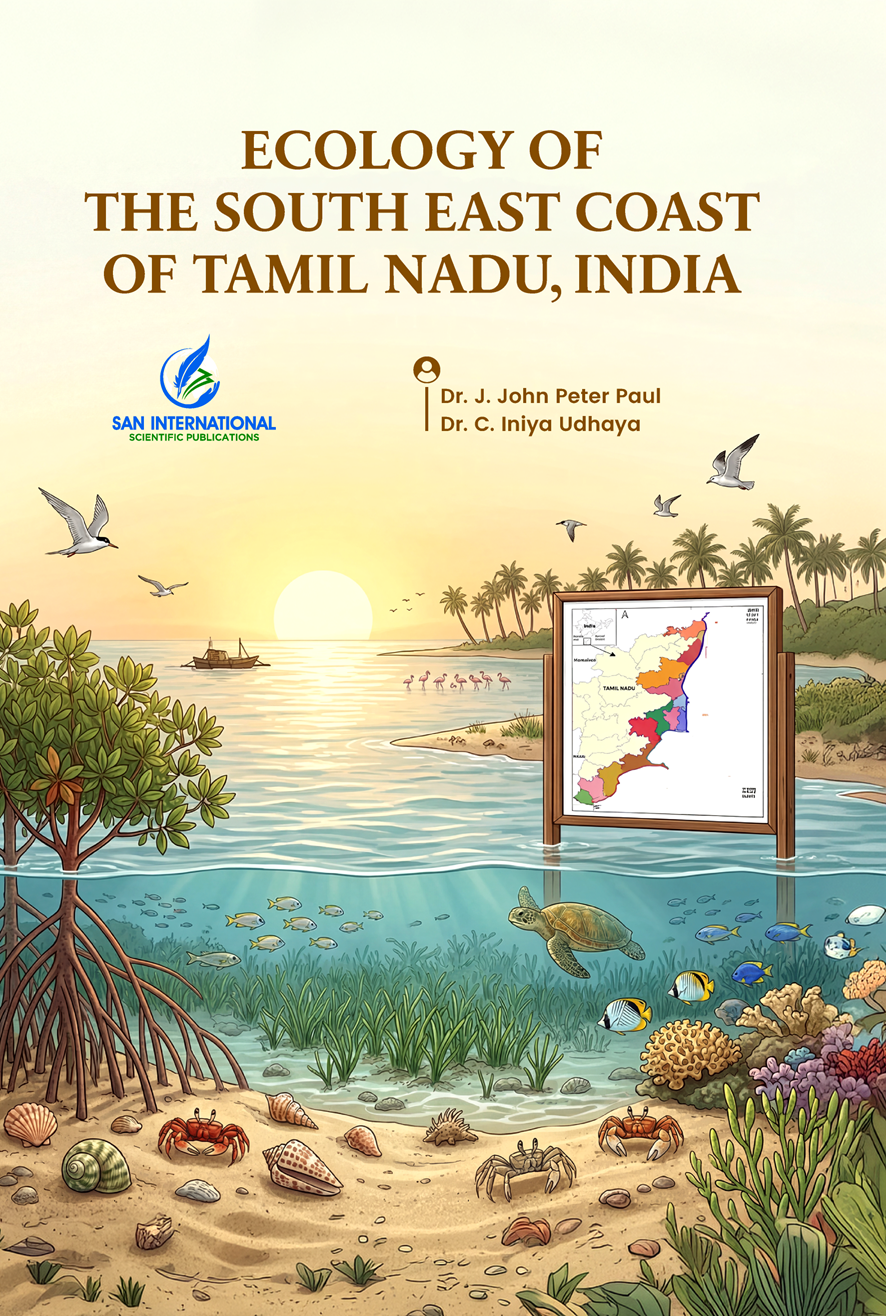
Ecology of the South East Coast of Tamil Nadu, India
Authors: Dr. J. John Peter Paul and Dr. C. Iniya Udhaya
ISBN: 978-81-69297-07-3
DOI: https://doi.org/10.59646/621
Date of Publication: March 25, 2026
Cite this book: JJP Paul and CI Udhaya, (2026), Ecology of the South East Coast of Tamil Nadu, India, San International Scientific Publications, ISBN: 978-81-69297-07-3, doi: https://doi.org/10.59646/621
Preface
The South East Coast of Tamil Nadu, India, is one of the most ecologically rich and diverse regions in the country, known for its intricate ecosystems that play an essential role in supporting both marine and terrestrial biodiversity. This coastal belt, stretching from the southern tip of India to the northern reaches of the state, serves as a vital habitat for numerous species of flora and fauna. Its dynamic interplay of coastal waters, estuaries, mangroves, and coral reefs makes it an invaluable part of India’s natural heritage.
Ecology, the study of interactions between living organisms and their environment, is a crucial discipline for understanding how ecosystems function and how they are shaped by both natural and anthropogenic factors. The coastal regions, with their complex ecological features, have often been under-researched despite their immense significance. The South East Coast of Tamil Nadu, in particular, represents a unique mosaic of ecological habitats, providing a rich source of scientific study and insights into the effects of human activities, climate change, and conservation efforts.
Geographical and Ecological Significance
Tamil Nadu’s coastal belt is geographically diverse, extending across sandy beaches, rocky shorelines, mudflats, lagoons, estuaries, and the iconic backwaters. The region is characterized by a complex network of ecosystems, each of which supports a diverse array of life forms. These include mangrove forests, seagrass beds, coral reefs, and intertidal zones. Mangroves, in particular, are a prominent feature along this coast, providing vital ecosystem services such as coastal protection from storm surges, sequestration of carbon, and providing nursery grounds for fish species.
The region’s estuaries and backwaters also harbor a rich diversity of fish, crabs, mollusks, and a wide range of bird species. These habitats are critical for local communities who rely on them for fishing and other traditional livelihoods. Beyond their economic value, these ecosystems are increasingly recognized for their role in mitigating the impacts of climate change, including rising sea levels and extreme weather events. However, the delicate balance of this coastal ecology is under significant threat. The South East Coast has long been subjected to intense human activity, from coastal urbanization and industrialization to agricultural practices that influence land and water quality. In addition, climate change, overexploitation of marine resources, and pollution have further stressed these ecosystems, resulting in habitat loss and reduced biodiversity. It is, therefore, more important than ever to document and understand these ecosystems to promote sustainable practices that can protect and restore them for future generations.
Objectives and Motivation for the Study
This book, Ecology of the South East Coast of Tamil Nadu, seeks to provide a comprehensive exploration of the region’s diverse ecological systems.
The primary objective is to highlight the importance of conserving the ecological integrity of the region while addressing the challenges posed by anthropogenic activities. By studying the various habitats along the coast ranging from sandy beaches to estuarine wetlands and coral reefs, we aim to build a holistic understanding of the interactions between species and their environment. Through this study, we hope to raise awareness about the vital services that these coastal ecosystems provide to both local communities and the wider environment. This book also aims to inform policymakers, researchers, and conservationists on effective conservation strategies and sustainable resource management practices that could help mitigate the negative effects of human activities. In doing so, it aims to contribute to a broader ecological vision for the region, grounded in both science and local knowledge.
Scope and Structure of the Book
The book is divided into several sections, each addressing a different aspect of the region’s ecology. The first section provides an overview of the geographical features of the South East Coast of Tamil Nadu, describing its coastline, climatic conditions, and the natural factors that influence its ecological zones. This section sets the stage for understanding the complexities of the ecosystem and the diversity of habitats that exist along the coast. The subsequent chapters focus on specific ecosystems within the region. We begin with an in-depth look at the mangrove ecosystems that are scattered along the coast. Mangroves are critical for stabilizing coastlines, providing breeding grounds for marine life, and acting as buffers against the effects of climate change. The book goes on to explore the coral reefs of the region, which are home to a wide range of marine species, many of which are endemic to the Indian Ocean.
The estuaries and backwaters that are so important for both biodiversity and the livelihoods of coastal communities are explored in detail in another chapter. These areas are rich in nutrients and provide a vital link between marine and freshwater ecosystems. A focus is also placed on the agricultural activities in the region and their impact on the surrounding ecosystems, particularly in terms of runoff, soil erosion, and freshwater management.
Additionally, the book examines the socio-economic aspects of the region’s coastal communities, exploring how local populations interact with the environment, the threats posed by overfishing, coastal development, and how these challenges can be mitigated. The role of traditional knowledge in ecosystem management and conservation is also discussed, highlighting how indigenous practices can complement modern scientific approaches to conservation.
The final chapters of the book are dedicated to the pressing challenges facing the region, such as the loss of biodiversity, pollution, and the impacts of climate change. The book concludes with a discussion of the conservation efforts that are currently underway and the strategies that can be implemented to ensure the sustainable management of this critical ecological zone.
Importance of This Study
The South East Coast of Tamil Nadu is a microcosm of the larger ecological challenges faced by coastal regions worldwide. By studying this particular area, we can gain valuable insights into how diverse coastal ecosystems function and the pressures that threaten them. This book is intended to fill a gap in the literature on the region’s coastal ecology and serve as a resource for future research and policy-making. It is hoped that this work will inspire a deeper commitment to preserving the region’s natural heritage and promote a more sustainable future for both its ecosystems and the communities that depend on them.
As we face an era marked by rapid environmental change, understanding the ecological dynamics of regions like the South East Coast of Tamil Nadu is crucial. It is only through informed, concerted efforts that we can ensure the continued health of these invaluable ecosystems, not just for the people and wildlife that rely on them, but for the global community at large.
This preface sets the tone for the book, introducing the significance of the South East Coast of Tamil Nadu’s ecology and the motivation behind studying and conserving it. It outlines the structure of the book, providing a roadmap for what readers can expect and highlighting the interdisciplinary approach of combining ecological science with socio-economic and conservation perspectives.