
Digital Politics: Power in the Information Age
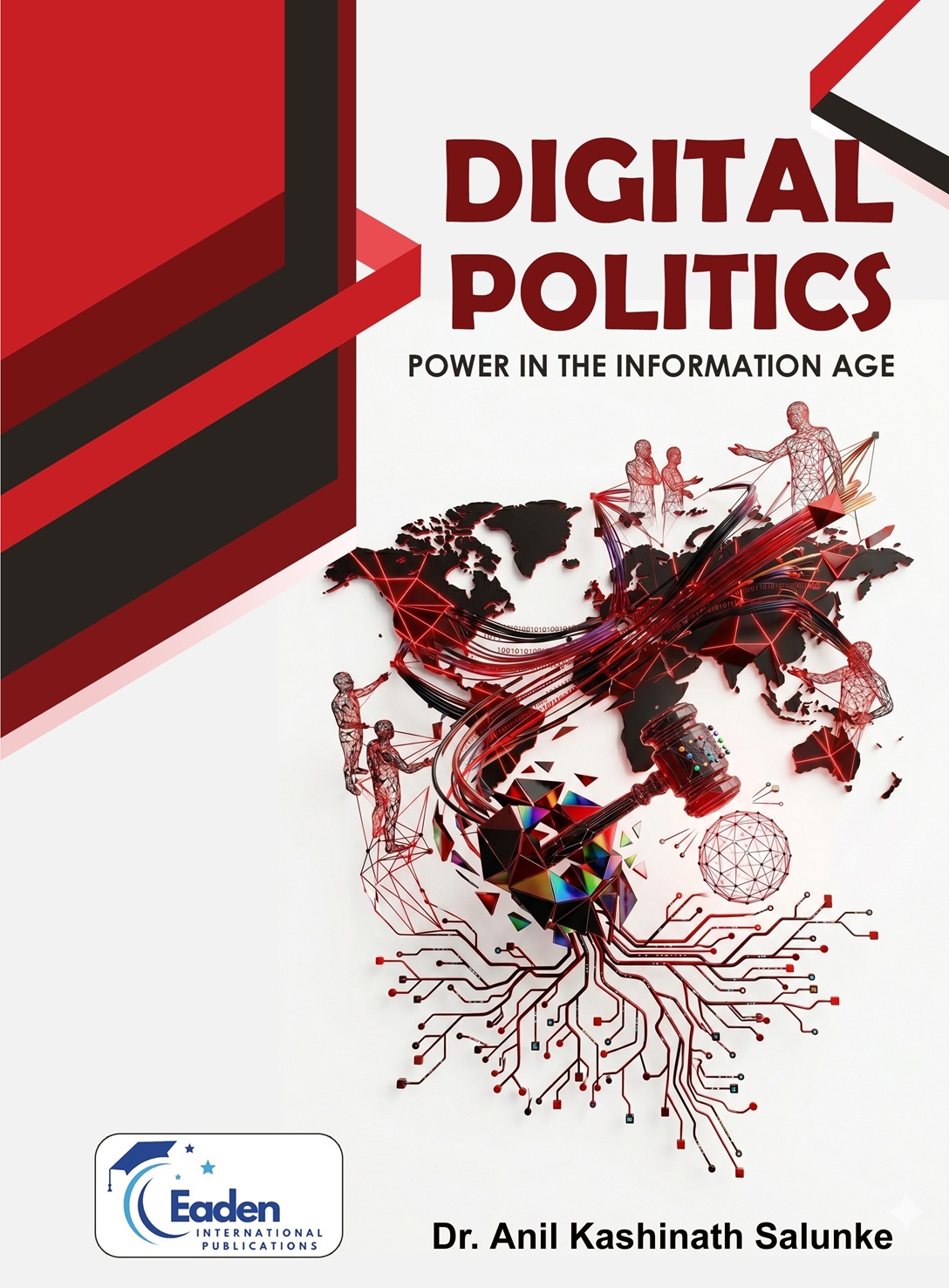
Digital Politics: Power in the Information Age
Author: Dr. Anil Kashinath Salunke
ISBN: 978-81-69297-98-1
DOI: https://doi.org/10.59646/683
Date of Publication: May 06, 2026
Cite this book: Anil KS, (2026), Digital Politics: Power in the Information Age, Eaden International Publications & San International Scientific Publications, ISBN: 978-81-69297-98-1, DOI: https://doi.org/10.59646/683
Preface
The twenty-first century has witnessed an unprecedented transformation in the way politics is practiced, communicated, and understood. The rise of digital technologies, social media platforms, artificial intelligence, big data, and networked communication has fundamentally reshaped political institutions, democratic participation, public opinion, governance, and international relations. Politics is no longer confined to parliaments, political rallies, newspapers, or television debates; it now unfolds continuously across digital platforms where information travels instantly and citizens participate actively in shaping political narratives.
This textbook, Digital Politics: Power in the Information Age, is designed to provide students, researchers, and readers with a comprehensive understanding of how digital transformation has altered the nature of political power in contemporary society. The book explores the intersection of technology and politics by examining digital democracy, online political participation, cyber governance, digital campaigning, surveillance, data politics, algorithmic influence, misinformation, and the growing role of artificial intelligence in governance and public administration. The evolution of “technopolitics” and digital public spheres demonstrates how information technologies have become central to modern political processes and civic engagement.
The information age has empowered citizens with new opportunities for communication and participation, yet it has also introduced serious challenges. Issues such as fake news, data manipulation, cyber threats, digital inequality, privacy violations, algorithmic bias, and the concentration of technological power among global digital corporations have raised critical questions about democracy, ethics, and accountability. Contemporary societies increasingly depend on digital infrastructures that shape public opinion, electoral outcomes, governance systems, and even collective memory.
This book aims to bridge theoretical perspectives with practical realities by presenting both conceptual foundations and contemporary developments in digital politics. It discusses how governments use digital tools for governance, how political parties employ social media for campaigning, how citizens mobilize through online activism, and how emerging technologies influence policy-making and political behaviour. Special attention is given to the global dimensions of digital politics, including cyber diplomacy, digital authoritarianism, platform governance, and international information warfare. The chapters have been carefully organized to introduce readers to the historical evolution of political communication, the emergence of digital democracy, the role of data and algorithms in political systems, digital citizenship, e-governance, cyber security, and the future of politics in an increasingly interconnected world. The book also highlights case studies and contemporary examples that demonstrate the opportunities and risks associated with digital transformation in governance and society.
As a single-author work, this textbook reflects an effort to present the subject in a clear, systematic, and interdisciplinary manner suitable for students of political science, public administration, media studies, sociology, communication studies, international relations, and information technology. The intention is not merely to explain digital technologies but to critically examine how power operates within digital environments and how societies can preserve democratic values in the age of information.
I sincerely hope that this book will encourage readers to think critically about the relationship between technology and political power and inspire meaningful discussions about the future of democracy, governance, and citizenship in a digitally connected world.