Cultural Tourism: Experiences and Management
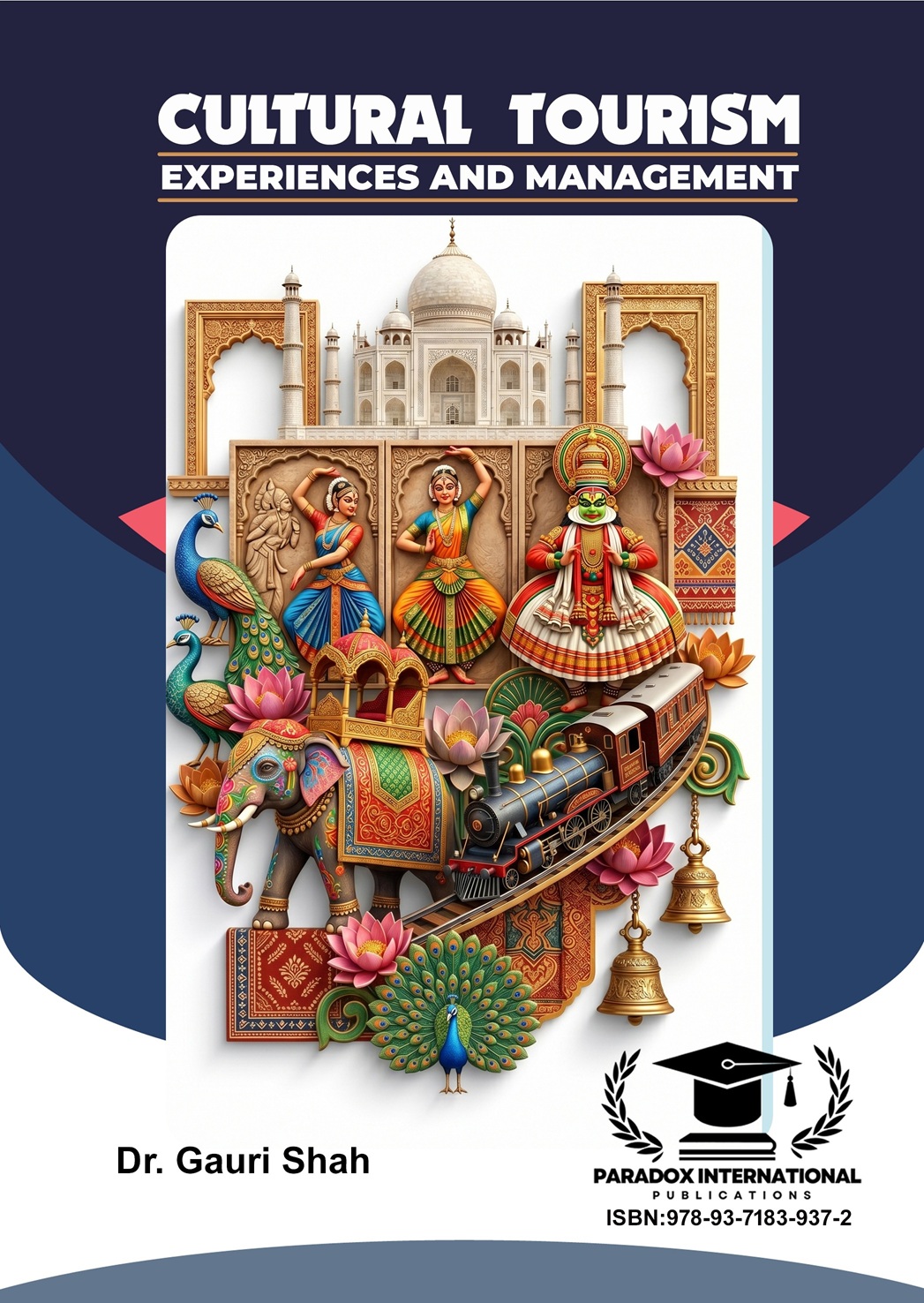
Cultural Tourism: Experiences and Management
Author: Dr. Gauri Shah
ISBN: 978-93-7183-937-2
DOI: https://doi.org/10.59646/668
Date of Publication: April 21, 2026
Cite this book: Gauri S, (2026), Cultural Tourism: Experiences and Management, Paradox International Publications & San International Scientific Publications, ISBN: 978-93-7183-937-2, DOI: https://doi.org/10.59646/668
Preface
Tourism today has evolved far beyond the traditional notion of leisure and travel; it has become a powerful medium for cultural exchange, heritage preservation, and experiential learning. Among its various dimensions, cultural tourism stands out as one of the most meaningful and rapidly growing segments, connecting people to the living traditions, historical narratives, artistic expressions, and intangible heritage of destinations across the world. The present textbook, “Cultural Tourism: Experiences and Management,” has been developed with the aim of offering a comprehensive and structured understanding of this dynamic field.
This book is the outcome of an in-depth engagement with the theoretical foundations and practical realities of cultural tourism. It seeks to bridge the gap between academic knowledge and industry practice by integrating concepts of tourism management with cultural studies, heritage conservation, and visitor experience design. Special emphasis has been placed on understanding how cultural resources can be responsibly developed, managed, and promoted to ensure both sustainability and authenticity.
The primary objective of this textbook is to provide students, researchers, and practitioners with a clear framework for analyzing cultural tourism systems. It explores key themes such as the significance of cultural heritage in tourism development, community participation, sustainable tourism practices, interpretation of cultural assets, and the role of technology in enhancing visitor experiences. Additionally, it examines contemporary challenges such as commercialization of culture, over-tourism, and the need for ethical tourism practices.
Each chapter has been carefully structured to ensure conceptual clarity, supported by relevant examples and case-based insights wherever necessary. The content is designed to be both academically rigorous and practically relevant, making it suitable for undergraduate and postgraduate students of tourism, hospitality, cultural studies, and related disciplines. As a single-authored work, this textbook reflects a unified perspective and coherent approach to the subject, while also acknowledging the interdisciplinary nature of cultural tourism. The intention has been to present the subject in a simple, accessible, and engaging manner without compromising on academic depth.
I sincerely hope that this book will serve as a valuable resource for learners and contribute to a deeper appreciation of cultural tourism as a tool for sustainable development, cultural understanding, and global harmony. Any suggestions for improvement from readers and academicians will be gratefully acknowledged and incorporated in future editions.