Contours of Contemporary Research: Perspectives Across Disciplines
Contours of Contemporary Research: Perspectives Across Disciplines
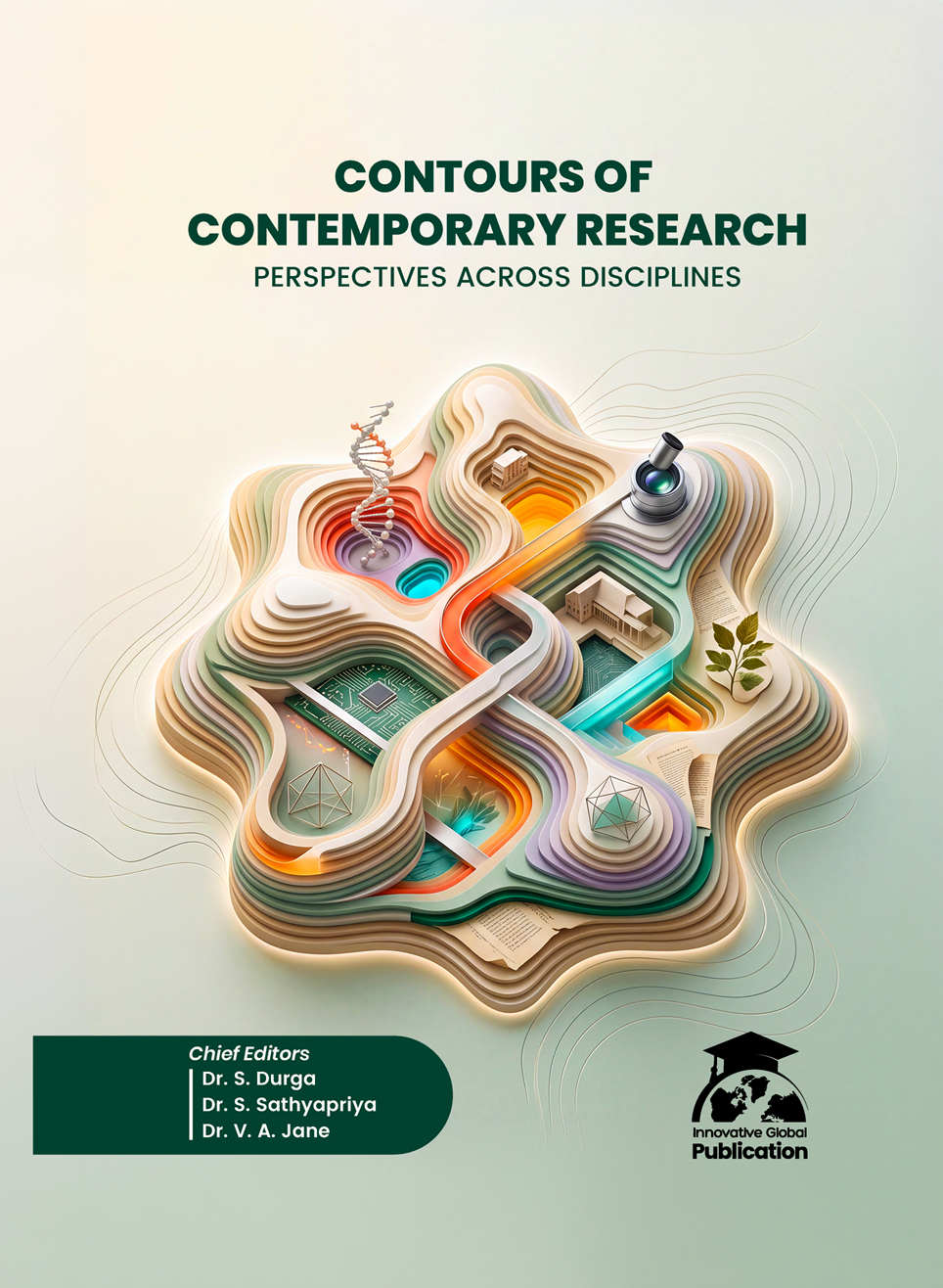
Chief Editors: Dr. S. Durga, Dr. S. Sathyapriya, and Dr. V. A. Jane
ISBN: 978-81-17787-25-0
DOI: https://doi.org/10.59646/880
Date of Publication: November 03, 2026
Chapters and Authors
Preface
The book Contours of Contemporary Research: Perspectives Across Disciplines presents a comprehensive collection of contemporary research contributions addressing emerging developments, interdisciplinary perspectives, and innovative approaches across diverse fields of knowledge. In an era characterized by rapid technological advancement, changing social structures, environmental challenges, and evolving institutional practices, interdisciplinary research plays a significant role in developing comprehensive solutions to complex global issues. This book brings together scholarly perspectives from business management, artificial intelligence, quantum science, advanced materials, nanotechnology, law, literature, education, sustainability, and indigenous knowledge systems, highlighting the growing importance of integrating knowledge and methodologies across academic disciplines.
The chapters explore the application of artificial intelligence in sustainable business innovation, quantum information measures in confined systems, and the development of two-dimensional materials for advanced electronics, healthcare, and renewable energy technologies. The discussions further extend to green synthesis of functional nanomaterials and their biomedical, environmental, and energy storage applications, demonstrating the potential of emerging scientific approaches in addressing technological and societal requirements. From the perspectives of business and management, the contributions examine rural entrepreneurship, sustainable livelihood development, digital intelligence, organisational resilience, environmental, social and governance (ESG) strategies, and responsible value creation. These studies provide insights into how technological capabilities and strategic management practices can contribute to sustainable economic development and institutional transformation.
This edited volume aims to provide researchers, academicians, scholars, postgraduate students, and professionals with valuable perspectives on current research developments and emerging interdisciplinary challenges. Each chapter contributes a distinct scholarly viewpoint while collectively demonstrating how collaboration across disciplines can expand research possibilities and generate meaningful solutions to contemporary problems. The book encourages critical thinking, knowledge exchange, and the integration of theoretical foundations with practical applications. It is expected to serve as a useful academic reference for readers interested in exploring the evolving contours of contemporary research and understanding the interconnected dimensions of science, technology, business, society, law, literature, and education. Through these diverse contributions, the volume seeks to promote interdisciplinary scholarship, innovative thinking, and sustainable knowledge development for addressing the complex demands of the modern world.