Communities at the Core: Regional Strategies for TB Isolation and Control in SAARC Countries
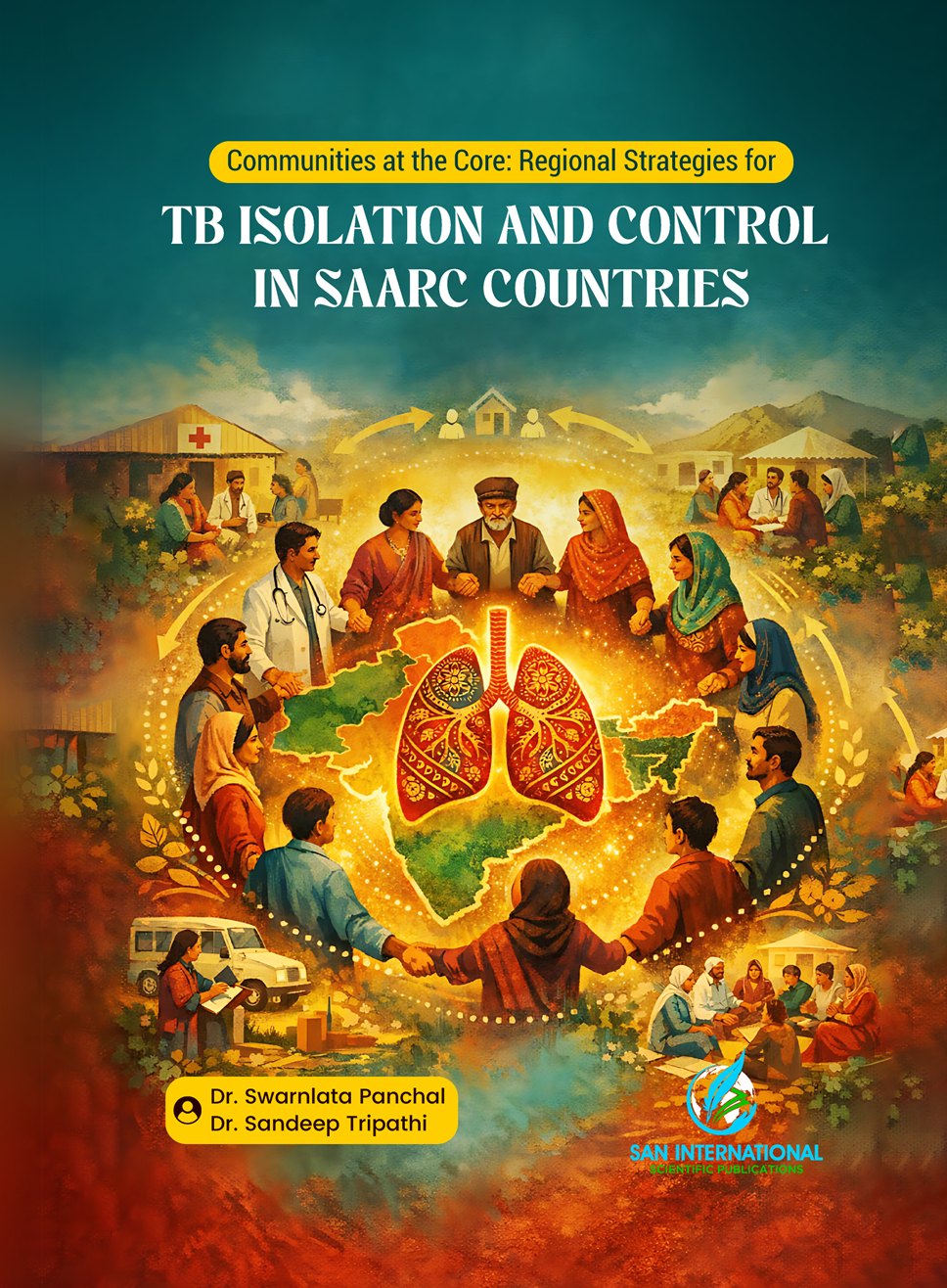
Communities at the Core: Regional Strategies for TB Isolation and Control in SAARC Countries
Authors: Dr. Swarnlata Panchal, and Dr. Sandeep Tripathi
ISBN: 978-81-998885-6-2
DOI: https://doi.org/10.59646/595
Date of Publication: February 11, 2026
Cite this book: Swarnlata P., and Sandeep T., (2026), Communities at the Core: Regional Strategies for TB Isolation and Control in SAARC Countries, San International Scientific Publications, ISBN: 978-81-998885-6-2, https://doi.org/10.59646/595.
Preface
Tuberculosis (TB) remains one of the most persistent and complex public health challenges confronting the countries of the South Asian region. Despite decades of global commitment and biomedical advances, the disease continues to thrive in conditions shaped by poverty, inequality, migration, overcrowding, and fragile health systems. The member states of the South Asian Association for Regional Cooperation (SAARC)—Afghanistan, Bangladesh, Bhutan, India, Maldives, Nepal, Pakistan, and Sri Lanka—collectively account for a substantial share of the global TB burden. Within this diverse yet interconnected region, tuberculosis is not merely a biomedical condition; it is deeply embedded in social structures, economic realities, cultural perceptions, and governance frameworks. Communities at the Core: Regional Strategies for TB Isolation and Control in SAARC Countries is grounded in the recognition that sustainable TB control in South Asia must move beyond hospital walls and national silos, placing communities at the center of prevention, isolation, treatment, and long-term care. This book brings together epidemiological evidence, historical analysis, policy review, and field-based insights to examine TB control through a distinctly regional lens. It begins by situating tuberculosis within the geographical, demographic, and developmental context of the SAARC region, exploring patterns of transmission, social determinants, vulnerable populations, and the structural inequities that fuel disease persistence. It traces the evolution of national TB control programs and the influence of global strategies, particularly the normative and technical guidance of the World Health Organization, while critically assessing policy responses to multidrug-resistant (MDR-TB) and extensively drug-resistant tuberculosis (XDR-TB). At its core, the book argues that community-based approaches—decentralized services, social mobilization, behavioral change communication, and locally grounded ownership—are indispensable for interrupting transmission and improving treatment outcomes. Dedicated sections examine the principles and ethics of TB isolation, airborne infection control, early detection strategies, diagnostic technologies, treatment adherence mechanisms, and the integration of TB services into primary health care systems. Special attention is given to stigma, gender and class dynamics, migration, occupational risk, nutrition, HIV co-infection, and the specific vulnerabilities of children and the elderly—factors that complicate both disease control and patient experience. The volume also addresses the pressing need for cross-border coordination in a region marked by mobility and porous boundaries, highlighting the importance of harmonized policies, surveillance systems, and regional cooperation mechanisms under the SAARC framework. By weaving together health systems analysis, governance considerations, ethical reflection, and community realities, this book seeks to provide policymakers, public health practitioners, researchers, and development partners with a comprehensive, context-sensitive roadmap for TB isolation and control in South Asia. Ultimately, it affirms that ending tuberculosis in the SAARC region will depend not only on medicines and technologies, but on empowered communities, equitable systems, and sustained regional solidarity.