
Collaborative Solutions: Cross Disciplinary Approaches to Achieve Global Sustainability Goals
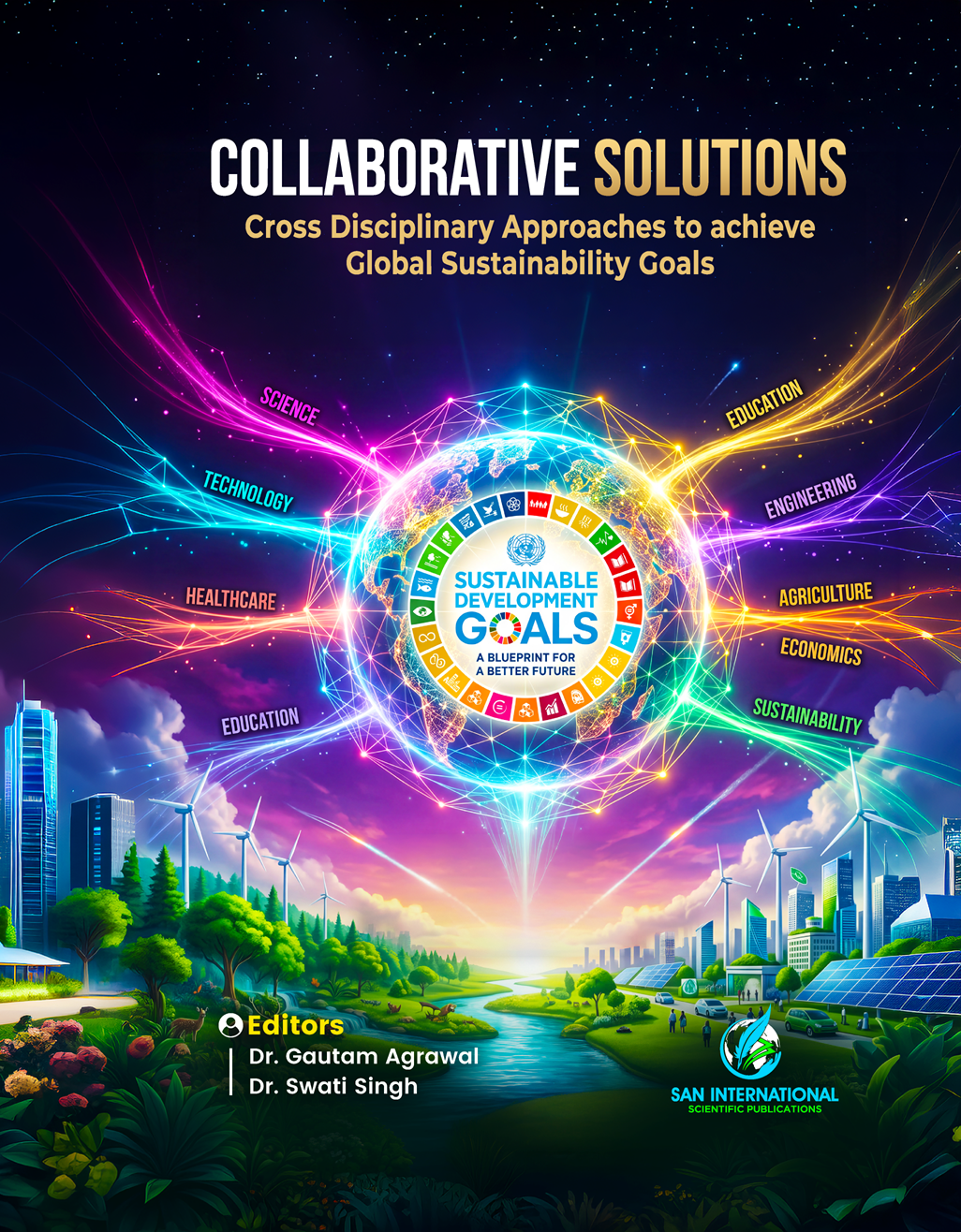
Collaborative Solutions: Cross Disciplinary Approaches to Achieve Global Sustainability Goals
Editors: Dr. Gautam Agrawal, and Dr. Swati Singh
ISBN: 978-81-69857-19-2
DOI: https://doi.org/10.59646/765
Date of Publication: July 23, 2026
Cite this book: Gautam A, and Swati S, (2026), Collaborative Solutions: Cross Disciplinary Approaches to Achieve Global Sustainability Goals, San International Scientific Publications, ISBN: 978-81-69857-19-2, DOI: https://doi.org/10.59646/765
Chapters and Authors
Preface
Sustainability has emerged as one of the most important global priorities of the twenty-first century, demanding innovative solutions that transcend the boundaries of individual disciplines. The complexity of contemporary challenges—including environmental degradation, climate change, technological advancements, legal reforms, public health, biodiversity conservation, and organizational transformation—requires collaborative efforts from researchers, academicians, policymakers, and industry professionals. In this context, Collaborative Solutions: Cross Disciplinary Approaches to Achieve Global Sustainability Goals brings together diverse scholarly perspectives that collectively contribute to achieving a more sustainable and inclusive future.
This edited volume presents a rich collection of interdisciplinary research exploring topics that are both timely and socially relevant. The chapters address emerging issues such as artificial intelligence and intellectual property rights, sustainable food systems, biochar applications for soil health, online dispute resolution mechanisms, renewable energy transitions, gender-neutral legal reforms, biodiversity conservation, ESG-focused human resource management, ethnobotanical studies, and student mental well-being. Although these subjects represent different fields of study, they are united by a common vision of advancing sustainable development through innovation, scientific inquiry, and collaborative knowledge sharing.
The contributions in this book demonstrate that meaningful progress toward the United Nations Sustainable Development Goals (SDGs) can only be achieved through integrated approaches that combine technological innovation, environmental responsibility, social inclusion, sound governance, and evidence-based decision-making. By bridging disciplines such as law, agriculture, environmental science, management, technology, and health sciences, the authors provide valuable insights that encourage interdisciplinary thinking and practical solutions to complex global challenges.
We sincerely appreciate the dedication and scholarly efforts of all contributing authors whose research and expertise have made this volume possible. Their commitment to academic excellence has resulted in a comprehensive resource that will benefit researchers, educators, students, professionals, and policymakers alike. We also extend our gratitude to the reviewers and editorial team for their valuable support in maintaining the quality and integrity of this publication.
It is our hope that this book will inspire further interdisciplinary research, foster meaningful collaborations, and encourage innovative strategies for addressing sustainability challenges across local, national, and global contexts. May this volume serve as a valuable reference and a catalyst for developing collaborative solutions that contribute to a more resilient, equitable, and sustainable world.