
Cinema: From Buzz to Blockbuster – The Role of Marketing, PR and Audience Psychology (Colour Printed + Hard Binding)
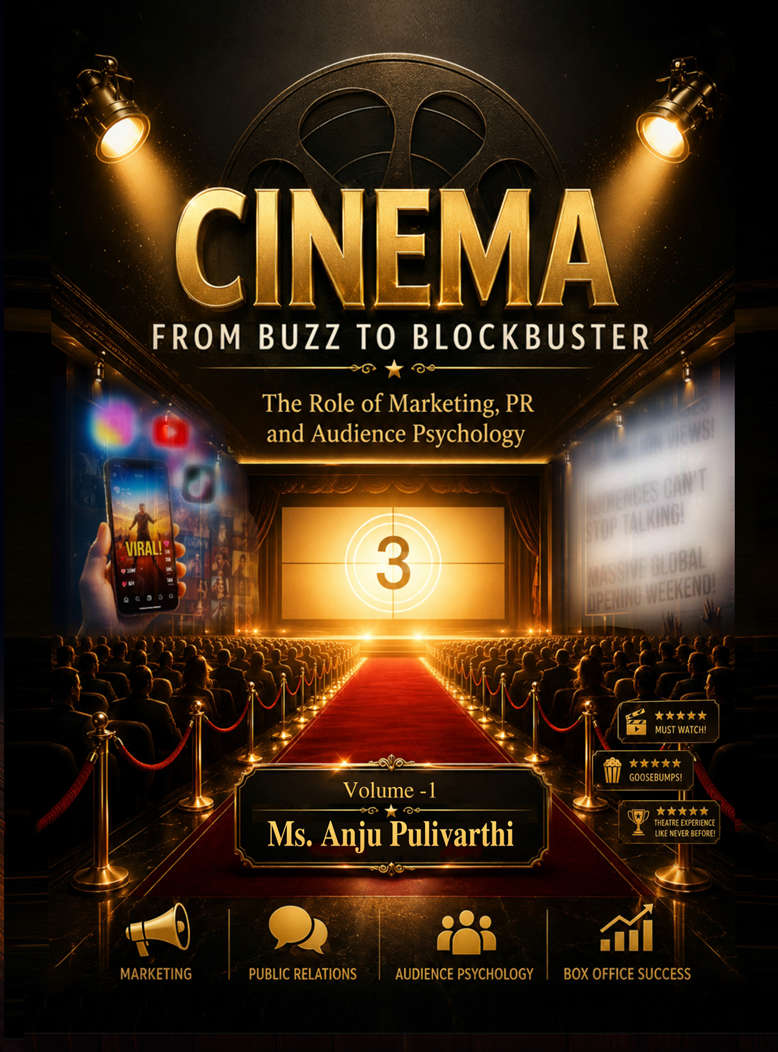
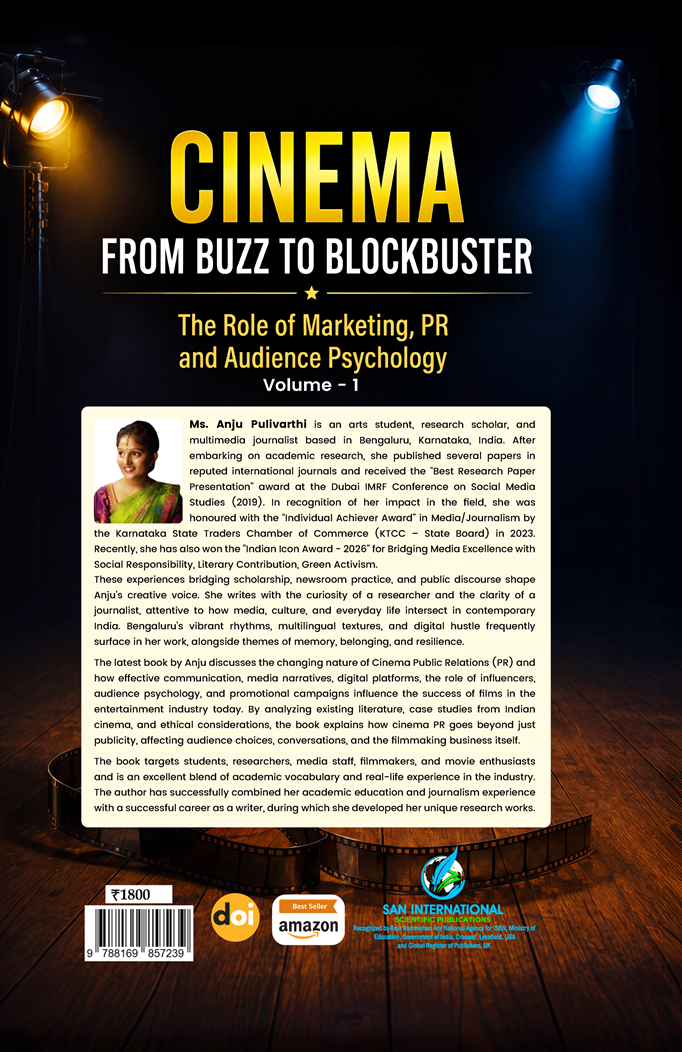
Cinema: From Buzz to Blockbuster – The Role of Marketing, PR and Audience Psychology (Colour Printed + Hard Binding)
Author: Ms. Anju Pulivarthi
ISBN: 978-81-69857-23-9
DOI: https://doi.org/10.59646/771
Date of Publication: July 27, 2026
Cite this book: Anju P, (2026), Cinema: From Buzz to Blockbuster – The Role of Marketing, PR and Audience Psychology, San International Scientific Publications, ISBN: 978-81-69857-23-9, DOI: https://doi.org/10.59646/771
Preface
Cinema has always been much more than entertainment. It is a cultural force that influences conversations, shapes public opinion, inspires emotions, and reflects the aspirations of society. While audiences often remember memorable performances, compelling stories, and breathtaking visuals, there is another equally powerful force operating behind every successful film—the strategic world of marketing, public relations, and audience psychology. In today’s highly competitive entertainment ecosystem, the journey of a film from announcement to blockbuster is rarely determined by cinematic excellence alone. Instead, it is carefully supported by communication strategies that generate anticipation, manage public perception, sustain engagement, and transform ordinary viewers into enthusiastic advocates. Cinema: From Buzz to Blockbuster – The Role of Marketing, PR and Audience Psychology has been written to provide readers with a comprehensive understanding of this fascinating and rapidly evolving domain. The book explores how carefully designed publicity campaigns, digital communication strategies, celebrity branding, influencer collaborations, social media trends, online reviews, fan communities, and even controversies contribute to shaping the commercial and cultural success of films. It explains that modern cinema promotion is no longer limited to posters, trailers, or press conferences. Today, every tweet, meme, interview, hashtag, reaction video, and audience discussion forms part of a sophisticated communication ecosystem capable of influencing millions of people within hours. One of the central objectives of this book is to bridge the gap between traditional public relations concepts and the realities of contemporary cinema marketing. The entertainment industry has experienced a remarkable transformation with the emergence of digital platforms, artificial intelligence-driven recommendation systems, streaming services, algorithm-based content distribution, and real-time audience engagement. These developments have fundamentally changed how films are promoted, discovered, discussed, and remembered. Consequently, PR professionals today must possess a multidisciplinary understanding that combines communication strategy, branding, psychology, media studies, digital marketing, consumer behavior, and crisis management. The book is organized in a progressive manner, beginning with an introduction that explains why cinema PR matters not only to filmmakers and marketing professionals but also to every member of the audience. Readers are introduced to the concept of cinema public relations, reputation management, the influence of social media, and the psychological mechanisms that shape movie preferences and public conversations. Part I provides a strong conceptual foundation by examining the evolution of cinema promotion from traditional print media to today’s digital-first environment. It discusses the changing architecture of cinema PR, the growing importance of celebrity image management, the emergence of opening weekend culture, influencer-driven campaigns, and the construction of powerful star narratives. Through detailed case studies and critical analyses, readers gain valuable insights into how strategic communication influences both industry success and audience perception. Part II focuses on the practical dimensions of cinema public relations that directly shape public opinion. It examines the influence of social media algorithms, influencer marketing, meme culture, online reviews, audience ratings, experiential marketing, digital campaigns, and controversy-driven publicity. The book critically evaluates both successful and unsuccessful campaigns, helping readers understand why certain promotional strategies resonate with audiences while others fail. Throughout these chapters, real-world case studies demonstrate how communication decisions can significantly impact box office performance, brand reputation, and long-term audience trust. A distinctive feature of this book is its emphasis on audience psychology. Marketing strategies are effective only when they align with the cognitive, emotional, and social behaviors of audiences. Therefore, this book explores why people trust influencers, how online consensus influences individual choices, why celebrity narratives attract emotional investment, and how digital communities amplify both positive and negative public sentiment. Understanding these psychological principles enables readers to appreciate that successful cinema marketing is not merely about promotion—it is fundamentally about influencing perception and creating meaningful emotional connections. The discussions presented throughout the book are supported by contemporary examples, detailed case studies, critical reflections, and practical lessons that connect theoretical concepts with industry practice. Rather than presenting cinema PR as a collection of promotional techniques, the book approaches it as a strategic discipline that integrates communication planning, media relations, branding, consumer psychology, digital engagement, and reputation management. This balanced perspective makes the content valuable for students, researchers, educators, public relations professionals, marketing practitioners, filmmakers, media analysts, journalists, and anyone interested in understanding how films achieve cultural relevance and commercial success. Ethical considerations also receive careful attention. While marketing and public relations possess tremendous power to shape narratives and influence public opinion, they also carry significant responsibilities. The book encourages readers to critically evaluate the ethical boundaries of promotional strategies, the role of misinformation, manufactured hype, influencer credibility, algorithmic amplification, and controversy-based publicity. Such discussions aim to cultivate informed professionals who can balance commercial objectives with transparency, authenticity, and public trust. Ultimately, Cinema: From Buzz to Blockbuster – The Role of Marketing, PR and Audience Psychology seeks to inspire readers to look beyond the screen and recognize the complex communication ecosystem that surrounds every film. Every successful release represents the collective effort of creative artists, strategic communicators, digital marketers, public relations experts, media organizations, influencers, fan communities, and audiences themselves. By understanding these interconnected forces, readers will gain a richer appreciation of how cinema evolves from a creative idea into a cultural phenomenon capable of influencing millions across the world. It is hoped that this book will serve as a valuable academic resource, a practical guide for communication professionals, and an engaging reference for all those who wish to understand the powerful relationship between cinema, marketing, public relations, and human psychology. As the entertainment industry continues to evolve with emerging technologies and changing audience behaviors, the principles discussed in this book will remain essential for anyone seeking to navigate the dynamic world of modern cinema promotion.