
Chromotherapy: Color as medicine
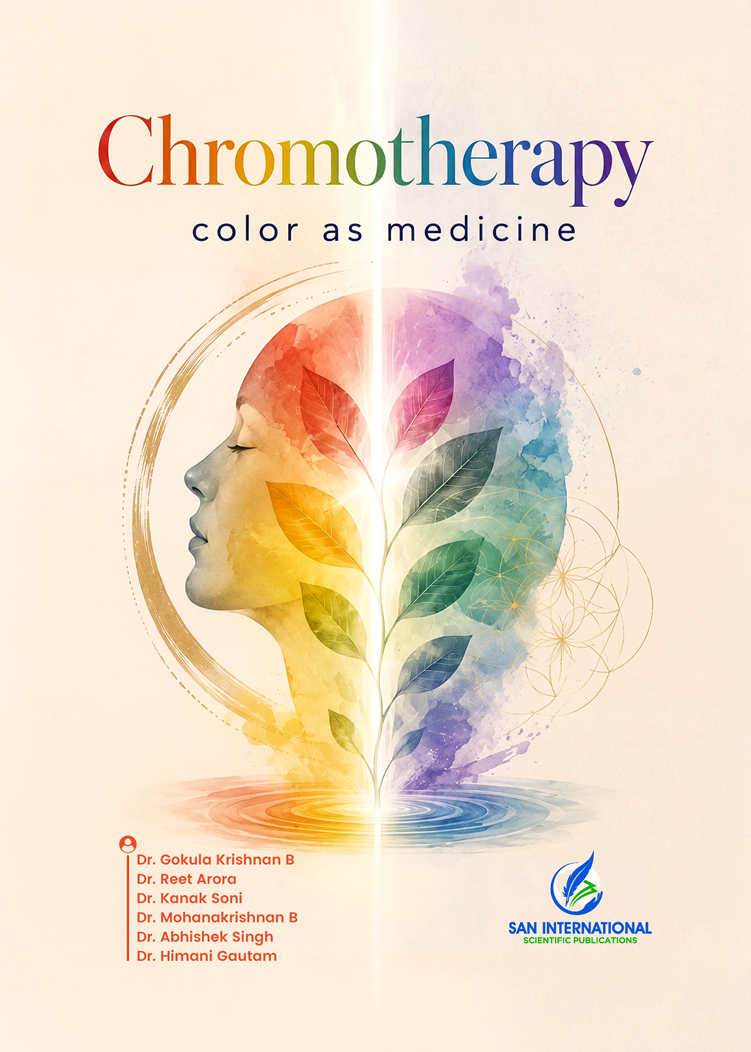
Chromotherapy: Color as medicine
Authors: Dr. Gokula Krishnan B, Dr. Reet Arora, Dr. Kanak Soni, Dr. Mohanakrishnan B, Dr. Abhishek Singh, and Dr. Himani Gautam
ISBN: 978-81-69857-00-0
DOI: https://doi.org/10.59646/751
Date of Publication: July 06, 2026
Cite this book: Gokula KB, Reet A, Kanak S, Mohanakrishnan B, Abhishek S, and Himani G, (2026), Chromotherapy: Color as medicine, ISBN: 978-81-69857-00-0, DOI: https://doi.org/10.59646/751
Preface
Color has fascinated humanity since the dawn of civilization. Beyond its aesthetic appeal, color has long been regarded as a powerful influence on human emotions, physiology, behavior, and overall well-being. Ancient civilizations such as those of Egypt, India, China, Greece, and Persia recognized the therapeutic potential of colors and incorporated them into healing rituals, architecture, spiritual practices, and traditional systems of medicine. In recent decades, advances in neuroscience, photobiology, psychology, and integrative medicine have rekindled scientific interest in understanding how different wavelengths of visible light interact with the human body. This growing convergence of ancient wisdom and modern scientific inquiry has positioned chromotherapy as an emerging complementary therapeutic approach deserving systematic exploration. Chromotherapy: Color as Medicine has been written to present a comprehensive, evidence-informed, and academically structured resource that bridges these diverse perspectives.
The central philosophy of chromotherapy is founded on the principle that every color represents a specific wavelength of visible light possessing unique vibrational characteristics capable of influencing biological systems. Light not only enables vision but also regulates numerous physiological functions, including circadian rhythm, hormonal secretion, neurochemical balance, emotional regulation, cellular communication, and tissue repair. Contemporary research has demonstrated that light exposure can influence melatonin production, serotonin metabolism, autonomic nervous system activity, and various neuroendocrine pathways, thereby providing scientific explanations for many observations that have traditionally been associated with color-based healing practices. Although several mechanisms continue to be investigated, growing evidence supports the significant role of light in maintaining physical and psychological health, opening new opportunities for integrative therapeutic interventions.
This book has been carefully organized to guide readers from the foundational principles of chromotherapy to advanced clinical applications and future technological innovations. Beginning with an introduction to the nature of color, the historical evolution of chromotherapy, and the scientific principles governing light and biological interactions, the text gradually explores the anatomy and physiology of color perception, neuroendocrine pathways, mechanisms of color action, and the influence of electromagnetic radiation on human physiology. Readers are introduced to the characteristics of individual therapeutic colors, their physiological and psychological effects, color psychology, emotional healing, chakra-based approaches, and the relationship between chromotherapy and various human body systems. Considerable attention has been devoted to evidence-based explanations, ensuring that traditional concepts are interpreted through the lens of contemporary biomedical knowledge wherever scientific evidence permits.
A distinctive feature of this volume is its emphasis on practical application. Comprehensive chapters describe patient assessment, individualized color prescription, various methods of administering chromotherapy, colored light therapy, photobiomodulation, LED-based interventions, hydrochromotherapy, chromotized oils, auricular chromotherapy, color breathing techniques, visualization therapy, environmental color therapy, and dietary color interventions. Clinical applications addressing stress, anxiety, insomnia, hypertension, respiratory disorders, digestive disturbances, musculoskeletal conditions, dermatological diseases, emotional burnout, and other health conditions are presented with appropriate therapeutic rationale, suggested protocols, and available scientific evidence. The inclusion of safety considerations, contraindications, treatment precautions, and ethical principles reinforces the responsible and evidence-conscious practice of chromotherapy within integrative healthcare settings.
Recognizing the increasing importance of interdisciplinary healthcare, this book also explores the integration of chromotherapy with naturopathy, yoga, meditation, pranayama, chakra healing, and holistic wellness practices. These discussions demonstrate how color-based interventions may complement established lifestyle and mind-body therapies to promote physical vitality, emotional resilience, and spiritual well-being. Rather than presenting chromotherapy as an alternative to conventional medicine, this volume advocates an integrative model in which complementary approaches are applied judiciously alongside established medical care, always guided by scientific evidence, clinical judgment, and patient-centered practice.
Another significant contribution of this book lies in its discussion of current research and future directions. Emerging technologies such as artificial intelligence, wearable therapeutic devices, smart lighting systems, virtual reality, augmented reality, neurofeedback, precision medicine, and personalized digital healthcare are creating exciting possibilities for the evolution of chromotherapy. These innovations have the potential to transform color therapy from a predominantly traditional practice into a technologically sophisticated discipline supported by objective assessment, real-time physiological monitoring, and individualized therapeutic protocols. By examining both current evidence and future prospects, this book encourages researchers to pursue rigorous investigations that will strengthen the scientific foundation of chromotherapy and facilitate its integration into modern healthcare.
This volume is intended to serve a broad readership, including undergraduate and postgraduate students of naturopathy, yoga, complementary and integrative medicine, physiotherapy, psychology, nursing, medical sciences, and allied health disciplines. It will also be valuable to educators, clinicians, researchers, wellness practitioners, healthcare professionals, and individuals interested in understanding the scientific and therapeutic dimensions of color-based healing. The systematic presentation of concepts, supported by historical perspectives, physiological explanations, clinical applications, research evidence, and emerging innovations, makes this book both an educational text and a practical reference.
The field of chromotherapy continues to evolve as scientific discoveries expand our understanding of light, human physiology, and holistic health. It is our sincere hope that Chromotherapy: Color as Medicine will inspire critical thinking, encourage evidence-based clinical practice, stimulate interdisciplinary research, and promote responsible innovation in complementary healthcare. May this book contribute to a deeper appreciation of the remarkable relationship between light, color, and human health, while encouraging future generations of scholars and practitioners to explore the therapeutic potential of one of nature’s most fundamental healing forces.