Applied Plant Physiology and Molecular Biology
Applied Plant Physiology and Molecular Biology
Author: Dr. Sandela Sandhya
ISBN: 978-81-17787-32-8
DOI: https://doi.org/10.59646/886
Date of Publication: November 13, 2026
Preface
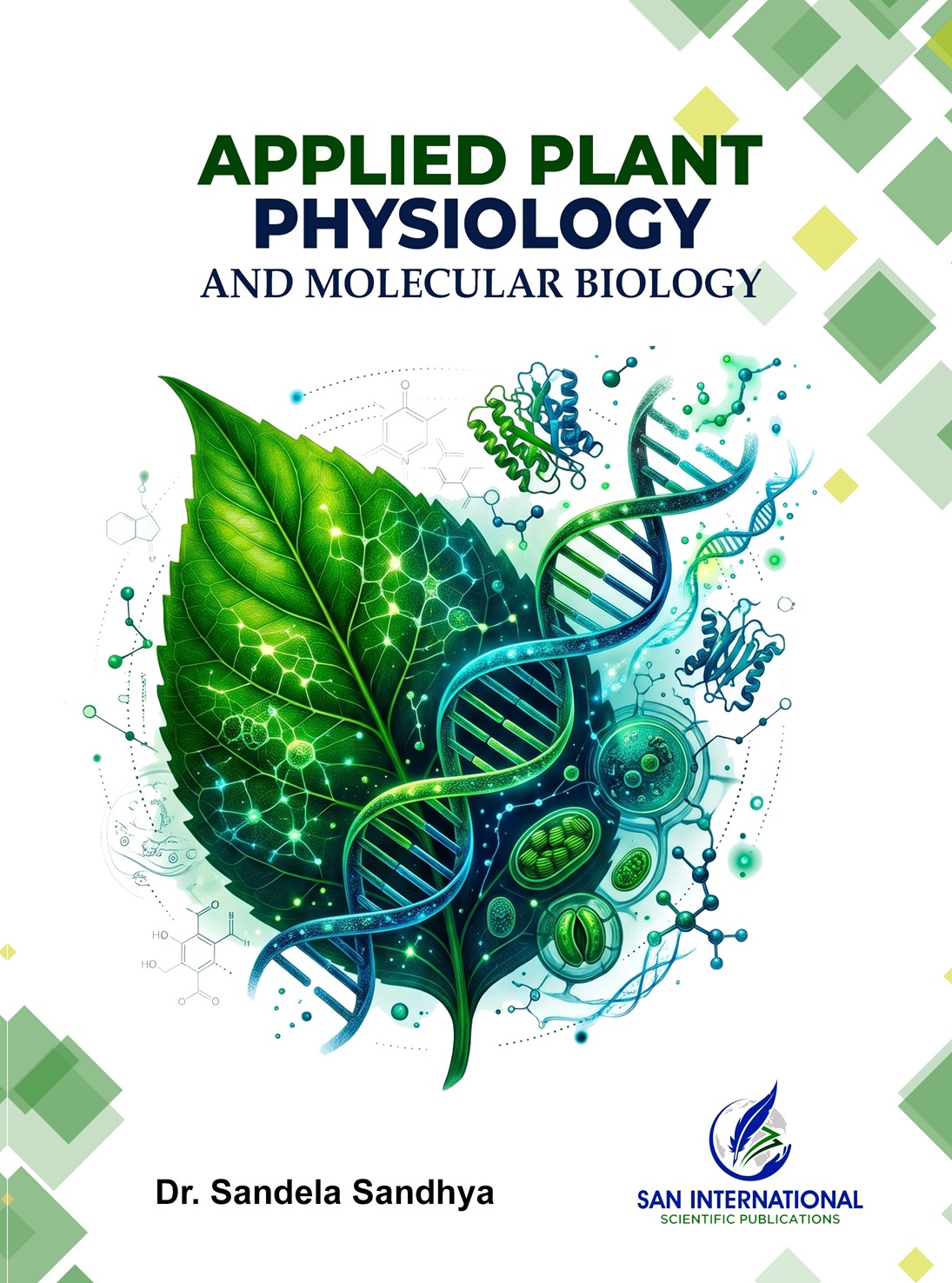
The book Applied Plant Physiology and Molecular Biology provides a comprehensive understanding of the physiological, biochemical, and molecular mechanisms governing plant growth, development, metabolism, and environmental adaptation. It integrates the fundamental principles of plant physiology with contemporary advances in molecular biology, genetic engineering, biotechnology, and computational approaches to explain how plants respond to changing environmental conditions and how these mechanisms can be applied to improve agricultural productivity. The book is designed to establish a strong scientific foundation while highlighting the practical applications of molecular discoveries in modern plant science.
The opening chapters explore the fundamental physiological processes of plants, including water relations, mineral nutrition, photosynthesis, carbon metabolism, plant growth regulators, seed germination, flowering, fruit development, and senescence. Particular attention is given to water potential, transpiration dynamics, nutrient transporters, photosynthetic pathways, phytohormone biosynthesis, and molecular signalling networks. The subsequent chapters examine plant responses to light, temperature, and environmental stresses, emphasizing the genetic and biochemical mechanisms associated with drought tolerance, salinity resistance, heat adaptation, pathogen defence, and pest management. These discussions establish the relationship between cellular processes, gene regulation, and whole-plant physiological performance.
The book further explores the applications of plant biotechnology through detailed discussions of plant tissue culture, micropropagation, genetic engineering, and transgenic plant development. Important techniques such as Agrobacterium-mediated transformation, particle bombardment, molecular marker systems, promoter engineering, and genome editing are examined alongside established applications, including Golden Rice and Bt crops. Advanced molecular approaches involving genomics, transcriptomics, proteomics, DNA sequencing, RNA sequencing, CRISPR-based genome editing, quantitative trait locus mapping, and marker-assisted breeding are also presented. The chapters on metabolic engineering highlight the manipulation of secondary metabolite pathways, medicinal plant improvement, biofuel production, and the optimization of valuable plant-derived compounds.
The concluding chapters emphasize emerging developments in applied plant physiology, including climate-smart agriculture, synthetic biology, vertical farming, controlled-environment cultivation, and plant factory technologies. The integration of artificial intelligence, machine learning, multi-omics data, genomic selection, metabolic flux modelling, and digital crop technologies demonstrates the expanding role of computational intelligence in understanding and improving plant systems. These emerging approaches offer new opportunities for enhancing photosynthetic efficiency, improving resource-use efficiency, developing stress-resilient crops, and supporting sustainable agricultural production.
This book is intended for undergraduate and postgraduate students, research scholars, academicians, plant biologists, biotechnologists, agricultural scientists, and professionals working in plant science and related disciplines. By combining physiological principles with molecular mechanisms and practical biotechnological applications, Applied Plant Physiology and Molecular Biology aims to serve as a valuable academic and research resource. It provides an integrated perspective on modern plant science and encourages the application of advanced biological knowledge to address contemporary challenges in crop improvement, agricultural sustainability, and global food security.