Antimicrobial Resistance of ESKAPE Pathogens: From Mechanisms to Mitigation
Antimicrobial Resistance of ESKAPE Pathogens: From Mechanisms to Mitigation
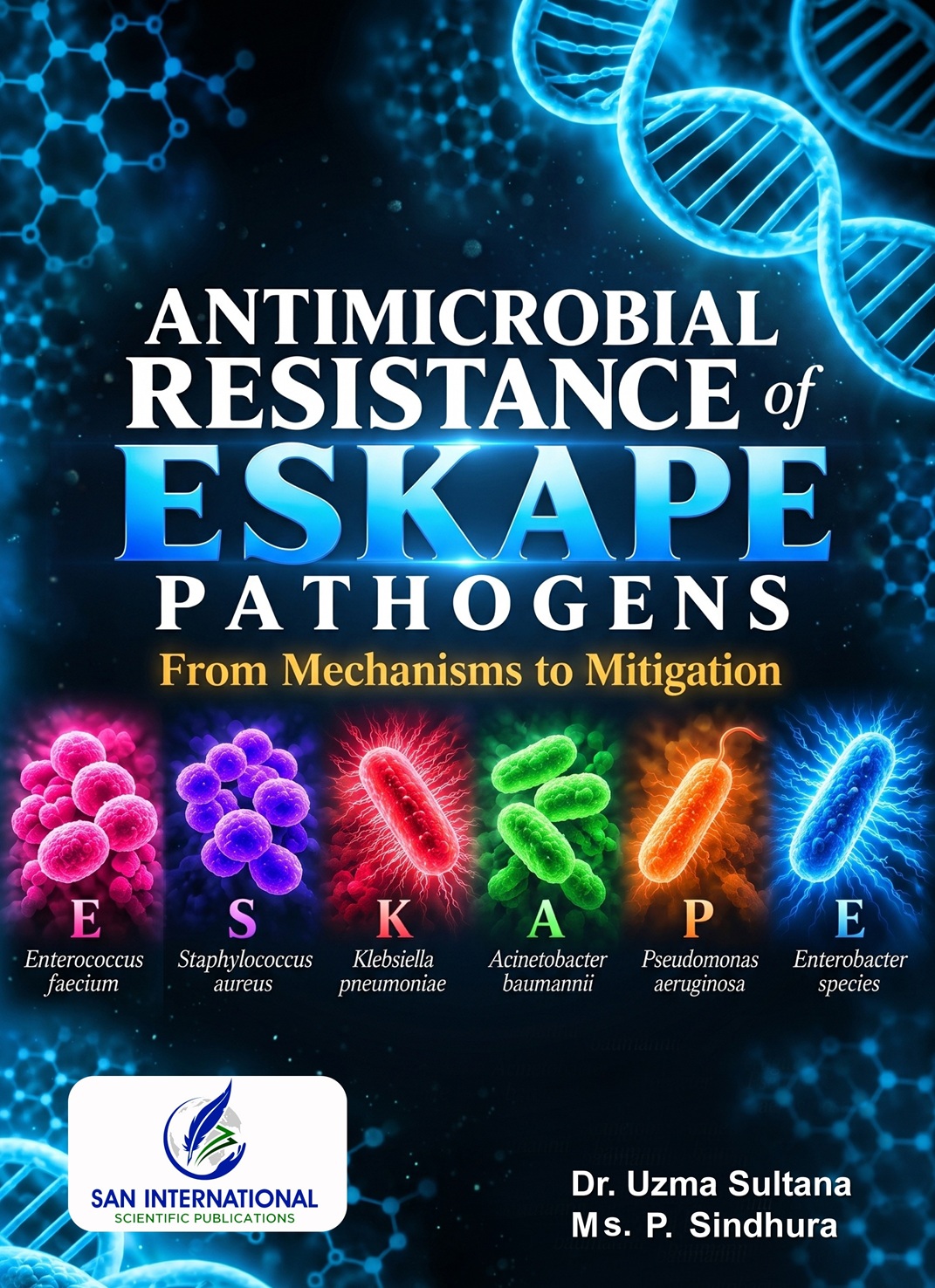
Authors: Dr. Uzma Sultana, and Ms. P. Sindhura
ISBN: 978-81-17787-47-2
DOI: https://doi.org/10.59646/894
Date of Publication: November 20, 2026
Preface
The emergence and rapid spread of antimicrobial resistance (AMR) among clinically significant bacterial pathogens have become major challenges to global public health. Among these, the ESKAPE pathogens—Enterococcus faecium, Staphylococcus aureus, Klebsiella pneumoniae, Acinetobacter baumannii, Pseudomonas aeruginosa, and Enterobacter species—are particularly concerning because of their ability to evade antimicrobial treatments, develop multidrug resistance, and cause severe healthcare-associated infections. Their diverse virulence mechanisms, adaptive genetic characteristics, and capacity to persist in clinical environments make them important targets for microbiological research, therapeutic innovation, and infection control. The book ” Antimicrobial Resistance of ESKAPE Pathogens: From Mechanisms to Mitigation” has been developed to provide a comprehensive understanding of these challenging pathogens, their resistance mechanisms, and emerging approaches for controlling their clinical and epidemiological impact.
The book is organized into four units, covering the microbiological foundations, molecular mechanisms, therapeutic interventions, and sustainable mitigation strategies associated with ESKAPE pathogens. Unit I introduces the microbiology, pathogenicity, and clinical significance of ESKAPE pathogens, emphasizing their virulence factors, infection mechanisms, molecular epidemiology, transmission dynamics, and role in healthcare-associated infections. Unit II explores the genetic and biochemical mechanisms responsible for antimicrobial resistance, including horizontal gene transfer, mobile genetic elements, biofilm formation, persister cells, and the evolution of multidrug resistance. Unit III focuses on antimicrobial resistance detection and emerging therapeutic strategies, discussing antimicrobial susceptibility testing, molecular diagnostics, genomic surveillance, novel antimicrobial agents, resistance inhibitors, drug discovery, bacteriophage therapy, antimicrobial peptides, nanotechnology-based interventions, liposomal antibiotic delivery, quorum-sensing inhibitors, CRISPR-Cas antimicrobials, plant-derived extracellular vesicles, antibiotic adjuvants, and microbiome modulation. Unit IV addresses resistance mitigation and infection control through antimicrobial stewardship, hospital-based prevention strategies, One Health approaches, global AMR surveillance, whole-genome sequencing, genomics-informed outbreak management, vaccines, and precision therapeutics.
This book is intended to serve as a valuable academic and scientific resource for undergraduate and postgraduate students, research scholars, microbiologists, medical professionals, pharmaceutical scientists, and researchers working in infectious diseases and antimicrobial resistance. By integrating fundamental microbiological concepts with molecular research developments and innovative therapeutic approaches, it aims to strengthen the understanding of ESKAPE pathogens and encourage the development of effective strategies for combating antimicrobial resistance. It is hoped that this book will contribute to ongoing scientific research, interdisciplinary collaboration, and the advancement of sustainable approaches to infection prevention and treatment.