
Amrut Yojna: Transforming India’ s Urban Landscape
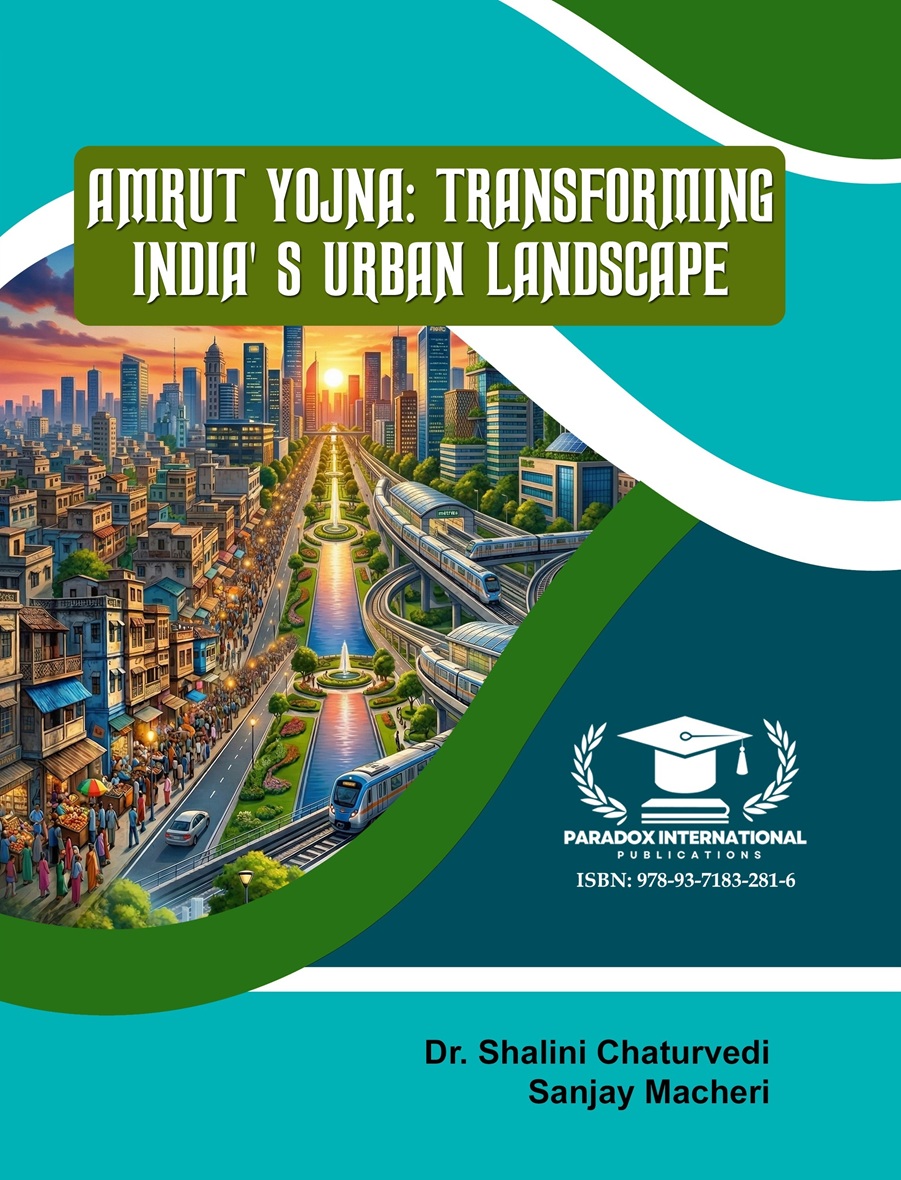
Amrut Yojna: Transforming India’ s Urban Landscape
Authors: Dr. Shalini Chaturvedi, and Sanjay Macheri
ISBN: 978-93-7183-281-6
DOI: https://doi.org/10.59646/656
Date of Publication: April 13, 2026
Cite this book: Shalini C, and Sanjay M, (2026), Amrut Yojna: Transforming India’ s Urban Landscape, Paradox International Publications & San International Scientific Publications, ISBN: 978-93-7183-281-6, DOI: https://doi.org/10.59646/656
Preface
India stands at a critical juncture in its urban transformation journey. Rapid urbanization, population growth, and the increasing demand for sustainable infrastructure have placed unprecedented pressure on cities to evolve into more livable, inclusive, and resilient spaces. In response to these challenges, the Government of India launched the Atal Mission for Rejuvenation and Urban Transformation (AMRUT), a landmark initiative aimed at improving the quality of life in urban areas through focused investments in basic services and infrastructure.
This textbook, “Amrut Yojna: Transforming India’s Urban Landscape,” is an attempt to present a comprehensive understanding of the mission, its objectives, implementation strategies, and its far-reaching impact on urban governance and development. The book delves into the core components of AMRUT, including water supply, sewerage systems, urban transport, green spaces, and capacity building, highlighting how these elements collectively contribute to sustainable urban growth.
The content is carefully structured to cater to students, researchers, policymakers, and practitioners who seek to understand the dynamics of urban development in India. It combines theoretical insights with practical case studies, policy analysis, and real-world examples to provide a holistic perspective. Special attention has been given to examining the challenges faced during implementation, the lessons learned, and the opportunities for future urban reforms.
In an era where cities are becoming the engines of economic growth, initiatives like AMRUT play a pivotal role in shaping the nation’s development trajectory. This book aims to bridge the gap between policy and practice, offering readers a clear and critical understanding of how strategic urban interventions can transform not just infrastructure, but also the lives of millions.
The authors sincerely hope that this work will serve as a valuable resource and inspire further research and innovation in the field of urban development and governance.