AI in Education: Principles And Emerging Horizons
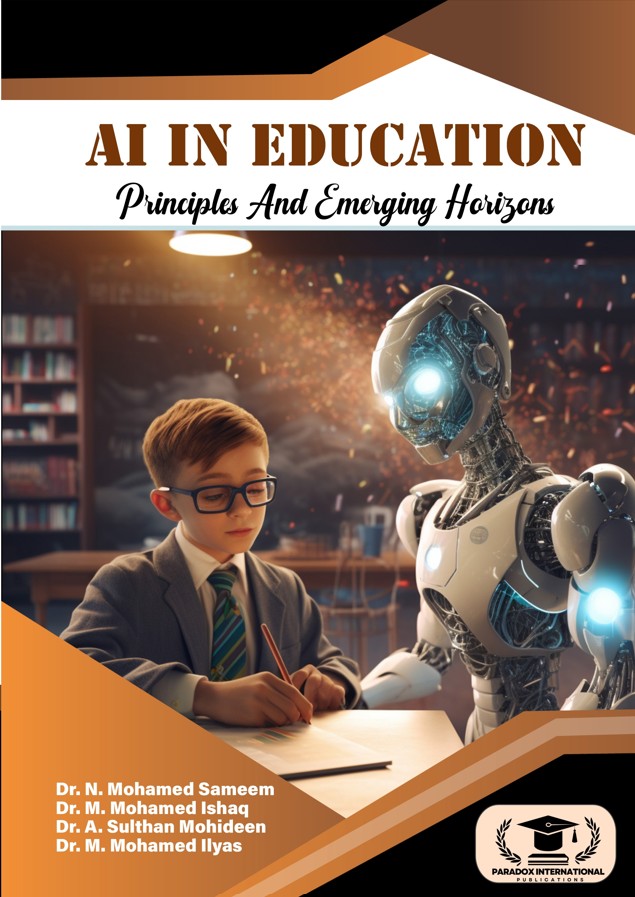
AI in Education: Principles And Emerging Horizons
Authors: Dr. N. Mohamed Sameem, Dr. M. Mohamed Ishaq, Dr. A. Sulthan Mohideen and Dr. M. Mohamed Ilyas
ISBN: 978-93-7183-882-5
DOI: https://doi.org/10.59646/aie/459
Date of Publication: September 22, 2025
About the Book:
The landscape of education is undergoing a profound transformation, shaped by the rapid advancement of Artificial Intelligence (AI). No longer a distant vision of the future, AI has become a present reality, influencing how we teach, learn, assess, and imagine the role of education in society. This book, AI in Education: Principles and Emerging Horizons, has been written to provide a comprehensive foundation for understanding the principles of AI as they apply to education, while also exploring the possibilities and challenges that lie ahead.
The central aim of this textbook is twofold: first, to equip readers with a clear understanding of the fundamental concepts, methods, and technologies that define AI in the educational context; and second, to examine how these tools are reshaping pedagogical strategies, curriculum design, assessment models, and learner engagement. From intelligent tutoring systems to adaptive learning platforms, from data-driven analytics to ethical considerations, the chapters are designed to help students, educators, researchers, and policymakers navigate this evolving field with clarity and critical insight.
While AI offers powerful opportunities to personalize learning, enhance accessibility, and support educators in unprecedented ways, it also raises profound questions about ethics, equity, and the human dimensions of education. This book does not shy away from such complexities. Instead, it provides frameworks for reflection, case studies of emerging practices, and discussions on the responsible adoption of AI technologies.
This work is the product of careful synthesis across disciplines—education, computer science, psychology, and ethics—because we believe that meaningful progress in AI and education requires interdisciplinary collaboration. We hope this textbook serves not only as a guide to current principles but also as a compass pointing toward the horizons of educational innovation.
It is our aspiration that readers will approach the chapters ahead with curiosity, critical thinking, and a sense of possibility. May this book inspire educators to harness AI thoughtfully, researchers to expand the boundaries of inquiry, and learners to envision futures where human creativity and artificial intelligence coexist in ways that enrich education for all.