
AI in Education: Enhancing Teaching and Learning
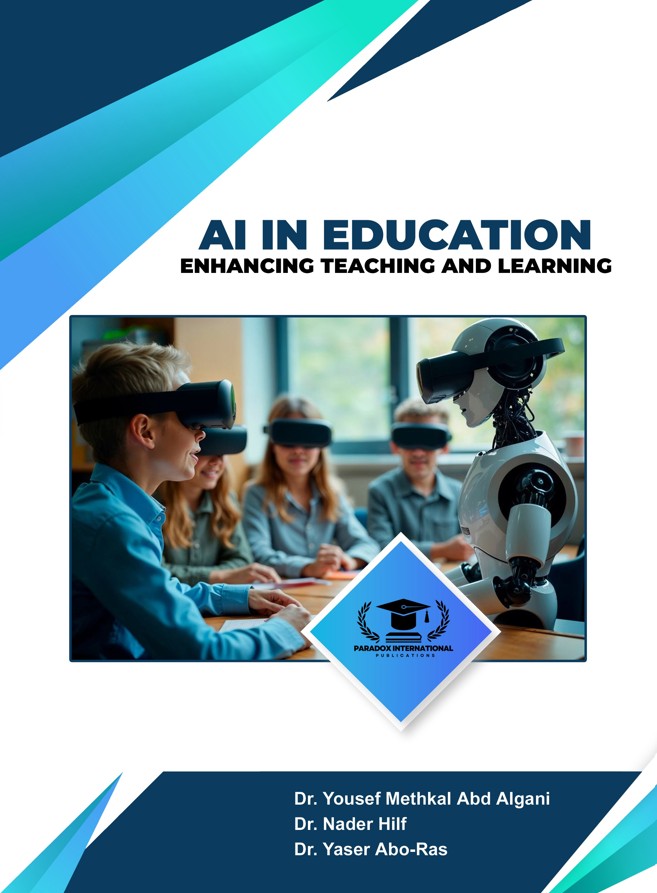
AI in Education: Enhancing Teaching and Learning
Authors: Yousef Methkal Abd Algani, Nader Hilf and Yasir Abu Rass
ISBN: 978-93-7183-219-9
DOI: https://doi.org/10.59646/513
Date of Publication: November 18, 2025
About the Book:
The rapid advancement of Artificial Intelligence (AI) has ushered in a new era in global education—one that challenges traditional paradigms while opening unprecedented opportunities for innovation, inclusion, and personalized learning. As classrooms evolve into dynamic, technology-rich environments, educators, policymakers, and learners are increasingly seeking deeper understanding of how AI can be thoughtfully integrated into teaching and learning practices. This textbook, Artificial Intelligence in Education: Enhancing Teaching and Learning, has been developed to serve as a comprehensive guide for navigating this transformative intersection of technology and pedagogy. The primary aim of this book is to demystify AI for educators, students, and researchers by presenting complex concepts in a clear, accessible manner while grounding them in real-world educational contexts. Rather than treating AI as a distant or purely technical subject, this text situates it within the lived experiences of the classroom—highlighting its potential to support instructional design, foster learner autonomy, streamline administrative tasks, and create more inclusive and equitable learning environments. Each chapter blends theoretical foundations with practical applications, case studies, and emerging trends. Readers will explore topics such as adaptive learning systems, intelligent tutoring, data-driven decision making, ethical considerations, AI literacy, and the role of teachers in an AI-augmented future. By presenting balanced perspectives, the book encourages critical reflection on both the benefits and challenges of AI adoption, including issues of privacy, bias, transparency, and the digital divide. This textbook also emphasizes the centrality of the human element in education. While AI tools can enhance instruction, predict learning patterns, and personalize pathways, it is ultimately the educator who interprets data, fosters emotional connection, and upholds ethical standards. The book underscores that AI should not replace teachers but empower them to become more effective facilitators of meaningful learning. Whether used in undergraduate and postgraduate courses, teacher training programs, or research seminars, this book strives to equip readers with the knowledge, competencies, and confidence needed to engage with AI critically and creatively. It is my hope that this work inspires thoughtful integration of AI in educational systems and sparks new conversations about the future of learning in an increasingly digital world. We extend our sincere gratitude to the educators, researchers, technologists, and students whose insights and experiences have informed these pages. Their dedication to reimagining education continues to illuminate pathways toward more adaptive, inclusive, and innovative learning environments.