AI-Enabled Workforce: Managing Talent in the Age of Automation
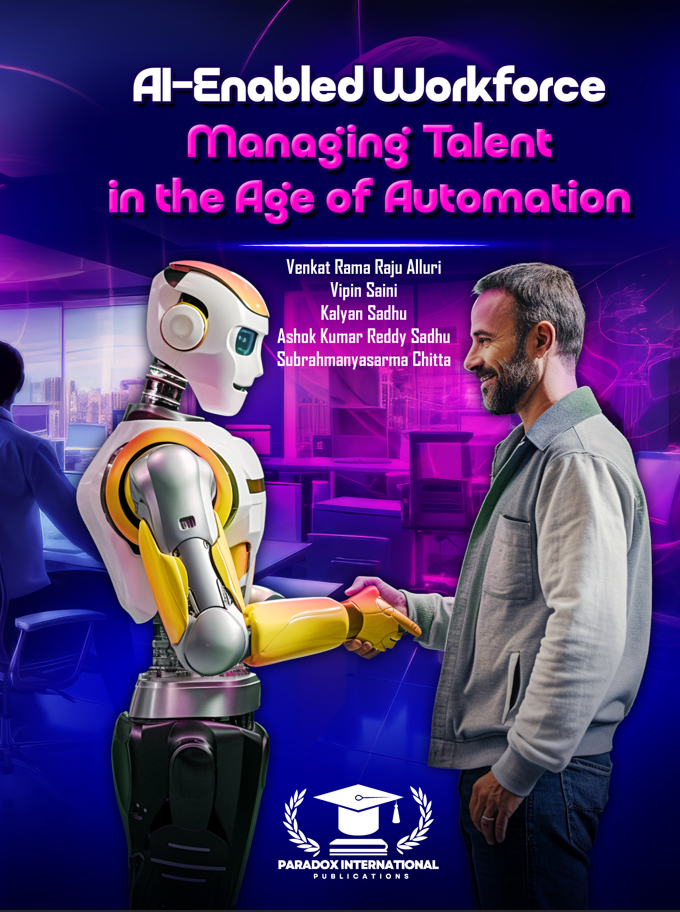
AI-Enabled Workforce: Managing Talent in the Age of Automation
Authors: Venkat Rama Raju Alluri, Vipin Saini, Kalyan Sadhu, Ashok Kumar Reddy Sadhu, and Subrahmanyasarma Chitta
ISBN: 978-81-985805-9-7
DOI: https://doi.org/10.59646/aw/316
Date of Publication: February 28, 2025
About the Book:
The rise of artificial intelligence (AI) and automation is reshaping the modern workplace at an unprecedented pace. From recruitment and workforce planning to employee engagement and leadership development, AI-driven technologies are revolutionizing how organizations manage talent. As businesses strive to navigate this transformation, it is imperative to understand both the opportunities and challenges that AI presents for workforce management. This book, AI-Enabled Workforce: Managing Talent in the Age of Automation, serves as a comprehensive guide for scholars, practitioners, and policymakers seeking to explore the evolving intersection of AI and human resource management. Our motivation for writing this book stems from a shared belief that AI should not be viewed merely as a tool for automation but as a strategic enabler of workforce potential. While AI has the power to enhance efficiency, optimize decision-making, and foster innovation, it also raises critical ethical, legal, and social considerations. By analyzing the key developments in AI-driven workforce management, we aim to provide insights into how organizations can embrace AI while ensuring fairness, inclusivity, and long-term sustainability.
In Chapter 1, we establish the foundational concepts of AI and automation, exploring their historical evolution and impact on traditional workforce structures. Chapter 2 delves into the dual nature of AI—highlighting its benefits in workforce management while addressing challenges such as job displacement and the need for continuous reskilling. The subsequent chapters examine AI’s influence on specific HR functions, from recruitment and predictive workforce planning to employee training, leadership development, and performance management. A key theme throughout this book is the human-AI collaboration model. In Chapter 8, we discuss how organizations can foster synergy between human employees and AI-driven systems, mitigating resistance and maximizing AI’s potential. We also address pressing concerns around ethics and legal compliance in Chapter 9, offering guidelines for responsible AI implementation in HR. Looking toward the future, Chapters 10 through 12 explore policy implications, case studies, and emerging trends that will shape workforce management in the coming decades. This book is the result of collaborative efforts among five authors, each bringing a unique perspective from academia, business, and technology. Our collective expertise in AI, human resource management, and workforce strategy has allowed us to craft a multidimensional analysis of AI’s role in talent management. We hope this book serves as a valuable resource for business leaders, HR professionals, researchers, and policymakers seeking to understand and navigate the evolving landscape of AI-enabled workforce management. We extend our gratitude to the many professionals, researchers, and organizations whose insights and experiences have informed our discussions. As AI continues to transform the world of work, we encourage an open dialogue on how businesses and society can harness its potential responsibly and ethically.