Adaptive Learning Technologies: AI Applications in Education
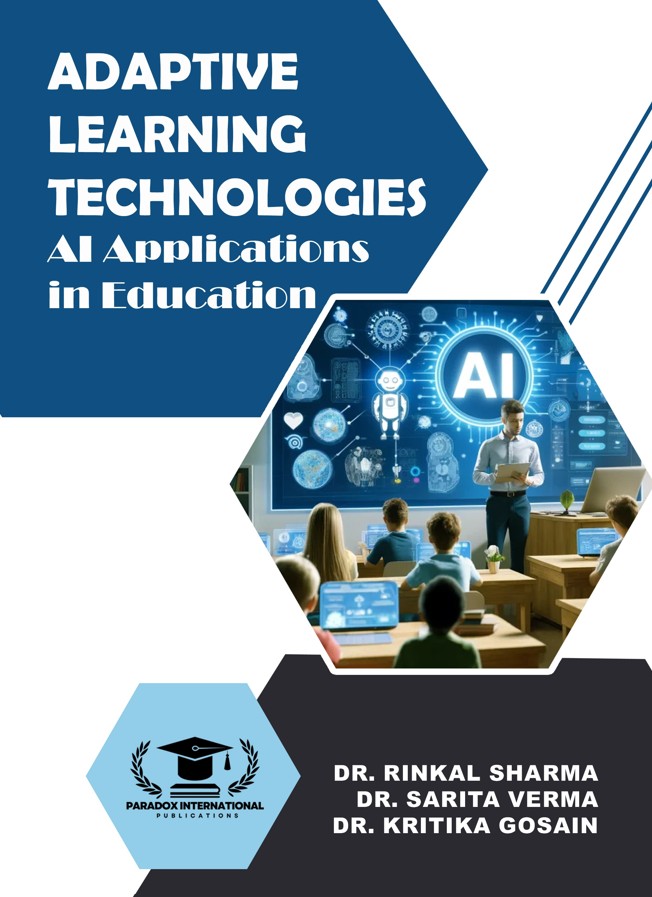
Adaptive Learning Technologies: AI Applications in Education
Authors: Dr. Rinkal Sharma, Dr. Sarita Verma and Dr. Kritika Gosain
ISBN: 978-93-7183-536-7
DOI: https://doi.org/10.59646/alt/447
Date of Publication:August 28, 2025
About the Book:
The rapid evolution of educational technology has transformed the way learners acquire knowledge and skills, and Artificial Intelligence (AI) has emerged as a pivotal force in shaping this transformation. Adaptive Learning Technologies: AI Applications in Education is designed to provide educators, researchers, and students with a comprehensive understanding of how AI-driven tools and methodologies can personalize learning, enhance engagement, and improve learning outcomes.
Education has traditionally followed a “one-size-fits-all” approach, often failing to address individual learner differences. Adaptive learning technologies, powered by AI, have the potential to bridge this gap by dynamically tailoring content, feedback, and learning pathways to meet the unique needs of each learner. This textbook explores the theoretical foundations, technological frameworks, practical applications, and ethical considerations surrounding AI in education.
The book is structured into six core sections. The first section introduces the concepts of adaptive learning and the role of AI in modern education. Subsequent sections delve into AI algorithms for personalized learning, intelligent tutoring systems, learning analytics, and assessment. Case studies from K–12 schools, higher education, and corporate learning environments illustrate the real-world impact of these technologies. The final sections examine the ethical, social, and policy implications of AI in education, providing a critical lens for responsible implementation.
This textbook is intended for undergraduate and graduate students in education, educational technology, and computer science, as well as for educators and practitioners seeking to integrate AI into their teaching practices. Each chapter includes examples, discussion questions, and hands-on activities to facilitate practical understanding and application.
By combining theory with practical insights, this book aims to equip readers with the knowledge and skills necessary to navigate the rapidly evolving landscape of AI-driven education. It emphasizes not only the technological possibilities but also the pedagogical principles and human-centered considerations that ensure AI serves as a tool to enhance, rather than replace, effective teaching and learning.
We hope that this textbook will inspire educators, technologists, and policymakers to leverage AI thoughtfully and innovatively, fostering learning environments that are adaptive, inclusive, and transformative.