Super Foods for Super Health With Reference to Tamil Nadu Foods
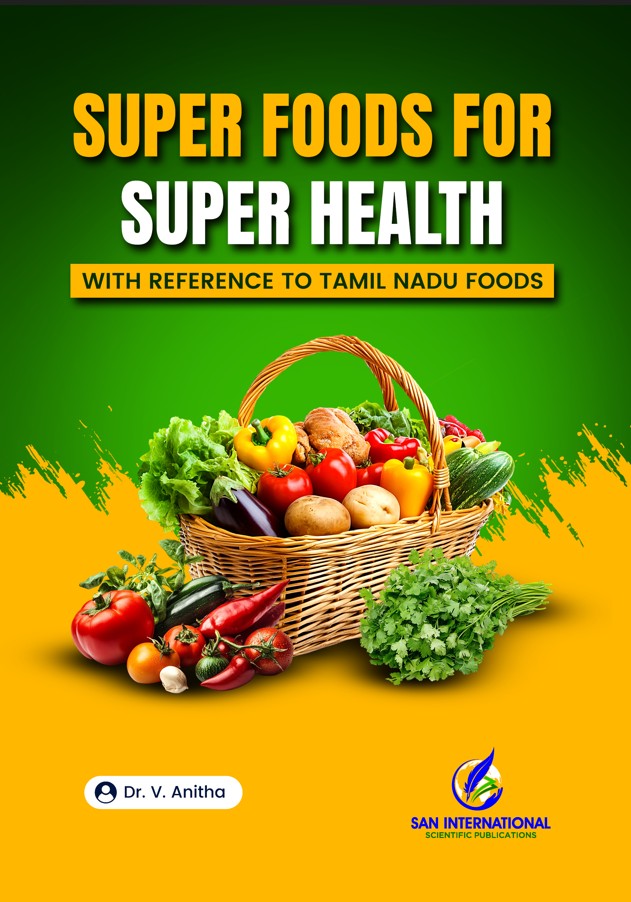
Super Foods for Super Health With Reference to Tamil Nadu Foods
Author: Dr. V. Anitha, M.D. (Siddha), PGDY
ISBN: 978-81-993993-3-4
DOI: https://doi.org/10.59646/484
Date of Publication: October 06, 2025
About the Book:
Food has always been central to the human experience—not only as nourishment but as a reflection of culture, environment, spirituality, and collective wisdom. Super Foods for Super Health: With Reference to Tamil Nadu Foods is an effort to rediscover and document the profound nutritional heritage of Tamil Nadu within the broader global framework of superfoods. In an era when the world is turning back to organic, natural, and functional foods for health and wellness, this book reaffirms that Tamil Nadu’s traditional diet—deeply influenced by Siddha medicine, Ayurvedic principles, and local folk knowledge—has long embodied what modern nutrition now calls “superfoods.” The book integrates scientific insights, traditional wisdom, and cultural practices to explore how the foods of Tamil Nadu contribute to holistic health, longevity, and disease prevention.
The text begins by examining the concept of superfoods from both global and Tamil perspectives, comparing the scientific classification of nutrient-dense foods with the region’s indigenous dietary wisdom. Tamil Nadu’s agrarian traditions, rich biodiversity, and sustainable food systems form the backbone of this exploration, illustrating how native crops and natural farming practices create a self-sufficient, eco-friendly nutritional model. The book further traces the roots of food therapy in ancient medical systems, especially Siddha and Ayurveda, emphasizing how traditional diets are designed not just to sustain life but to restore balance within the body and mind. Sangam literature, folk sayings, and culinary rituals are analyzed to highlight Tamil philosophy’s deep connection between food, environment, and health.
Each unit of the book is dedicated to a distinct aspect of Tamil superfoods and their health relevance. Unit 2 focuses on millets, the ancient grains once central to Tamil diets, now globally recognized for their exceptional fiber, calcium, and protein content. It presents traditional and modern recipes, emphasizing how millets prevent diabetes, enhance bone strength, and support weight management. Unit 3 explores heritage rice varieties such as Karuppu Kavuni, Poongar, and Mapillai Samba—grains that symbolize fertility, energy, and strength. It connects their historical and ritual significance to their therapeutic roles in promoting heart health and immunity, while also acknowledging the current efforts to revive these forgotten varieties.
Unit 4 introduces pulses, legumes, and sprouts, the protein powerhouses of Tamil cuisine, explaining their nutritional balance and ecological benefits as nitrogen-fixing crops. Traditional recipes like sundal, adai, and kollu rasam are celebrated not merely as dishes but as cultural symbols of health and festivity. Unit 5 highlights fruits and nuts—from jackfruit and banana to amla and guava—revealing their seasonal roles in maintaining hydration, digestion, and vitality. The section also draws connections between temple offerings (prasadam) and their nutritional significance, blending spirituality with health.
Unit 6 explores the world of greens and medicinal leaves, including drumstick (moringa), Arai keerai, Siru keerai, and Manathakkali, underscoring their therapeutic properties for anemia, liver health, and detoxification. Tamil proverbs and cultural expressions about greens serve as cultural evidence of their enduring importance. Unit 7 focuses on spices, herbs, and natural immunity boosters such as turmeric, pepper, fenugreek, tulsi, and thuthuvalai, explaining their biochemical properties, antioxidant power, and role in disease prevention. Traditional tonics like rasam and herbal teas are reinterpreted as functional foods that combine taste with healing.
Unit 8 delves into oils, fermented foods, and functional beverages, emphasizing cold-pressed oils, probiotic-rich dishes like idli and dosa, and natural drinks like neer mor, panakam, and pathaneer. These sections reveal how fermentation enhances digestibility, gut health, and bioavailability of nutrients—principles that modern nutrition and microbiome research now validate. Unit 9 is a dedicated chapter on disease-specific nutrition, linking Tamil superfoods to chronic disease management. It details dietary strategies for diabetes, hypertension, anemia, liver disorders, and heart disease, combining traditional recipes with nutritional science. Unit 10 concludes with seasonal diet charts, emphasizing the importance of aligning food choices with climatic conditions, life stages, and physiological needs.
At its core, this book is not just about food—it is about a way of life. It celebrates the Tamil principle of Unave Marunthu (“Food is Medicine”), which aligns perfectly with today’s global movement toward functional and preventive nutrition. The discussions throughout the book bridge cultural traditions with contemporary health trends, inviting readers to understand how locally sourced, minimally processed, and seasonally adapted foods can sustain both human and environmental well-being.
In compiling this work, great care has been taken to combine scientific analysis with cultural authenticity. Each section draws upon ethnographic records, ancient texts, modern nutritional studies, and living traditions of Tamil households. The book aims to serve a wide audience—students of nutrition, researchers, dietitians, food technologists, and health-conscious readers—by offering a multidimensional understanding of Tamil Nadu’s food systems.
Ultimately, Super Foods for Super Health: With Reference to Tamil Nadu Foods aspires to spark a renaissance in traditional eating practices by showing that the superfoods of the future are, in fact, the superfoods of our past. By returning to indigenous grains, greens, and culinary wisdom, we not only nurture our bodies but also preserve the ecological and cultural fabric that has sustained Tamil civilization for millennia. Through this exploration, readers are invited to rediscover the timeless truth that true health begins at the dining table—with nature’s bounty, cultural mindfulness, and the harmony of food, body, and spirit.