Modern Fisheries: Fish Biology, Ecology and Sustainable Aquaculture
Modern Fisheries: Fish Biology, Ecology and Sustainable Aquaculture
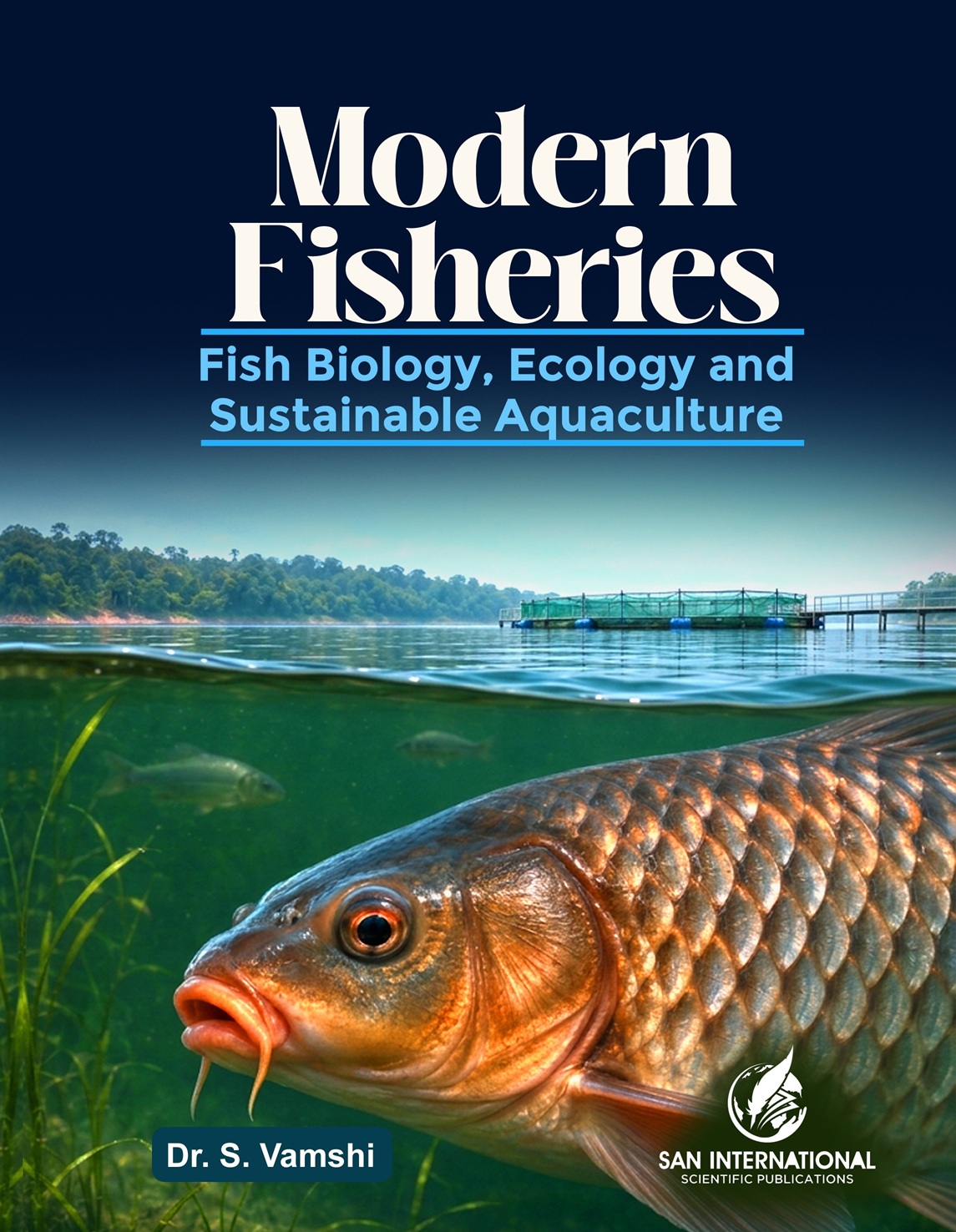
Author: Dr. S. Vamshi
ISBN: 978-81-17787-35-9
DOI: https://doi.org/10.59646/889
Date of Publication: November 16, 2026
Preface
The book Modern Fisheries: Fish Biology, Ecology and Sustainable Aquaculture provides a comprehensive understanding of the biological, ecological, physiological and applied aspects of fisheries science, integrating fundamental zoological principles with contemporary developments in aquaculture and aquatic resource management. It is designed to introduce readers to the diversity of fishes, their structural and functional adaptations, reproductive mechanisms, developmental processes and ecological interactions within freshwater, marine and brackish-water environments. The book emphasizes the scientific understanding of fish biology and aquatic ecosystems as essential foundations for improving fisheries productivity, maintaining ecological balance and supporting the sustainable utilization of aquatic resources. The first unit explores fish diversity, classification, evolutionary adaptations, comparative anatomy, physiology and reproductive biology, highlighting the structural and functional characteristics that enable fishes to survive in diverse aquatic habitats. It also examines aquatic ecosystems, fish ecology and behavioural adaptations, providing insights into feeding patterns, habitat preferences, environmental responses and interactions among aquatic organisms. The second unit focuses on fish development, nutrition and aquaculture sciences, covering embryology, larval development, breeding biology, nutritional requirements, feeding ecology and growth dynamics. Particular attention is given to inland fisheries, different aquaculture systems and fish production practices that contribute to the development of efficient and productive fisheries operations. The third unit addresses aquatic animal health and environmental zoology, emphasizing fish diseases, parasitology, immunological responses and disease prevention strategies. It further discusses aquatic toxicology, pollution biology and the application of fish as biological indicators for evaluating environmental quality and identifying ecological disturbances. The fourth unit examines fisheries conservation and sustainable resource management through population dynamics, stock assessment, biodiversity conservation and climate-resilient fisheries practices. It also highlights sustainable fisheries development, integrated aquatic resource management and the blue economy, demonstrating the importance of balancing economic activities with aquatic ecosystem conservation and long-term resource availability.
This book is intended for undergraduate and postgraduate students, research scholars, academicians, fisheries professionals and individuals interested in fish biology, aquatic ecology and aquaculture development. By connecting biological knowledge with practical fisheries applications, it aims to strengthen scientific understanding, encourage research-oriented learning and promote responsible approaches to aquatic resource utilization. The book ultimately emphasizes the significance of modern fisheries science in ensuring food security, supporting livelihoods, conserving aquatic biodiversity and advancing environmentally sustainable aquaculture practices.