Indian Biodiversity: Faunal Resources and Conservation Biology
Indian Biodiversity: Faunal Resources and Conservation Biology
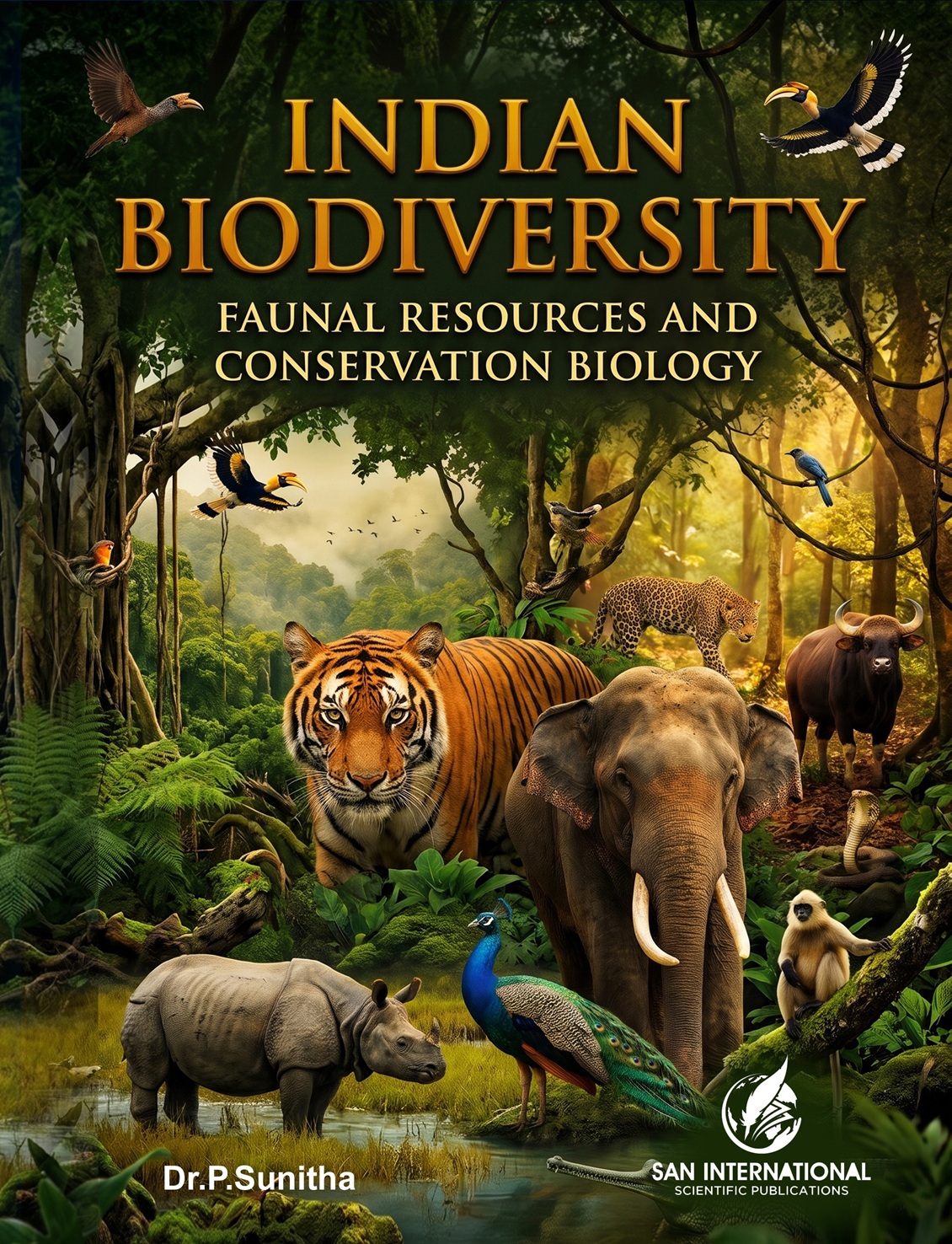
Author: Dr. P. Sunitha
ISBN: 978-81-17787-34-2
DOI: https://doi.org/10.59646/888
Date of Publication: November 16, 2026
Preface
Biodiversity is the foundation of ecological stability, environmental sustainability, and the continued existence of life on Earth. India, recognized as one of the world’s megadiverse countries, possesses an exceptionally rich variety of faunal resources distributed across diverse geographical regions, ecosystems, and climatic conditions. Its animal diversity encompasses a wide range of invertebrates and vertebrates, including fishes, amphibians, reptiles, birds, and mammals, many of which are endemic, threatened, or ecologically significant. Understanding this diversity, its distribution patterns, ecological functions, and conservation requirements is essential for maintaining natural ecosystems and ensuring the sustainable utilization of biological resources. The book Indian Biodiversity: Faunal Resources and Conservation Biology has been developed to provide a comprehensive understanding of India’s faunal wealth, ecological significance, biodiversity assessment, and wildlife conservation practices.
The book is organized into four units covering the fundamental concepts and major aspects of faunal biodiversity and conservation biology. Unit I introduces the foundations of Indian faunal biodiversity, including biodiversity concepts, classification, ecological significance, biogeographical zones, biodiversity hotspots, faunal diversity, distribution patterns, and endemism. Unit II explores the diversity and ecological importance of Indian fauna, with particular emphasis on invertebrates, their ecological functions, and vertebrate groups such as fishes, amphibians, reptiles, birds, and mammals. Unit III examines faunal resources and their economic and ecological importance, biodiversity assessment techniques, ecological monitoring, diversity indices, and the identification and conservation significance of threatened, endemic, and invasive animal species. Unit IV focuses on wildlife conservation and sustainable biodiversity management, addressing threats to faunal diversity, ecosystem degradation, in-situ and ex-situ conservation strategies, wildlife protection measures, conservation policies, and emerging approaches for sustainable management.
This book aims to strengthen the understanding of faunal diversity and its relationship with ecosystem functioning, environmental balance, and human well-being. It highlights the importance of scientific biodiversity assessment, habitat protection, wildlife management, and conservation planning in addressing the challenges posed by habitat destruction, climate change, pollution, overexploitation, and invasive species. By integrating ecological principles with contemporary conservation approaches, the book provides valuable academic knowledge for understanding India’s faunal resources and their long-term protection. It is intended to serve as a useful reference for undergraduate and postgraduate students, researchers, teachers, wildlife enthusiasts, and individuals interested in biodiversity, zoology, ecology, and environmental conservation.