
Systematic Taxonomy of Diatoms: Morphological Characteristics and Ecological Perspectives
Systematic Taxonomy of Diatoms: Morphological Characteristics and Ecological Perspectives
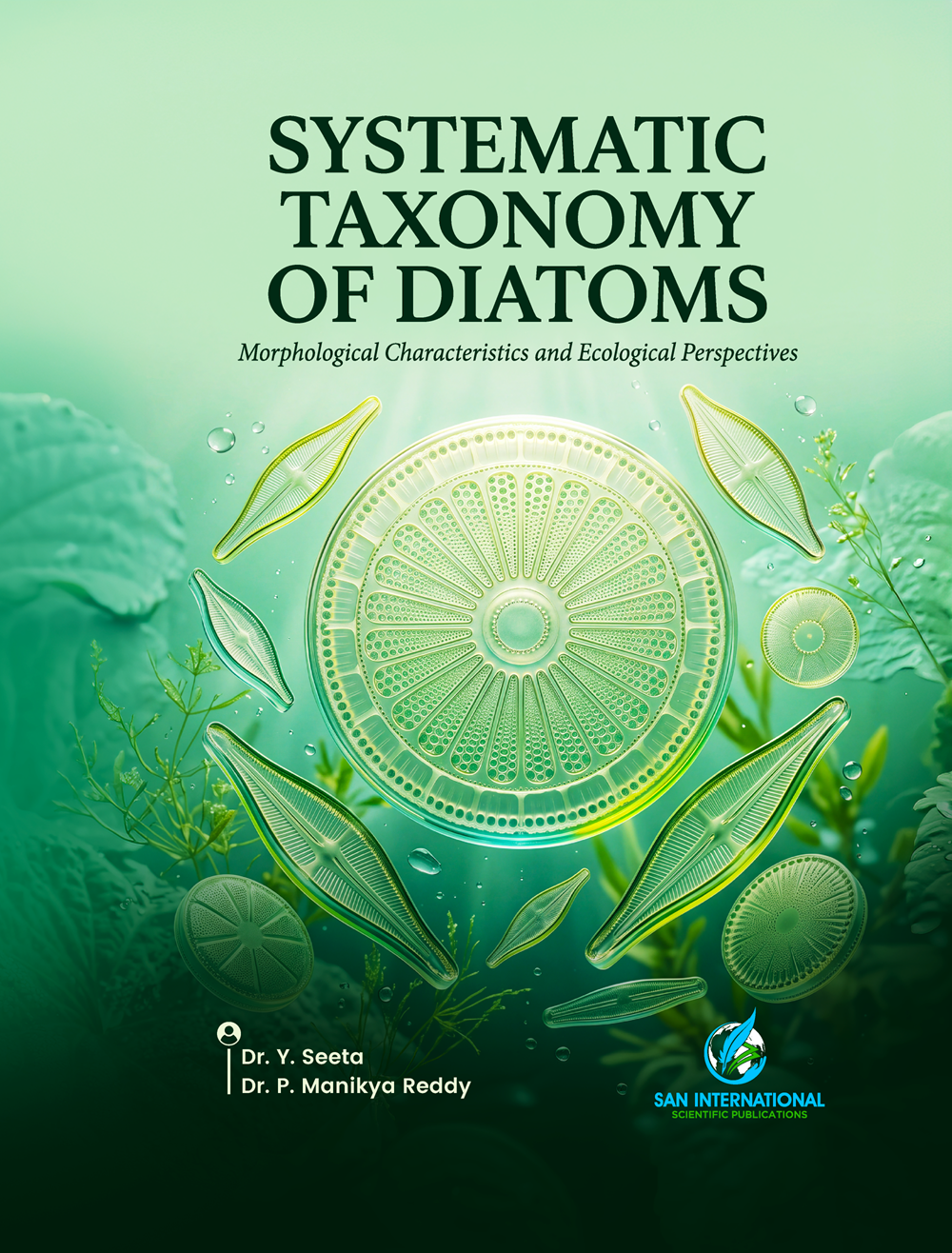
Authors: Dr. Y. Seeta, and Dr. P. Manikya Reddy
ISBN: 978-81-17787-28-1
DOI: https://doi.org/10.59646/881
Date of Publication: November 11, 2026
Preface
Diatoms are among the most diverse and ecologically significant groups of microscopic algae, playing an essential role in aquatic ecosystems, primary production, nutrient cycling, and environmental monitoring. Their distinctive silica-based cell walls, known as frustules, exhibit remarkable variations in shape, symmetry, ornamentation, and structural organization, providing important characteristics for systematic identification and classification. The study of diatom taxonomy offers valuable insights into biodiversity, species distribution, ecological relationships, and the environmental conditions that influence aquatic communities. Systematic Taxonomy of Diatoms: Morphological Characteristics and Ecological Perspectives is developed to provide a systematic account of diatom diversity, emphasizing their taxonomic classification, diagnostic morphological features, and ecological significance.
The book is organized into three chapters, beginning with an introduction to the fundamental aspects of diatoms, including their general characteristics, structural organization, classification, and ecological importance. Chapter 2 presents the systematic description of different diatom taxa, highlighting their distinctive morphological characteristics and taxonomic features. Particular attention is given to the identification of genera and species through their valve shapes, striation patterns, raphe structures, symmetry, and other diagnostic features. A comprehensive collection of 37 illustrative plates supports the systematic descriptions and provides visual documentation of the identified diatom specimens. The diatom chart further facilitates the understanding of their morphological diversity and taxonomic relationships. Chapter 3 provides an organized presentation of plate names, genus and species details, and corresponding plate references, enabling convenient identification and cross-referencing of the illustrated taxa.
This book is intended to serve as a valuable reference for students, research scholars, taxonomists, phycologists, microbiologists, and environmental scientists interested in diatom identification and biodiversity studies. The systematic descriptions and extensive plate illustrations are expected to support practical learning, taxonomic investigations, and ecological research. By bringing together morphological observations, systematic classification, and ecological perspectives, this work aims to strengthen the understanding of diatom diversity and encourage further investigations into their importance as indicators of environmental conditions and aquatic ecosystem health.
It is sincerely hoped that this book will contribute to academic learning and scientific research in diatom taxonomy and freshwater and marine biodiversity. The author acknowledges the importance of continued taxonomic documentation and microscopic investigations in expanding our knowledge of these fascinating organisms and their role in maintaining ecological balance.