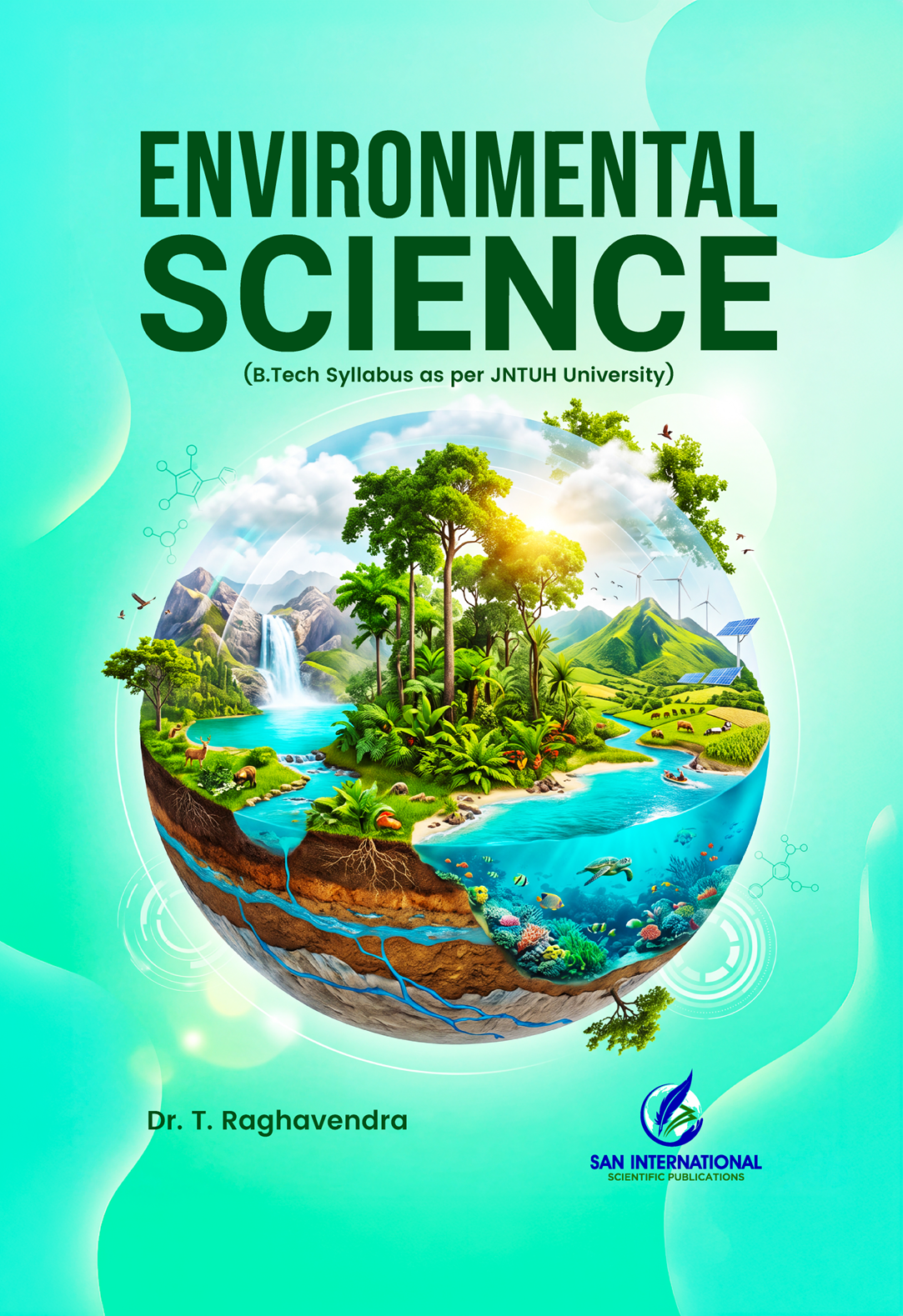
Environmental Science (B.Tech Syllabus as per JNTUH University)
Environmental Science (B.Tech Syllabus as per JNTUH University)
Author: Dr. T. Raghavendra
ISBN: 978-81-17787-20-5
DOI: https://doi.org/10.59646/872
Date of Publication: October 30, 2026
Preface
Environmental Science is an interdisciplinary field that explores the relationship between living organisms, natural resources, and the physical environment, emphasizing the importance of maintaining ecological balance and achieving sustainable development. The increasing challenges associated with environmental degradation, biodiversity loss, natural resource depletion, pollution, climate change, and ecosystem disturbances have highlighted the need for a comprehensive understanding of environmental processes and their implications for human society. This book, Environmental Science, is designed to provide readers with a systematic understanding of fundamental environmental concepts, ecological principles, resource management strategies, pollution control technologies, and environmental protection mechanisms. It introduces the structure and functions of ecosystems, food chains, food webs, ecological pyramids, energy flow, biogeochemical cycles, ecosystem services, and carrying capacity, establishing a foundation for understanding the interdependence of organisms and their surroundings. The discussion on natural resources examines the utilization and conservation of water, minerals, land, forests, and energy resources, with particular attention to resource exploitation, environmental consequences, renewable energy alternatives, and relevant case studies.
The book further explores biodiversity and biotic resources, covering genetic, species, and ecosystem diversity, biodiversity values, India’s status as a megadiverse nation, biodiversity hotspots, major threats, and in-situ and ex-situ conservation approaches, including the National Biodiversity Act. Environmental pollution and its control technologies constitute another major area of discussion, addressing air, water, soil, and noise pollution, solid waste and electronic waste management, wastewater treatment processes, bioremediation, and air pollution control technologies. The final unit focuses on environmental policies, legislation, and Environmental Impact Assessment (EIA), introducing important environmental protection laws, waste management regulations, baseline data acquisition, environmental impact evaluation, risk assessment, and Environmental Management Plans (EMP). Contemporary concerns such as sustainable development goals, global environmental challenges, and international environmental agreements are also discussed to establish an understanding of the policy frameworks governing environmental protection. The contents are organized into five comprehensive units, progressing from ecological fundamentals to natural resource conservation, biodiversity protection, pollution management, and environmental governance. The book aims to strengthen conceptual understanding and develop awareness of the scientific, technological, legal, and societal approaches required to address environmental challenges. It will serve as a valuable academic resource for undergraduate and postgraduate students, researchers, teachers, and readers interested in environmental science and sustainable resource management.